

Kudrytskyi warns Ukraine is already late to prevent next winter’s energy crisis — NV interview
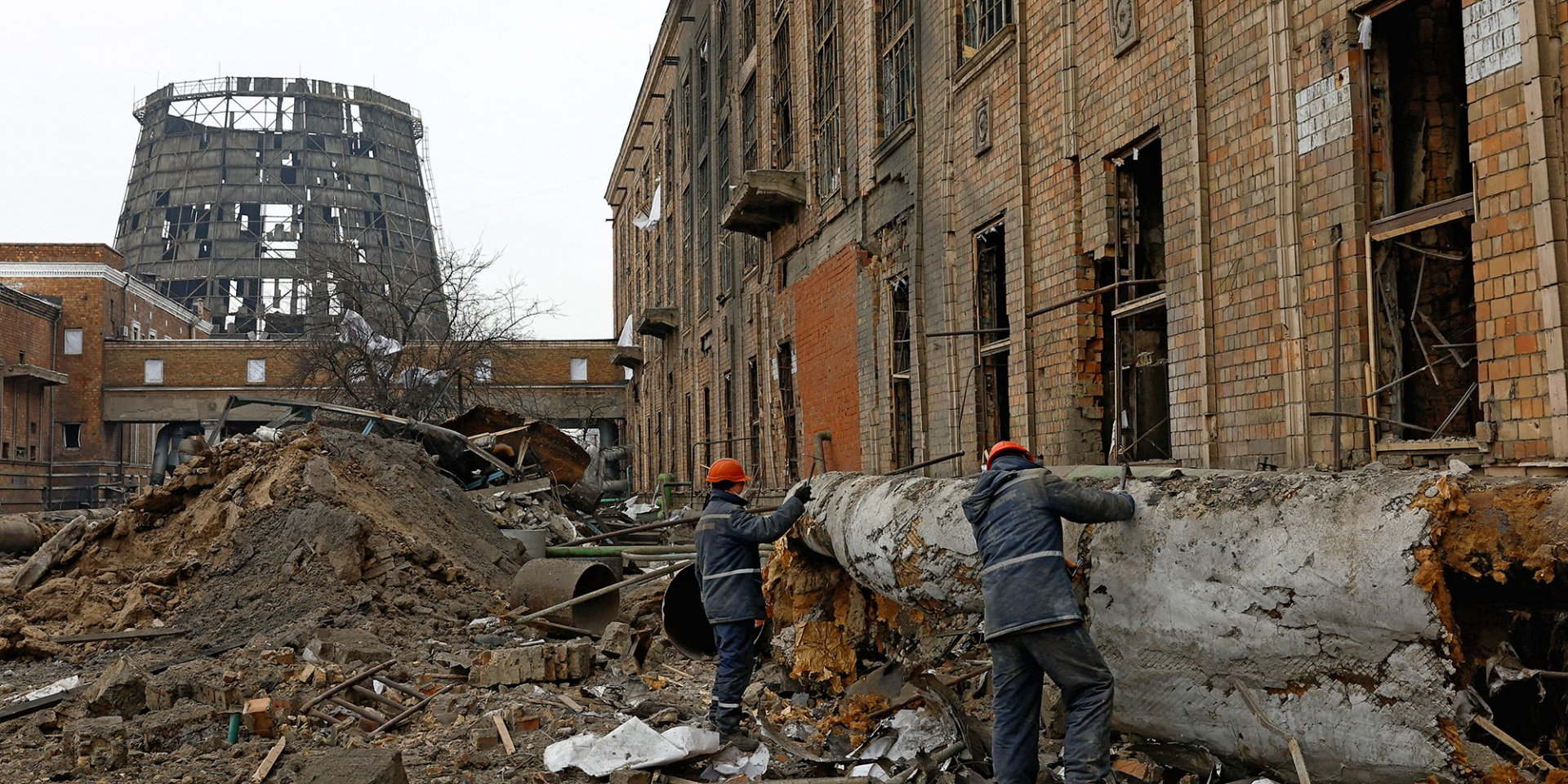
According to the government, since the beginning of 2026 Russia has carried out nearly 220 strikes on Ukraine’s energy infrastructure. (Photo: REUTERS/Valentyn Ogirenko)
Volodymyr Kudrytskyi, co-founder of Negen and head of
Ukrenergo’s management board from 2020–2024, assessed the current state of
Ukraine’s energy sector, forecast whether electricity outages are likely this
summer, and outlined step-by-step recommendations on how to replace Soviet-era
combined heat and power plants damaged by Russian strikes.
This winter has been the most difficult for Ukraine’s energy
system since the start of Russia’s full-scale invasion. As the first cold
weather arrived, Russian forces methodically struck energy infrastructure in
Kyiv and Kyiv Oblast, as well as in Kharkiv, Dnipro and Odesa.
The capital proved unprepared for that scenario and, for the
first time during the war, faced its most severe energy crisis, coming within a
step of catastrophe.
NV asked Kudrytskyi whether Russia might ease its attacks as
warmer weather returns, how Ukraine can move away from Soviet-era thermal
generation, and what should replace it to get through the next winter and
heating season with fewer risks.

— In your view, can we expect that once warmth and
sunlight return, Russia will lose interest in attacking Ukraine’s energy sector
because it becomes too expensive for them?
— I wouldn’t rule that out. In previous years we did see a
drop in Russian shelling after winter. Take the winter of 2022–2023 — the first
winter of the full-scale war and the missile-and-drone campaign. Around
mid-February, electricity outages stopped, the effectiveness of Russian strikes
dropped sharply, and they shifted to other targets. After that, there were no
strikes on energy infrastructure for more than a year.
So yes, it’s possible. Their appetite for these attacks
depends directly on how much damage they can actually cause. The less effective
the strikes, the less incentive they have to continue.
— It’s clear that in warm, sunny weather electricity
consumption falls and green generation increases. But how important is green
generation overall?
— From March to roughly October, solar plays a noticeable
role in the electricity balance. Over the year as a whole, wind and solar
together account for about 10%. But during that warmer period, solar’s share is
higher because in winter there’s almost no sun. From March to October, solar
can cover up to 20–25% of national consumption during certain hours.
— And wind?
— Wind mattered before Russia’s invasion. Unfortunately,
after the invasion we lost part of our wind capacity in temporarily occupied
territories.
Right now, several companies are actively developing wind
projects. They’re capital-intensive and take longer to build than solar plants.
But wind has a major advantage: it’s strongest during the heating season — the
toughest time for the system. That’s when solar is practically useless. Wind
can really support the grid in winter.
A lot of wind capacity is under construction. It hasn’t all
been commissioned yet, but some of it is already operating.
— What new heat and power generation should Ukraine
build, and how should it differ from what we had before?
— I’d put it differently. The question isn’t what specific
technology we need. The question is: what mix of sources can most effectively
cover the country’s consumption?
We have to consider where we are now. We have a strong
nuclear sector. We also have to factor in military risks that will remain even
after the war when we design the future structure of the system.
Ukrenergo, as the system operator and the only body that
defines the optimal structure of the future energy system, has already answered
this. We will keep our nuclear base. As long as our nuclear power plants are
operational, they will continue to run.
But we are rapidly losing Soviet-era coal generation and
large combined heat and power plants running on coal and gas — like those in
Kyiv and Kharkiv. These are centralized, large facilities. A few missile
strikes are enough to knock out a major share of generation.
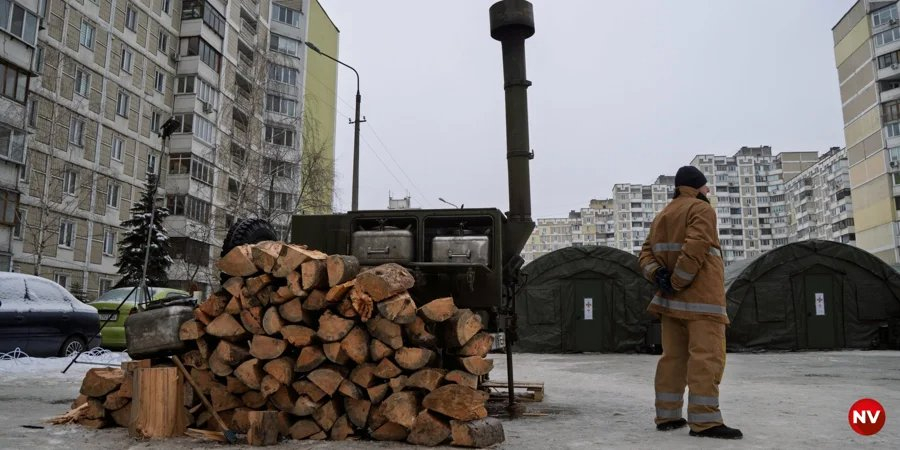
So the answer is a mix of sources to replace that Soviet-era
generation built in the 1960s, 1970s and partly in the 1980s.
First, solar and wind. Their operating costs are extremely
low — almost zero — because the sun and wind are free once the station is
built. That’s much cheaper than burning coal.
But they’re variable. They don’t produce electricity when consumers need it; they produce it when weather allows. To integrate them, we need storage systems — large industrial batteries. They let you store solar power during the day and shift it to evening, when consumption peaks.
We also need highly flexible gas generation. Not huge
centralized gas plants like before, but decentralized ones. Instead of one
1,000 MW plant, imagine 100 smaller 10 MW plants spread across the country.
This kind of generation can be deployed relatively quickly —
within about a year. These are containerized gas piston engines. They’re much
more efficient than the old large plants — roughly twice as efficient. They use
about half as much gas per unit of electricity. That’s a huge saving.
So that’s the mix: renewables, distributed storage across
Ukraine, and fast, flexible gas plants. That combination would stabilize and
balance the system, make it more resilient to Russian strikes, and replace the
part of the energy balance that has to be phased out because of attacks and
age.
— So generation needs to be decentralized?
— Exactly. We’ll keep nuclear, which is by definition
centralized. But everything else should be built as a network of relatively
small power plants and storage systems.
It’s one thing to attack 15 energy facilities. It’s another
to try to attack 500–1,000. That would require many times more drones and
missiles. Given Russia’s economic problems and massive budget deficit, scaling
production to that level would be extremely difficult.
That’s the strategic response to the energy terror Russia is
carrying out against Ukraine.
— Summer is just three months away. Consumption will
rise, and nuclear units will go offline one by one for maintenance. In a sense,
we still have to “get through” the summer. What should we expect?
— If Russia really eases off, I think we can get through the
summer without major problems. I mean we won’t see catastrophic levels of
electricity outages. There may be outages, but not as painful as in summer
2024.
The second scenario is that Russia intensifies attacks,
including with Shahed drones, which it produces in large numbers. In that case,
we could see fairly serious outages during periods of summer heat.
After the spring flood ends and water levels in the Dnipro
and Dniester rivers fall — usually after May — hydropower output drops. During
summer heat there’s simply less water. At the same time, nuclear units are in
their most active phase of fuel reloading and maintenance.
If Russia launches intensive attacks during that window, we
could face problems similar to summer 2024.
Those are the two basic summer scenarios.
But I don’t agree that there’s plenty of time before next
winter. From a household perspective, maybe. People can still buy a small
gasoline generator if they live in a private house. They can think about an
EcoFlow or other backup options. From that angle, there’s time.
From the system’s perspective, though, eight or nine months
is very little. Deploying decentralized generation takes six to 10 months. If
you count from today, we’re already running late if we want to be fully
prepared for next winter.
One of the government’s key performance indicators should be
to commission as much capacity as possible in spring, summer and fall. We need
to enter next winter with more decentralized generation in place.
And we absolutely must not repeat scandalous and completely
inexplicable actions like blocking tenders for new generation, which the Energy
Ministry under Herman Halushchenko carried out last year. Halushchenko is under
investigation and suspected of money laundering and participation in a criminal
organization. Instead, we need to continue deregulation, especially simplifying
grid connections to regional operators and Ukrenergo. That makes life easier
for investors, speeds up new capacity and attracts more investment. It costs
the state nothing and can deliver real results.
— What can realistically be done to soften the blow of
winter 2026–2027? And what are we actually doing?
— On top of the decentralized generation already operating —
which by my estimates is 600–700 MW, and by others up to 1 GW — we can
realistically add another 500–600 MW of gas piston capacity.
Solar will continue to grow. Businesses are building plants
for their own use. Households are installing rooftop solar. Energy storage —
industrial batteries — is developing actively. These systems help cover the
most difficult hours of the day, morning and evening, including in winter.
We won’t eliminate the systemic deficit before the next
heating season. But we can mitigate the impact of potential Russian attacks
next winter.
— The toughest issue is money. Economy Minister Oleksii
Sobolev says urgent needs total $1 billion — for generation capacity, mobile
substations, backups and equipment. That’s just for urgent needs. Where will
the money come from?
— For urgent rebuilding before winter, funding usually comes
from international partners. But to ensure these and even larger funds flow
into the sector, the key factor is trust from Western partners. That’s
especially important after the Mindichgate corruption scandal.
Donors need to be sure the money won’t be stolen. That means
trusting the management of energy companies and the institutions that regulate
them, including the national energy regulator.
We’re in a transitional phase. The leadership of the Energy
Ministry has changed. Supervisory boards are being reshaped. But dozens and
hundreds of officials remain — in state companies and institutions — who
cooperated with the structure created and led by Tymur Mindich, Halushchenko
and others.
Put yourself in the donors’ position. It’s hard to channel
large sums to Energoatom if even the head of the agency, who appeared on NABU
recordings, hasn’t been replaced. The same applies to Centrenergo and other
companies. And the regulator is crucial, because it sets the rules of the
market.
— Many international funds say they’re raising money for
Ukraine’s energy sector. Are you satisfied with how that money is being used,
and where can we see results?
— For urgent damage repair, I’d rate it 3+/4-.
For longer-term needs — protective structures at plants and
substations, or stimulating decentralized generation — until recently I would
have rated the government’s work as unsatisfactory.
That said, there are signs of cautious optimism after Denys
Shmyhal became energy minister. I hear from companies and industry
representatives that things are gradually improving. I also hear that the State
Agency for Restoration and Infrastructure Development under Serhii Sukhomlyn is
handling protection of energy facilities more effectively. That’s encouraging.
From my perspective, building decentralized generation, in
recent weeks there’s been clear interest from the Energy Ministry, the Economy
Ministry and the government in encouraging investment. There’s also a push for
further deregulation to speed up the process. So there is some positive
momentum.
— In summer 2025 you and Dragon Capital founded Power
One, focused on distributed generation — batteries and gas piston plants. You
planned to reach 60 MW in the first stage and then 150 MW in 2026. Have you met
those targets?
— We’ve built several facilities, though total capacity is
somewhat lower than that initial milestone. The 60 MW target was for the first
phase, which runs until mid-2026, not the end of 2025.
We’ve already commissioned our first gas piston plants.
We’re connected to the grid. It took us eight months to build the first
capacity from scratch.
We secured a loan from the European Bank for Reconstruction
and Development to complete the first phase of about 67 MW. We received the
first tranche at the end of last year and are using it to finish that phase. We
expect to complete it in summer.
Plans for this year remain unchanged. We aim to raise more
capital to build additional balancing capacity so the system can cover daily
peaks — morning and evening.
The project is moving actively. Initial electricity sales
show solid economic results.
— How easy is it to scale this in Ukraine?
— From a procedural standpoint, it’s actually easier now in
Ukraine than in Europe.
There are two main challenges. First, debt capital. There
isn’t enough available domestically. If you want to build a large portfolio —
hundreds of megawatts — you need to work with international financial
institutions like the European Bank for Reconstruction and Development, the
European Investment Bank and others.
Second, there’s a paradox. Physically, we have a capacity
deficit. On paper, though, there are many grid connection permits for
facilities that were never built.
A key regulatory change would be to revise how regional
operators and Ukrenergo calculate network capacity. When issuing connection
permits, they shouldn’t assume the worst-case theoretical scenario where all
possible generation at a node runs simultaneously. That situation exists only
on paper.
In practice, those conservative assumptions create barriers
to connecting urgently needed generation and storage.
Together with other investors, we’ll likely propose changes to
improve and optimize this process. It would cost the state nothing — no
subsidies are needed. It’s simply a more realistic way to calculate network
capacity. That would open up many more opportunities to connect new power
plants to the system.
The military war may be swinging in our favor, but the information war continues.
Just as an army needs soldiers, so does a free society need its journalists to ensure that people have access to honest, trustworthy voices to understand the world around them.
For the past five years, The New Voice of Ukraine has been working tirelessly to push back against Russian narratives and defend democracy. But we cannot do it alone.
Please consider supporting us on Patreon for just $5 a month – your donation does directly to supporting journalists and ensuring that this front of the infowar says solid and defended.
Thank you.
Follow us on Twitter, Facebook and Google News
