

China lures Russian Far East businesses with lower taxes, 3% loans
 Read NV on Google
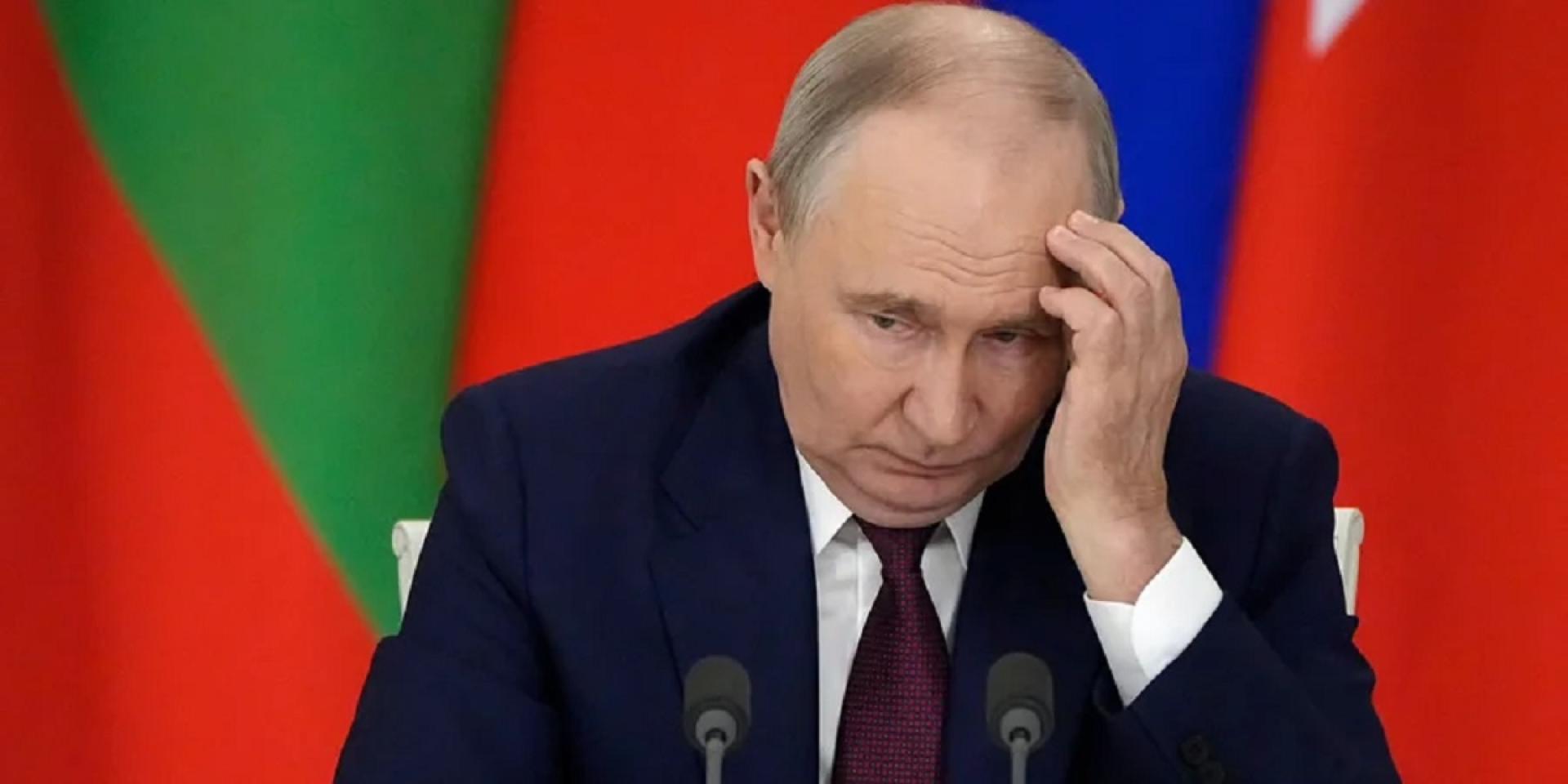
Russian dictator Vladimir Putin (Photo: Alexander Zemlianichenko/Pool via REUTERS)
Companies operating in Russia’s Far Eastern Federal District
have begun registering in China because of high taxes and expensive credit. Alexander
Kalinin, head of the Opora Rossii business organization, described the trend in
a report by The
Moscow Times.
“Our Chinese friends are already luring Far Eastern
companies to re-register in Chinese industrial and technology parks — roughly
speaking, on the other side of the river,” Kalinin said on the sidelines of the
Eastern Economic Forum. Russia and China are separated there by the Amur River.
Kalinin said Chinese partners are offering Russian
businesses lower taxes, loans at 3% and grants for capital expenditures.
Business Solutions and Technologies, or DRT, formerly Deloitte in Russia,
confirmed that companies are interested in relocating operations to China.
About 3,800 entities with Russian participation currently operate in China.
Most are importers; manufacturers of electronics, equipment, consumer goods and
auto components; and light-industry companies. China’s VAT rate on most goods
is significantly lower than Russia’s — 13% compared with 22% — while small
businesses qualify for a reduced 3% rate. Companies can also access cheap
financing unavailable in Russia because of its high benchmark interest rate.
Transactions with Russia remain difficult, however, because
banks’ requirements for such payments constantly change, while some lenders may
restrict transactions depending on the counterparties, goods involved and
payment structure, Khobrakova said. All transactions involving foreign
participants in China are subject to bank and foreign exchange controls.
Russian contract and foreign exchange laws also pose
obstacles to transferring assets to China, said Tatyana Kofanova, a partner in
DRT’s tax and legal department. She added that Russian companies operating in
China must comply with sanctions compliance requirements to avoid the risk of
secondary sanctions.
It was previously reported that Russia’s oil and gas
revenues in 2025 fell to their lowest level since the coronavirus pandemic.
Russia’s budget could face a significant deficit as early as
the beginning of 2026 because of a shortfall in oil and gas revenues, the
Russian government has acknowledged.
Ukrainian intelligence said the financial condition of
Russia’s medium and large businesses continued to deteriorate, reflecting
growing imbalances in the corporate sector.
More than half of Russia’s large companies ended 2025 with
lower profits, cut or completely froze investment projects, and many were
preparing to lay off employees.
On Feb. 24, 2026, it emerged that about 300 companies in
Russia were preparing to close.
For the first time, 74 Russian regions simultaneously fell
into severe financial distress.
Russia saw a wave of mass business closures.
Russia’s Finance Ministry acknowledged that the hole in
Russia’s treasury was widening at a record pace.
Russia’s state statistics agency Rosstat acknowledged that more
than 17,000 Russian businesses reported losses.
On April 3, 2026, it emerged that 22 Russian industries had
fallen deep into the red.
The military war may be swinging in our favor, but the information war continues.
Just as an army needs soldiers, so does a free society need its journalists to ensure that people have access to honest, trustworthy voices to understand the world around them.
For the past five years, The New Voice of Ukraine has been working tirelessly to push back against Russian narratives and defend democracy. But we cannot do it alone.
Please consider supporting us on Patreon for just $5 a month – your donation does directly to supporting journalists and ensuring that this front of the infowar says solid and defended.
Thank you.
Follow us on Twitter, Facebook and Google News
