

Ukraine’s groundbreaking defense tech reshapes modern warfare
Ukraine’s defense technology sector has developed a wide range of capabilities, particularly in ground robotic complexes (GRCs), positioning itself as a leader over Russia in this field. However, scaling up production remains a crucial challenge.
“We can't outmatch the enemy in sheer numbers or in their ruthlessness. So, innovation is our lifeline. If we lose the technology race, it's game over for us,” said Senior Lieutenant Oleksandr Yabchanka, commander of the Honor Company, part of Ukraine’s Da Vinci Wolves Battalion, in an interview with NV Business. “Our technological edge allows us to keep up with the pace of war forced upon us by the enemy.”
Ground robotics to enhance soldier safety
Ground robotic complexes, or GRCs, are modular and adaptable across a wide array of battlefield functions, from logistics and evacuation to mine clearance, surveillance, and fire support. These systems aim to reduce human presence on the frontlines, enhancing soldier safety. However, GRCs are not fully autonomous replacements for human fighters.
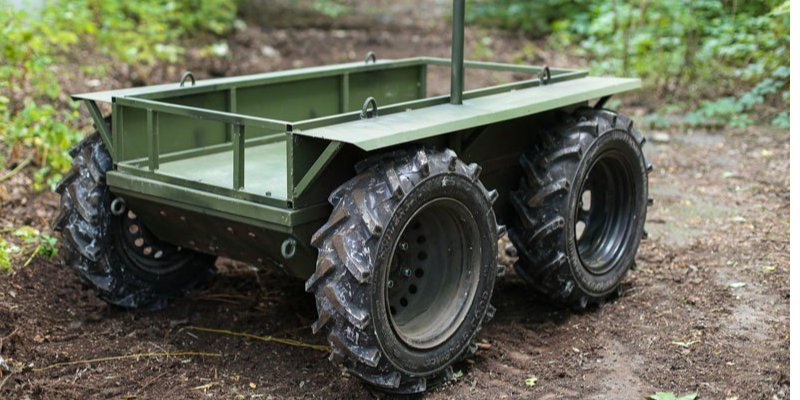
“For instance, if we deploy a turret 50 meters from the machine gunner, that gunner’s risk is lower. But the turret still needs a gunner nearby for maintenance,” Yabchanka explained. “This technology doesn’t provide absolute protection but does reduce risks.”
GRCs are particularly valuable in logistics, allowing Ukrainian forces to transport supplies remotely, reducing physical strain and exposure to enemy fire. “If a drone spots a robot, we lose gear—not people,” Yabchanka noted. “This is crucial when moving supplies for 3-4 days on dangerous routes.”
Evacuation is another vital application, though less common due to risks. Yabchanka recounted how GRCs played a key role in rescuing a group of injured soldiers. “With GRC support, we managed seven trips under fire to save our men,” he recalled.
Pioneers in Ukraine’s robotics industry
Ukraine’s Brave1 platform has registered over 160 developers producing more than 250 GRC designs, with over 30 certified to NATO standards, qualifying them for government orders and future export. Ukrainian defense companies like FRDM, MOROZ, and TENCORE are pioneering these advancements.
FRDM
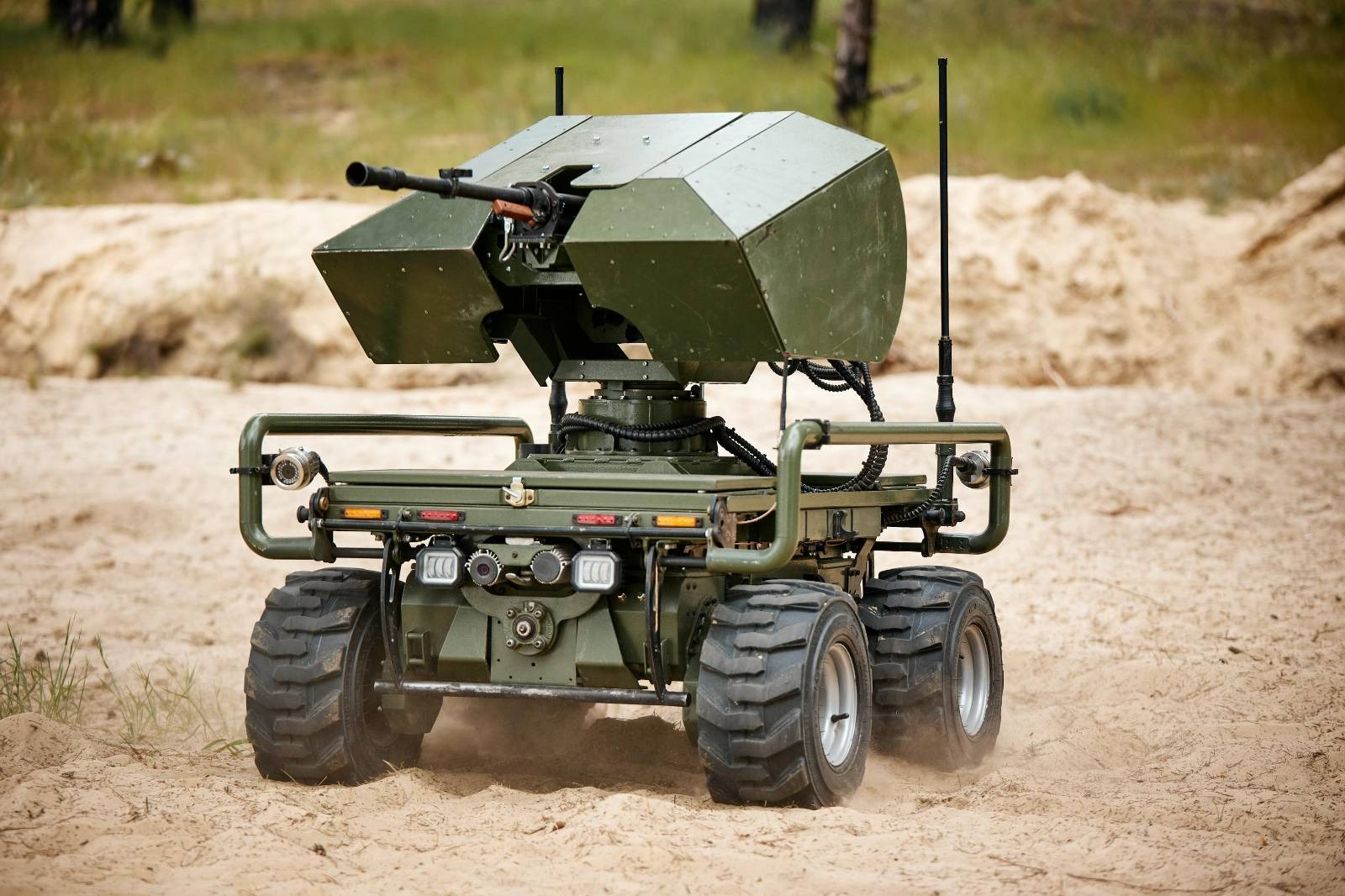
Founded in 2017, FRDM designs GRCs for battlefield logistics, surveillance, and evacuation. Many models also support strike capabilities, operating against personnel, light armor, and drones at low altitudes. FRDM’s product line includes drones and stationary turrets.
MOROZ
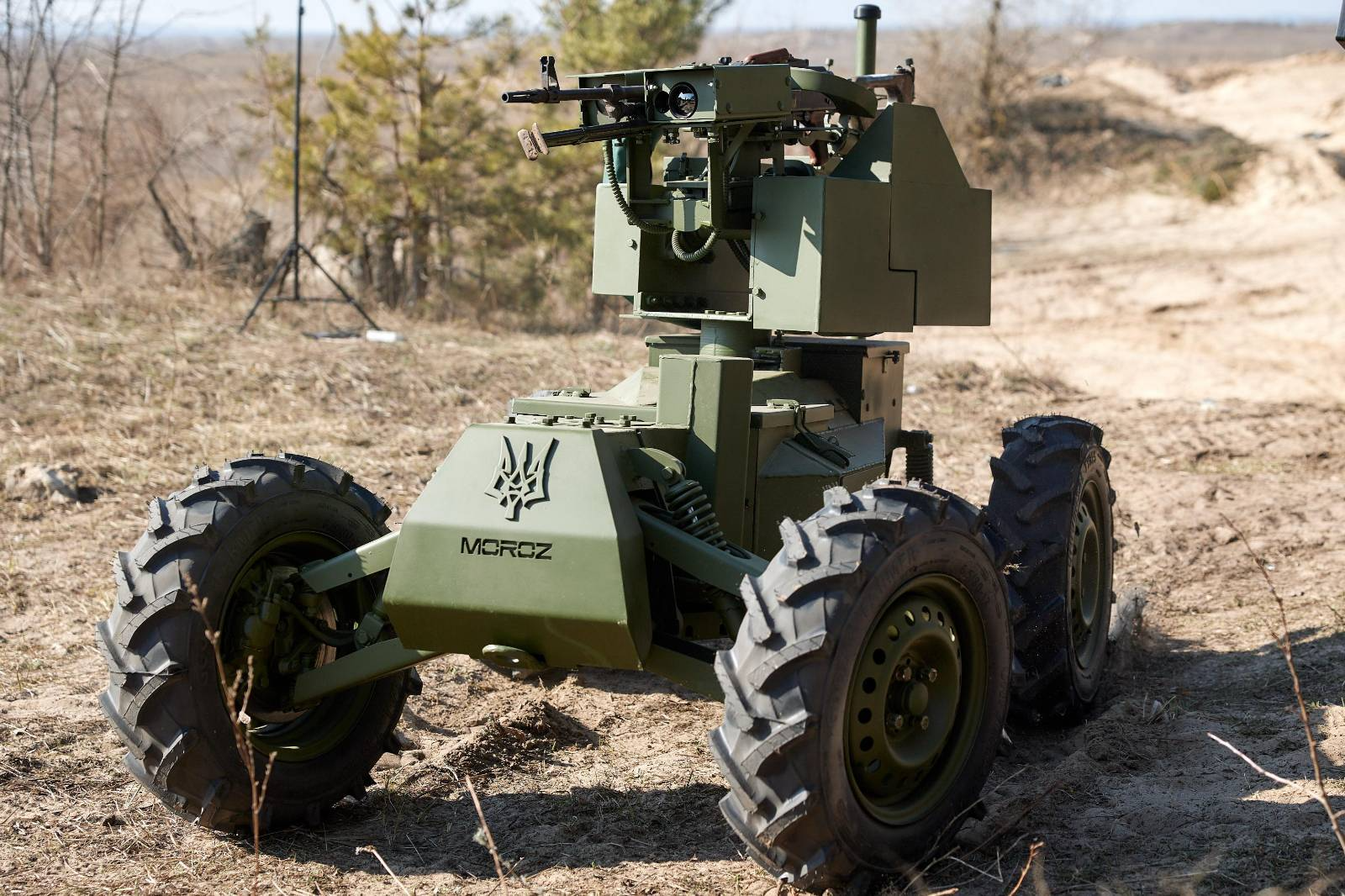
Initially focused on agricultural tech, MOROZ shifted to defense to fill demand for electric-powered combat drones. With successful testing of a reconnaissance-strike GRC, MOROZ has secured government contracts and is developing an advanced combat drone for heavy firepower.
TENCORE
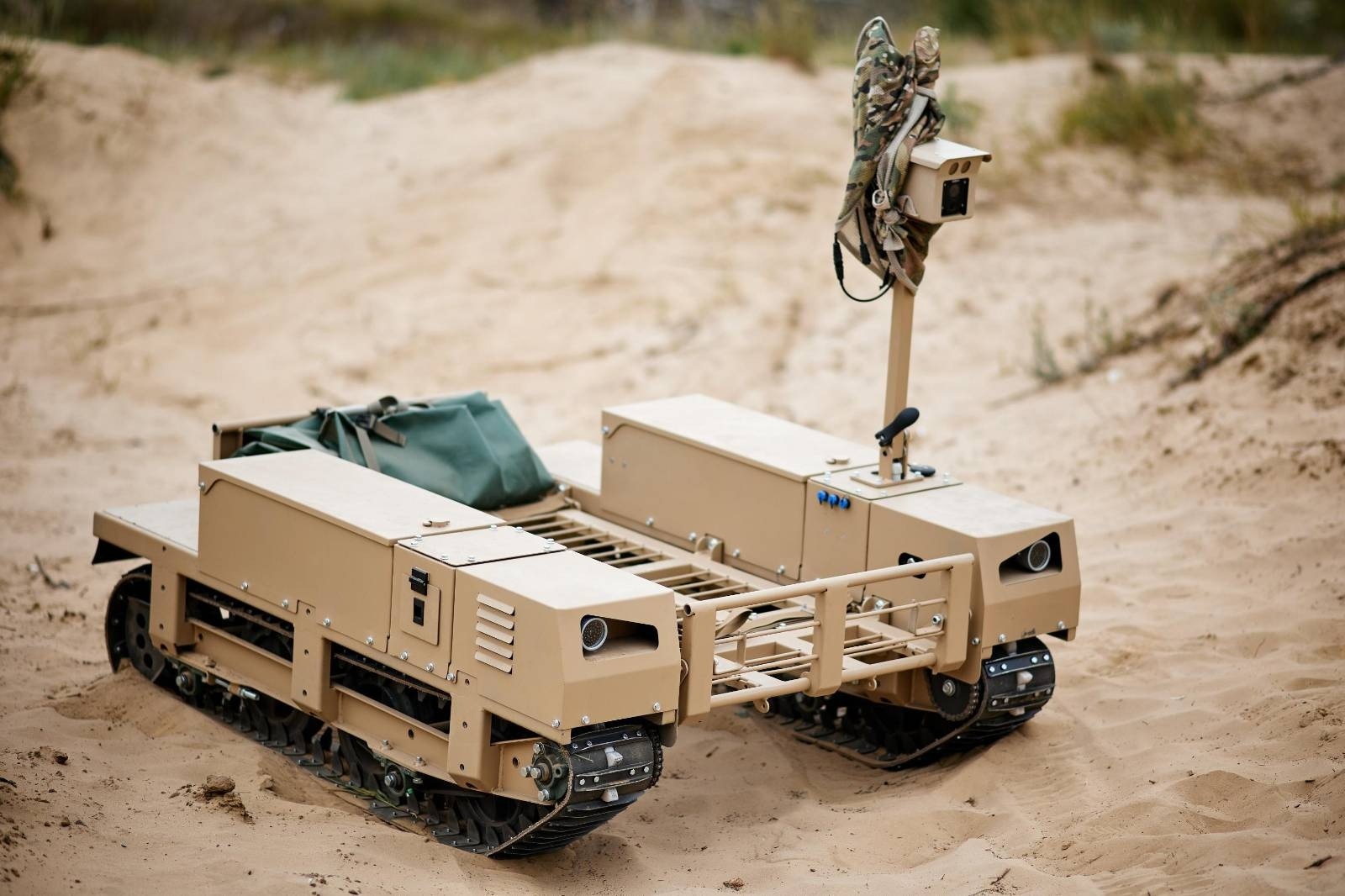
Formed in early 2024, TENCORE specializes in modular evacuation platforms that transport supplies and wounded soldiers and can be fitted with combat modules like turrets or mine-clearance attachments. TENCORE’s GRCs range from €7,500 to €30,000, significantly undercutting European equivalents.
Facing challenges and future potential

Despite progress, the Ukrainian defense tech industry faces obstacles. “We rarely see partner nations’ GRCs at the front,” Yabchanka explained, noting that these systems often don’t perform as well under combat conditions compared to field testing. Ukraine’s GRC developers are working closely with the military to refine designs for real-world conditions, often providing prototypes and repairs free of charge.
In contrast, Russia’s approach relies heavily on "disposable" infantry rather than sophisticated robotics. “Russia mirrors our innovations and scales them rapidly due to its vast resources,” Yabchanka said. For Ukraine to maintain its edge, government support will be essential in advancing and scaling up GRC production.
“Right now, we’re ahead in ground robotics, and I hope Russia won’t catch up by flooding the front with costly tech. But it’s also about mastering how to use this technology in combat,” Yabchanka concluded.
The military war may be swinging in our favor, but the information war continues.
Just as an army needs soldiers, so does a free society need its journalists to ensure that people have access to honest, trustworthy voices to understand the world around them.
For the past five years, The New Voice of Ukraine has been working tirelessly to push back against Russian narratives and defend democracy. But we cannot do it alone.
Please consider supporting us on Patreon for just $5 a month – your donation does directly to supporting journalists and ensuring that this front of the infowar says solid and defended.
Thank you.
Follow us on Twitter, Facebook and Google News
