

Ukraine releases list of landmarks affected by Russian destruction of Kakhovka Dam
 Read NV on Google
The State Tourism Development Agency of Ukraine has released a list of at-risk landmarks and heritage zones in flooded areas, following the Russian destruction of the Kakhovka Dam and hydroelectric plant (HPP), in a Facebook post on June 6.
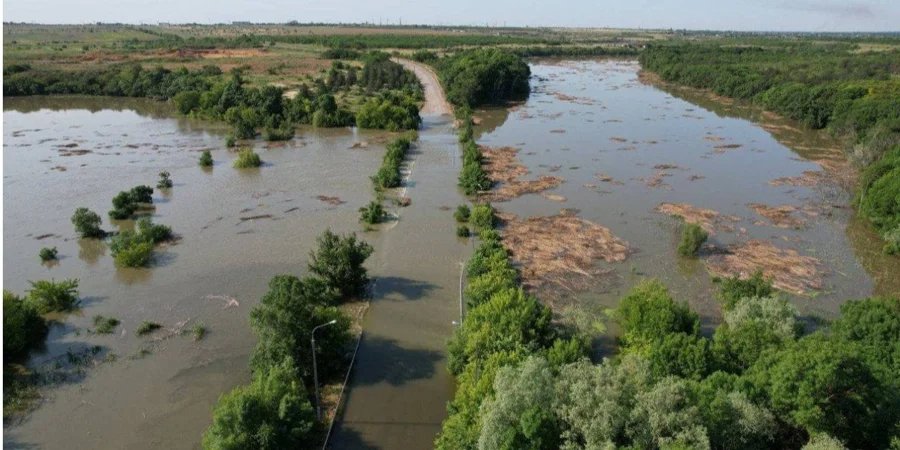
The dam’s explosion has caused a significant ecological and man-made catastrophe, the full extent of which is yet to be understood. In addition, cultural and historical landmarks, as well as tourist and recreational areas, have been submerged in the affected zones.
The majority of these landmarks are situated on the left bank of Kherson Oblast, which is currently under Russian occupation. As of the evening of June 6, 10 settlements on the right bank – Mykolaivka, Olhivka, Lvove, Tyahynka, Ivanivka, Tokarivka, Ponyativka, Prydniprovsk, Sadove, and partially the city of Kherson – have been fully or partially submerged.
“It is estimated that 80% of the territory of the Nyzhnedniprovskyi National Nature Park, renowned among national and European biologists for its rare floodplain forests, swamps, and sandy steppes, may be submerged,” the agency said.
“This unique European ecosystem is likely to be irreversibly destroyed.”
Additionally, the Ostap Vyshnia House-Museum in the village of Krynky, Oleshkivskyi district, has been submerged, and the Oleksiy Shovkunenko Kherson Art Museum is located within the affected zone.
Meanwhile, the ancient Kyiv Rus port city of Oleshnia, a significant archaeological site in Kherson Oblast situated on the island of Velykyi Potiomkin, approximately 12 kilometers downstream from the center of Kherson, is under threat of submersion.
The Ochakiv Gate, part of Kherson’s defensive fortifications built in 1783 and considered a national architectural treasure, and the Zeleni Khutory Tavriyi complex, established on the sites of ancient homesteads, are also at risk, the agency writes. The Zeleni Khutory Tavriyi complex was home to an authentic museum depicting Ukrainian rural life from the 15th to the 20th centuries, as well as saline pink lakes.
The village of Tyahynka, where archaeological excavations and the discovery of Bronze Age and Scythian settlements, as well as a medieval fortress, are located, is also likely to be submerged, resulting in the loss of unique historical findings.
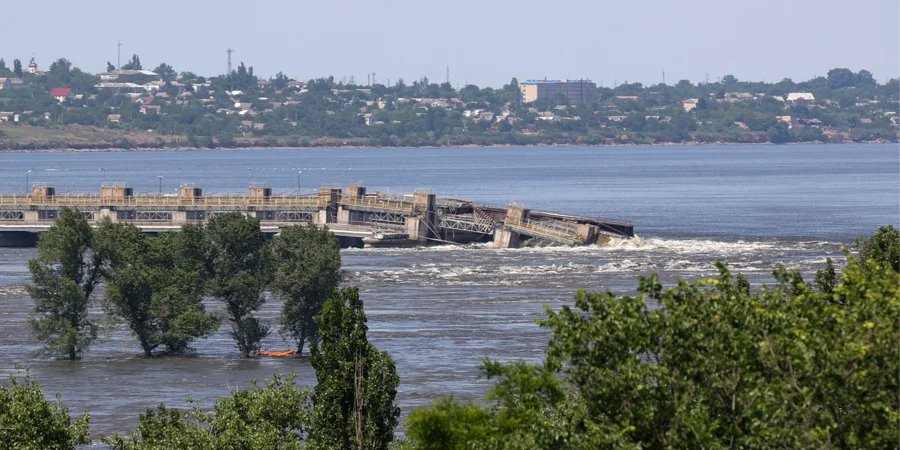
The Kinburn Spit, located within the territory of the Black Sea Biosphere Reserve, a UNESCO-protected area with over a century of nature conservation traditions, is also facing partial flooding from the disaster. This location, home to over a hundred species of birds and more than seven hundred rare plant species, risks losing a portion of its unique flora and fauna.
The military war may be swinging in our favor, but the information war continues.
Just as an army needs soldiers, so does a free society need its journalists to ensure that people have access to honest, trustworthy voices to understand the world around them.
For the past five years, The New Voice of Ukraine has been working tirelessly to push back against Russian narratives and defend democracy. But we cannot do it alone.
Please consider supporting us on Patreon for just $5 a month – your donation does directly to supporting journalists and ensuring that this front of the infowar says solid and defended.
Thank you.
Follow us on Twitter, Facebook and Google News
