

Ukrainian documentary Divia wins major prize at Paris film festival
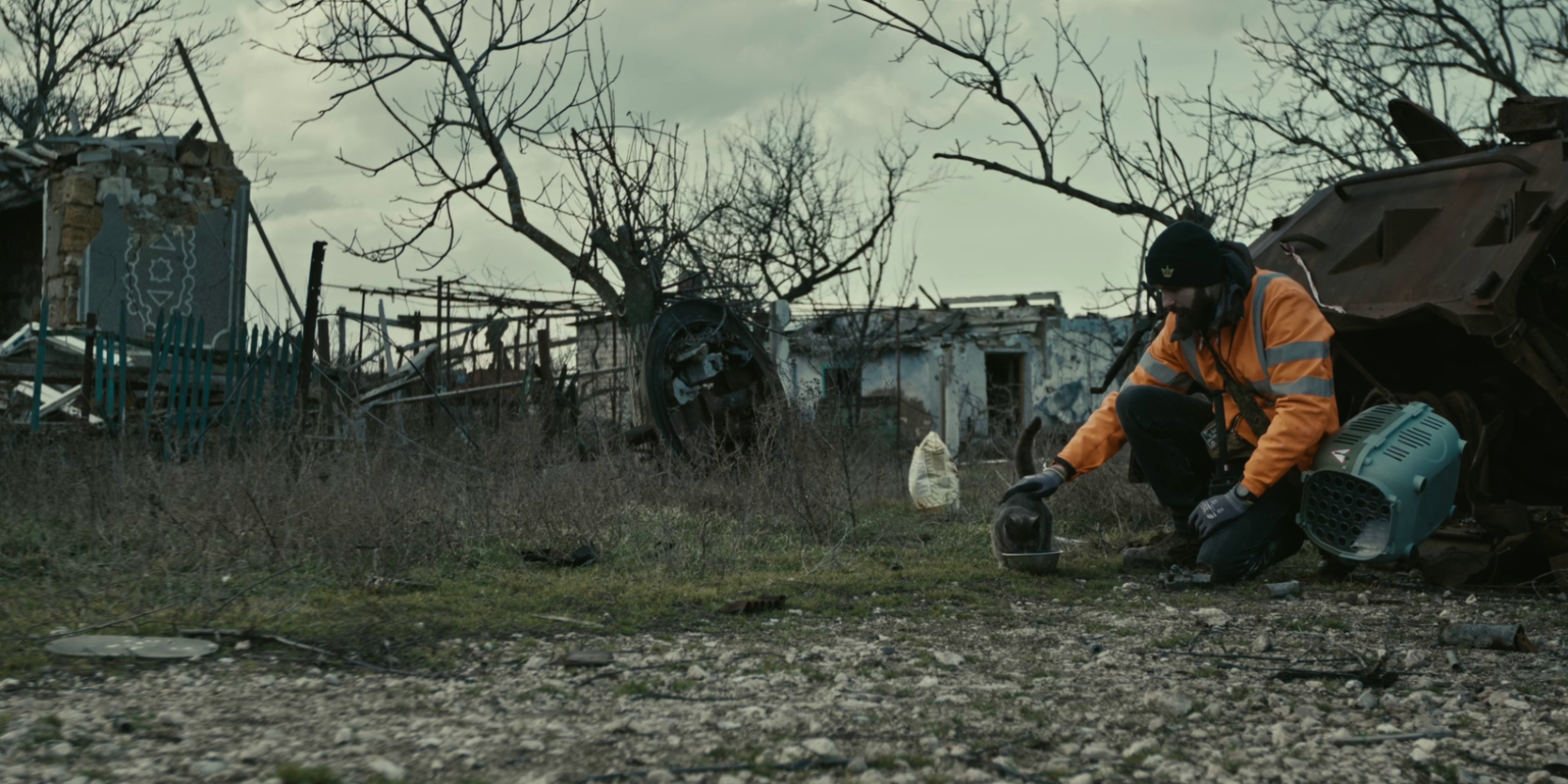
A frame from the film Divia about Ukrainian land during a full-scale invasion (Photo: Courtesy of the film crew)
The documentary Divia by Ukrainian director Dmytro Hreshko won the Research Laboratories Prize at the 45th Jean Rouch International Film Festival in Paris, an award presented with the support of the festival’s partner research laboratories.
In their statement, members of the festival’s research laboratories jury said: “We wanted to recognize the originality and radical nature of this 70-minute film, devoid of dialogue and almost entirely absent of human presence, filmed by drone — itself also a weapon of war.
“This experimental work with image and sound, built around the reality of war, creates an apocalyptic allegory. It opens access to sensory experiences, making palpable the wounds inflicted on the land by human instruments of destruction. The film’s unique cinematic treatment creates a striking blurring of boundaries between the living and nonliving worlds. The director offers a new perspective on war, perceived from the point of view of nature, portrayed organically and profoundly.”

The film was presented at the festival by producer Hlib Lukianets.
About the Jean Rouch Festival
The Jean Rouch International Film Festival has been organized since 1982 by the Ethnographic Film Committee, a nonprofit charitable organization based in Paris.
According to the festival, its programming committee aims to support filmmakers with a strong cinematic approach and films offering a personal and unique view of the contemporary world.

In addition to the international competition, the festival hosts thematic programs dedicated to cinematic heritage and contemporary documentary filmmaking. Tributes to documentary masters, retrospectives, master classes, screenings for schoolchildren, workshops and meetings for researchers and filmmakers are organized at venues across Paris.
About Divia by Dmytro Hreshko
Divia is a journey through Ukrainian land and a portrait of the country before and during Russia’s full-scale invasion. The film features scenes of destruction and recovery, where nature continues striving to heal even amid war.

“Without dialogue or voice-over narration, the film unfolds like a metaphysical symphony: landscapes silently testify to destruction — and to quiet, persistent resilience. Sound here is not a background element but a character itself. The camera follows burned forests, craters in fields and rusting skeletons of military vehicles. Each image is an imprint of violence carved into the soil.
“Yet even under these conditions, nature does not stop. The seasons return. Grass grows through scorched earth. Regeneration begins — slowly but relentlessly,” the film’s team said.
The people appearing in the film include deminers, ecologists, animal rescue volunteers and body recovery workers striving to save lives and bring people home.

The film was produced by Polina Herman and Hlib Lukianets. The documentary is a Polish-Ukrainian-Dutch co-production made by Gogol Film and UP UA STUDIO. Dutch producer Richard Valk of Valk Productions also served as co-producer. International promotion was supported by the Ukrainian Institute and Eurimages.
The military war may be swinging in our favor, but the information war continues.
Just as an army needs soldiers, so does a free society need its journalists to ensure that people have access to honest, trustworthy voices to understand the world around them.
For the past five years, The New Voice of Ukraine has been working tirelessly to push back against Russian narratives and defend democracy. But we cannot do it alone.
Please consider supporting us on Patreon for just $5 a month – your donation does directly to supporting journalists and ensuring that this front of the infowar says solid and defended.
Thank you.
Follow us on Twitter, Facebook and Google News
