

Belgium rejects renewed calls to use frozen Russian assets to fund Ukraine
 Read NV on Google
Belgium opposes using frozen Russian assets to support Ukraine (Photo: wikimedia)
Belgium firmly opposes using frozen Russian
assets to support Ukraine, Belgian Defense Minister Theo Francken said,
according to Euractiv.
“This is non-negotiable, the door is closed. Our prime
minister will stand his ground,” Francken said.
He said Belgium’s opposition had sparked outrage. Francken
singled out the Baltic states — the strongest supporters of a reparations loan
— for refusing to abandon the idea.
“They should also be careful about constantly bringing this
issue up again and putting us in a corner. I don’t think that is wise,”
Francken said.
The defense minister stressed that Lithuania, Latvia and
Estonia receive significant support from Belgium.
Use of frozen Russian assets — key facts
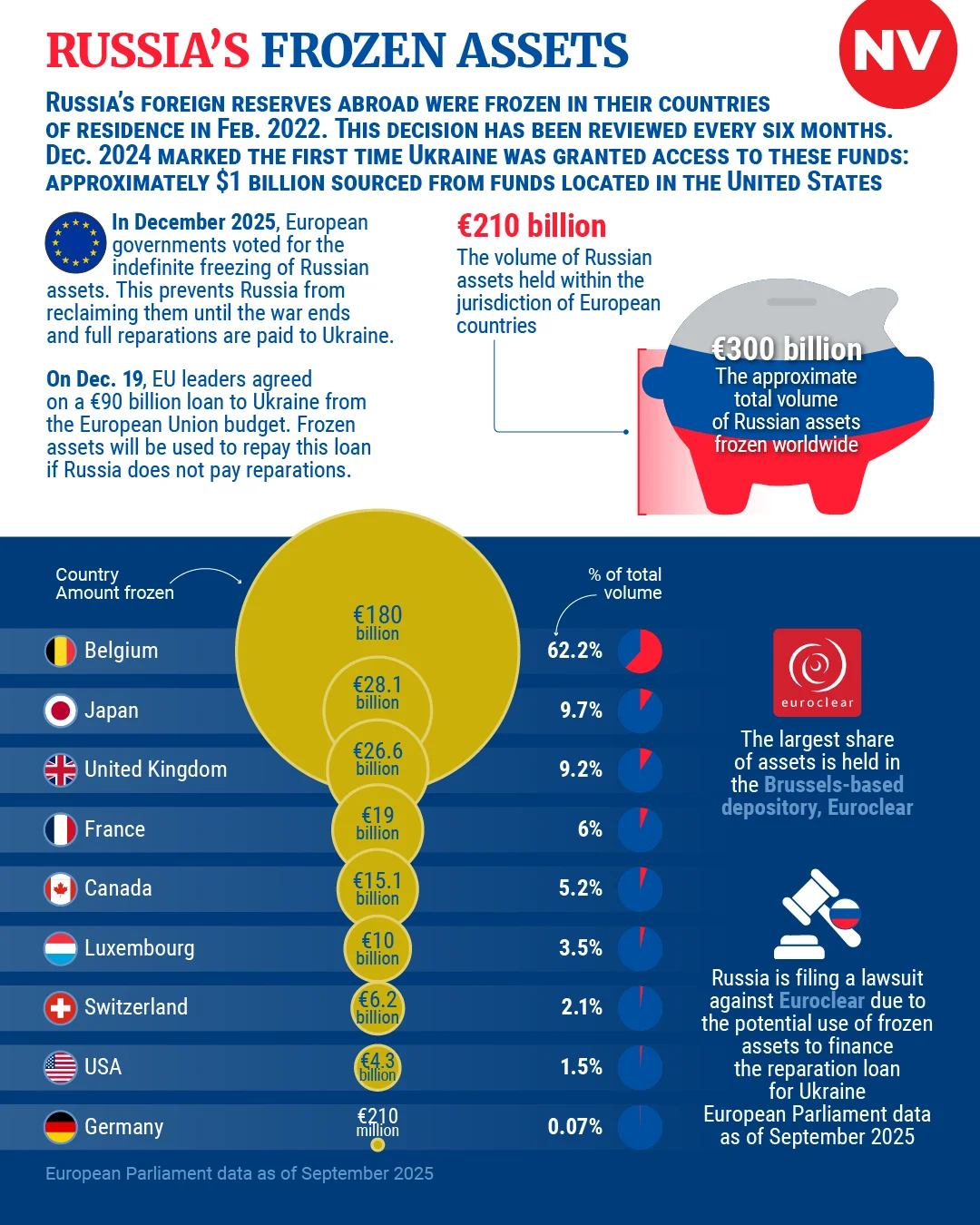
On Dec. 19, 2025, European Commission President Ursula von
der Leyen explained that Ukraine would be financed for the next two years
through EU borrowing on capital markets. Kyiv would repay the 90 billion euro
debt only after Russia pays reparations, while Russian assets in Europe would
remain frozen until then. Belgian Prime Minister Bart De Wever opposed a direct
reparations loan, while securities depository Euroclear threatened legal action
against the EU if the funds were transferred to Ukraine.
The United Kingdom then declined to use its 8 billion in
frozen Russian assets on its own to help Ukraine. The Financial Times reported
that French President Emmanuel Macron had effectively killed the EU proposal to
use 210 billion euros by siding with opponents of the plan at a decisive
moment.
On Feb. 26, 2026, German Foreign Minister Johann Wadephul
said the EU would no longer consider transferring the assets to Ukraine. A
European Commission spokesperson said a few days later that the Commission’s
position differed significantly from Wadephul’s statement.
On March 31, EU foreign policy chief Kaja Kallas announced
that the European Union would provide Ukraine with 80 million euros from income
generated by the frozen assets — not the assets themselves.
On Aug. 8, former senior officials from Germany, France and
the United States called on the EU to urgently take control of frozen Russian
central bank assets.
On Aug. 27, the Financial Times reported that Sweden, the
Netherlands, Spain and Poland had urged Brussels to reopen talks on using
frozen Russian assets to finance Ukraine.
The military war may be swinging in our favor, but the information war continues.
Just as an army needs soldiers, so does a free society need its journalists to ensure that people have access to honest, trustworthy voices to understand the world around them.
For the past five years, The New Voice of Ukraine has been working tirelessly to push back against Russian narratives and defend democracy. But we cannot do it alone.
Please consider supporting us on Patreon for just $5 a month – your donation does directly to supporting journalists and ensuring that this front of the infowar says solid and defended.
Thank you.
Follow us on Twitter, Facebook and Google News
