

Estonian foreign minister warns of potential return to ‘Era of Empires’ if UN fails to curb Russia's veto abuse
If trust in the currently impotent international system is not restored, the world may return to an "age of empires" in which "might makes right," Estonian Foreign Minister Margus Tsahkna wrote in an article for UK newspaper The Guardian on Dec. 20.
"With confidence (in international institutions - ed.) rapidly fading, the entire system risks collapse," the diplomat said.
“That would mean the return to an age of empires in which ‘might makes right’, and everyone suffers.”
Tsahkna said that the rules-based international system "needs urgent and fundamental change" if it is not to collapse, and called for a "new global conversation" on how to reform the UN and the International Criminal Court.
Russia's invasion of Ukraine has highlighted flaws in the system that risk fatally undermining people's faith in it, Tsahkna said.
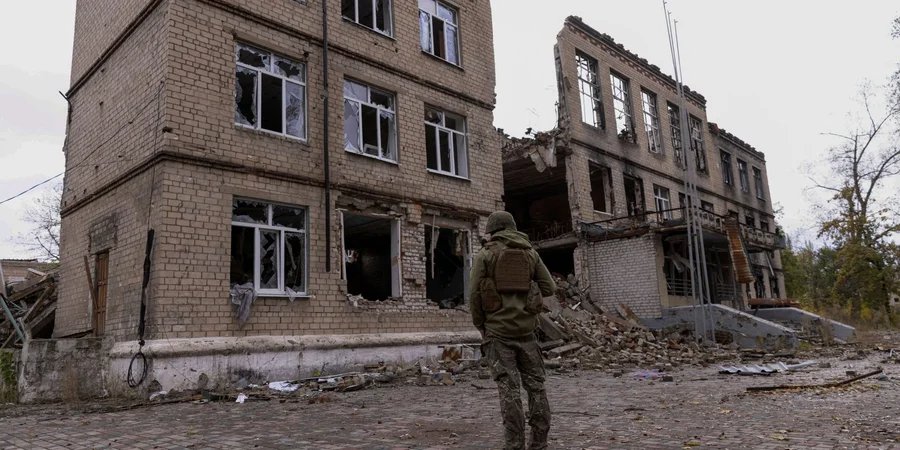
The Estonian foreign minister called on the UN Security Council to invite "additional permanent members to better reflect our modern world" and to take measures to suspend the membership of those countries that abuse their veto power.
Estonia believes that Russia's use of the veto during the war in Ukraine has "revived global interest" in reforming the UN, which has been stalled for decades due to the lack of consensus on the way forward and the threat of using the veto to block any changes.
"Russia’s ongoing and barbaric war of aggression against Ukraine did not just break the system," Tsahkna wrote.
“It exploited some of its many flaws to degrade its apparently unenforceable norms and values. If that continues, we will all eventually lose interest in saving the system.”
Tsahkna said that reaching an agreement on the need for reforms will, however, not be "easy."
The official also called for a revision of the ICC's founding Rome Statute to ensure accountability for the crime of aggression and noted that such an initiative should be taken immediately by the General Assembly by creating a special tribunal.
Russia, as a permanent member of the UN Security Council, has consistently abused its veto. Since 2014, all draft resolutions in the UN Security Council on Russia's aggression against Ukraine have been blocked due to Russia's abuse of the veto.
Since 2011, Russia has also used its veto power 17 times to block Security Council decisions to protect the Syrian people.
Russia was also the only country to veto a Security Council resolution calling for an end to Russia's full-scale invasion of Ukraine.
Ukrainian President Volodymyr Zelenskyy criticized the organization during a UN Security Council meeting on Sept. 23, saying that it was Russia's veto that had brought the UN to a standstill, and that the aggressor state was using its veto to the detriment of all other members of the organization.
He called for reforming the UN and noted that a key reform could be the use of the veto, which should not "serve as a weapon for those who are obsessed with hatred and war."
The military war may be swinging in our favor, but the information war continues.
Just as an army needs soldiers, so does a free society need its journalists to ensure that people have access to honest, trustworthy voices to understand the world around them.
For the past five years, The New Voice of Ukraine has been working tirelessly to push back against Russian narratives and defend democracy. But we cannot do it alone.
Please consider supporting us on Patreon for just $5 a month – your donation does directly to supporting journalists and ensuring that this front of the infowar says solid and defended.
Thank you.
Follow us on Twitter, Facebook and Google News
