

Far-right Polish politician damages UPA monument and posts video
 Read NV on Google
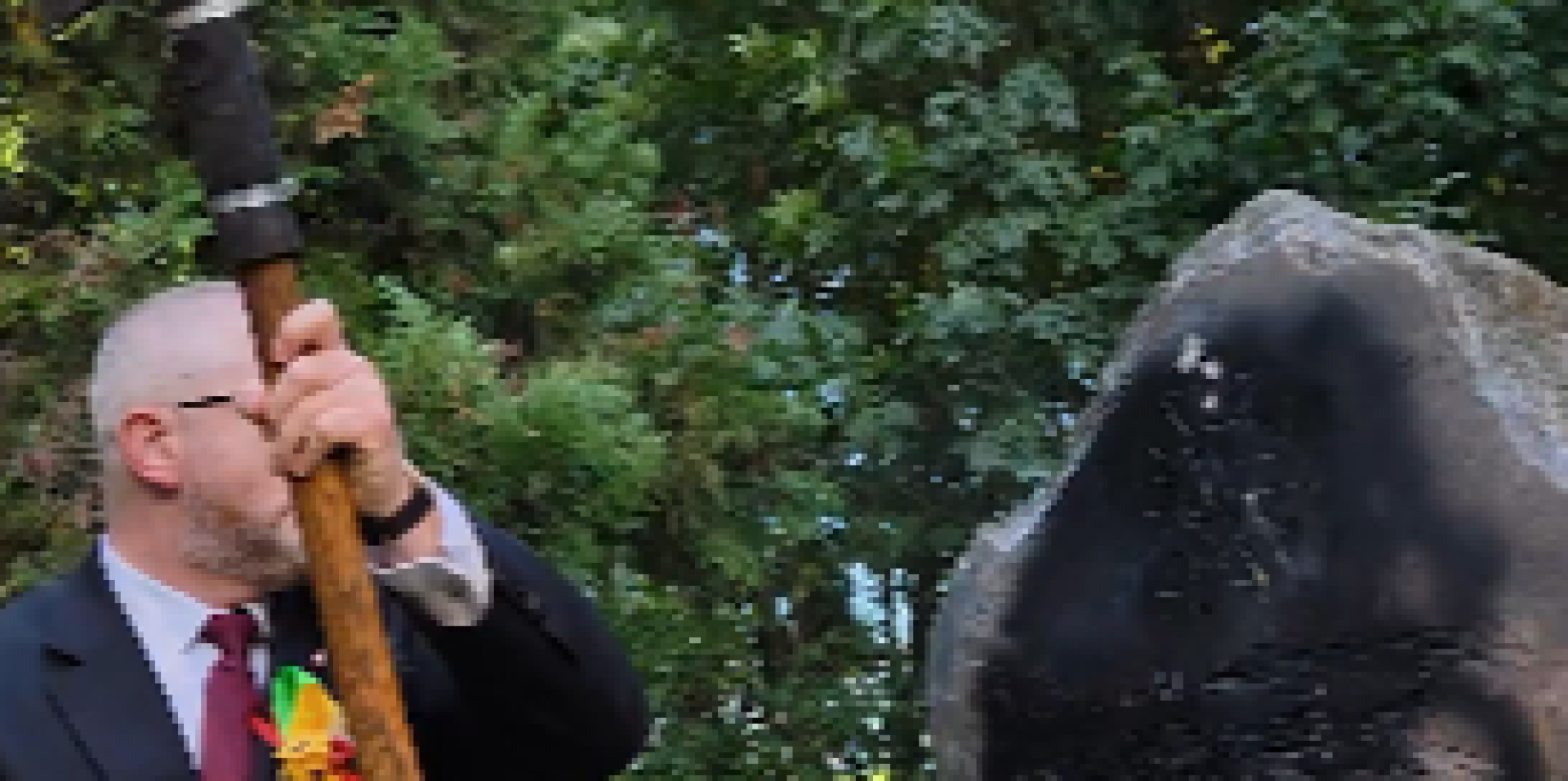
Grzegorz Braun damaged a monument to the UPA in the Polish village of Białystok. (Photo: Grzegorz Braun / X)
Grzegorz Braun, leader of the far-right Confederation of the
Polish Crown party, damaged a monument to the Ukrainian Insurgent Army, or UPA,
in the Polish village of Białystok.
Braun posted a video of the incident on social media.
He claimed the monument should be dismantled.
The video shows Braun using a hammer to smash the names of
Ukrainians carved into the stone.
The granite obelisk commemorates Ukrainians killed in
battles against the Soviet NKVD. It stands in the village of Białystok in the
Dołhobyczów commune of Hrubieszów County, where the Ukrainians who died were
buried in 1946.
The report notes that the monument stands directly at the
site of the mass grave. The memorial site has existed since the 1990s and has
been in its current form — a stone engraved with the names of the dead — since
2019.
The obelisk has been vandalized several times. In 2026, it
was defaced with spray paint, and an arch decorating the stone was cut away.
The Ukrainian Embassy formally condemned the vandalism at the time.
Escalating tensions between Ukraine and Poland
On June 19, Polish President Karol Nawrocki stripped
Ukrainian President Volodymyr Zelenskyy of Poland’s highest state decoration,
the Order of the White Eagle. Nawrocki said naming one of Ukraine’s military
units in honor of UPA heroes “goes far beyond Ukraine’s internal affairs.”
On June 20, several Ukrainian politicians, including
Ukraine’s presidential chief of staff Kyrylo Budanov; Leonid Kuchma, Ukraine’s
president from 1994 to 2005; Viktor Yushchenko, president from 2005 to 2010;
and Petro Poroshenko, president from 2014 to 2019, announced that they were
giving up their Polish awards.
The same day, Zelenskyy said he had sent the Order of the
White Eagle back to the Polish president, posting photos from Nova Poshta.
Zelenskyy had been scheduled to attend the Ukraine Recovery
Conference in Gdańsk but decided not to go. The delegation was led by Yulia
Svyrydenko, who at the time served as prime minister.
On July 3, Ukrainian Foreign Minister Andrii Sybiha met with
his Polish counterpart Radosław Sikorski and proposed a package of
crisis-response measures, including a meeting of expert historians on World War
II.
On July 8, Zelenskyy met with Nawrocki at the NATO summit in
Ankara. Zelenskyy said Russia was a common threat to both countries, and the
two sides agreed to continue their dialogue. Nawrocki said they had failed to
resolve their historical disputes, although the conversation was constructive,
and repeated that “symbols associated with Stepan Bandera limit Ukraine’s
European ambitions.”
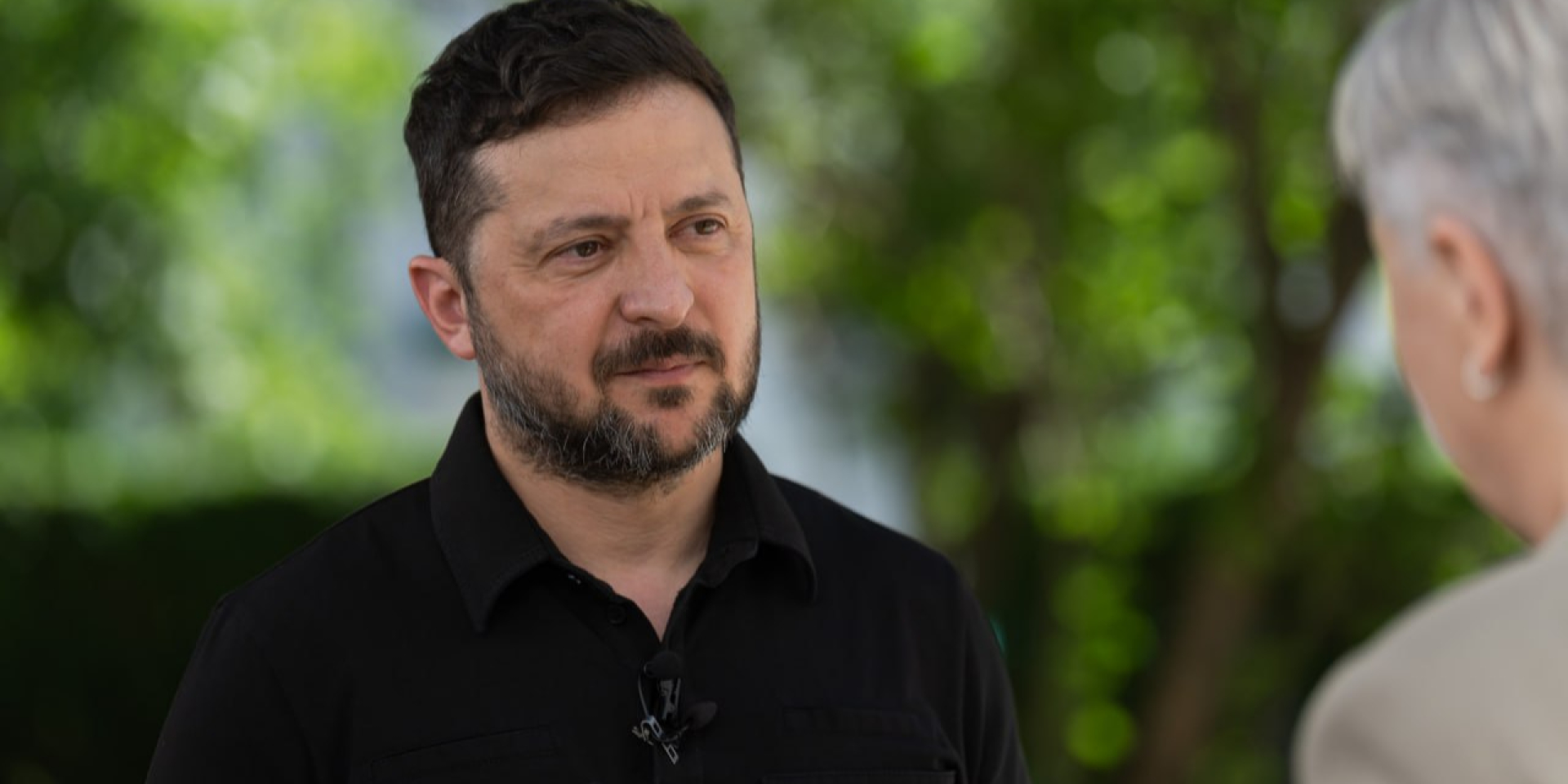
The same day, the European Parliament, after reviewing a
European Commission report on Ukraine’s EU integration reforms, adopted a
document containing a section on good-neighborly relations that criticized Kyiv
for naming a Special Operations Forces unit in honor of UPA heroes.
On July 11, during events marking a local day of remembrance
for victims of the Volhynia tragedy, Nawrocki called on the Polish parliament
to pass a law banning the red-and-black flag used by the Organization of
Ukrainian Nationalists, or OUN, and its armed wing, the Ukrainian Insurgent
Army, or UPA.
Nawrocki said that “the entire ideology of the Ukrainian
nationalist who kills Polish women and children is embedded in these colors,”
and claimed the flag’s aesthetic echoed the Nazi concept of “blood and soil”
(Blut und Boden). There is no evidence that the OUN and UPA’s red-and-black
flag has anything to do with that element of Nazi ideology or originated from
it.
An IBRiS poll conducted on July 25–26 showed that Polish
attitudes toward Ukrainians changed noticeably after a Ukrainian unit was named
in honor of UPA Heroes and Zelenskyy was stripped of Poland’s Order of the
White Eagle.
One-third of respondents said they viewed residents of
neighboring Ukraine less favorably after those events. Only 1.8% said their
view had improved.
For the first time since 2014, opponents of accepting
Ukrainian refugees in Poland also outnumbered supporters.
A CBOS poll found that in July 2026, 42% of Polish residents
supported accepting Ukrainian refugees, while 52% opposed it.
By comparison, in May 2022, 91% of Poles supported accepting
refugees from Ukraine, while only 4% opposed it.
Polish police data as of July 17 showed that since the
beginning of 2026, Ukrainians had filed 30% more reports of xenophobic crimes
than during the same period in 2025. There were 180 such reports, compared with
275 during all of 2025.
The military war may be swinging in our favor, but the information war continues.
Just as an army needs soldiers, so does a free society need its journalists to ensure that people have access to honest, trustworthy voices to understand the world around them.
For the past five years, The New Voice of Ukraine has been working tirelessly to push back against Russian narratives and defend democracy. But we cannot do it alone.
Please consider supporting us on Patreon for just $5 a month – your donation does directly to supporting journalists and ensuring that this front of the infowar says solid and defended.
Thank you.
Follow us on Twitter, Facebook and Google News
