

Labor shortage worsens in Ukraine as hiring picks up
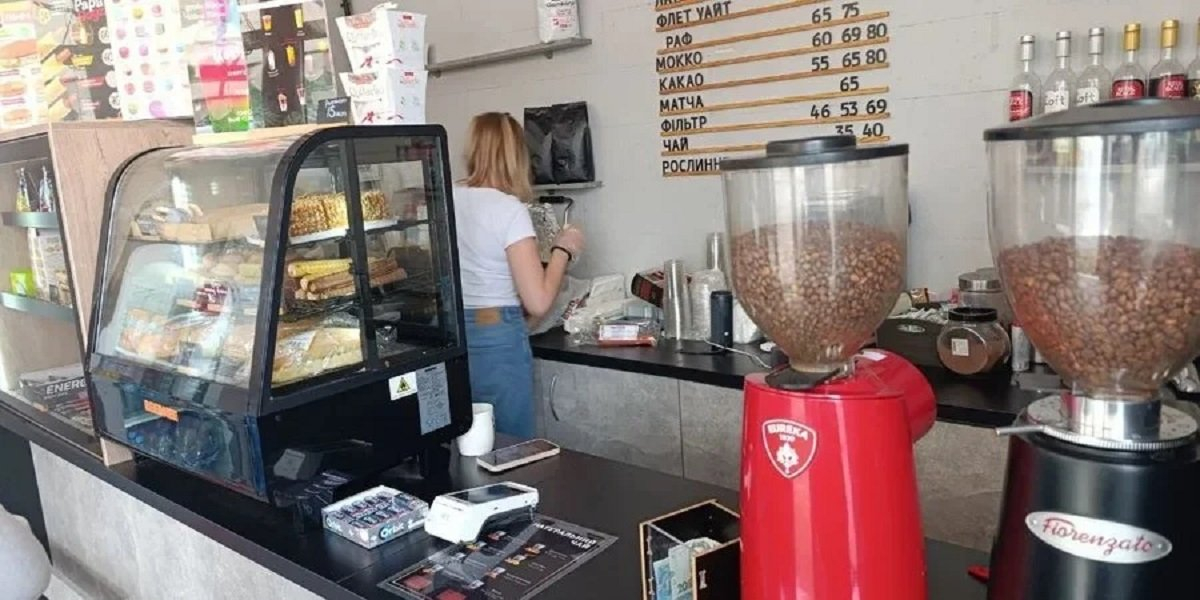
The Ukrainian labor market is gradually recovering (Photo: NV)
Ukraine’s labor market is gradually recovering from crisis but has not yet returned to predictability, according to data shared with NV Business by GRC.ua in its annual study “Labor Market Barometer. Forecasts for 2026.”
In 2025, companies actively sought workers, expanded or maintained teams, yet increasingly faced a paradox: despite high hiring activity, finding the right specialists became more difficult.
The research records this new normal, in which active hiring no longer guarantees closed vacancies.
Throughout 2025, the vast majority of companies hired staff. Nearly half of employers opened vacancies across all business lines, signaling not only the restoration of operations but also cautious attempts at growth. Only a small share of companies refrained from recruiting, and even among them it was more a temporary pause than a freeze on development. The market clearly shows that even in difficult conditions, business cannot afford to stand still.
At the same time, the nature of this movement remained restrained. Among companies that hired, a targeted approach dominated. Most often, employers sought a small number of new employees — usually up to 10% of the current staff. This indicates a desire to balance the need for people against financial and security risks. Mass staff expansion was almost nonexistent, but layoffs did not become the dominant scenario either.
Despite active hiring, the staff shortage is only intensifying. More than half of companies openly state that the shortage of workers at all levels is the main challenge in Ukraine’s labor market. The problem is felt especially acutely in blue-collar professions, where the lack of candidates has become systemic. Adding to this is the migration factor: the outflow of people abroad continues to affect the available workforce, shrinking the pool of specialists inside the country.

One of the key recruitment problems has become the salary gap. More than 40% of employers note that candidates’ salary expectations do not match companies’ financial capabilities. This gap is gradually becoming one of the main reasons for prolonged hiring processes. At the same time, another issue is growing: nearly one-third of companies face a mismatch between current business needs and the competencies available on the labor market. Business needs certain specialists, but the market offers entirely different ones.
In 2026, hiring activity is not expected to decrease. Employers’ plans largely repeat last year’s scenarios. Nearly half of companies intend to hire across all directions, while a significant portion will focus on specific functions or replacing those who left.
Hiring scales will remain moderate: most companies plan to bring in up to 10% new employees, one-quarter a bit more (11–20%), and only every tenth organization is preparing for more noticeable expansion — up to one-third of staff.
Businesses are ready to hire and are looking for new employees, but increasingly encounter limitations that do not depend on the number of open vacancies. Staff shortages, migration, the gap between expectations and possibilities, and structural skills mismatch are shaping a new reality for the labor market. In this reality, the companies that will win are those that learn not only to search for people but also to invest in developing their own teams, review compensation approaches and build longer, more stable relationships with employees. This is becoming the key competitive advantage in a market where there are many vacancies but fewer and fewer people.
The data come from a study conducted by GRC.ua experts. The survey included 7,880 respondents and covered all sectors of the economy and professional fields across Ukraine, excluding temporarily occupied territories and the Crimean peninsula.
GRC.UA is a Ukrainian HR portal that combines online job-search capabilities with an offline recruitment agency. It is part of the largest international alliance Kestria.
Earlier reports covered whether there is a significant difference between average salary figures from the State Statistics Service and companies’ tax reporting.
In January 2026, Ukraine saw a sharp increase in wage arrears.
Will you support Ukraine’s free press?
Dear reader, as all news organizations, we must balance the pressures of delivering timely, accurate, and relevant stories with requirements to fund our business operations.
As a Ukrainian-based media, we also have another responsibility – to amplify Ukraine’s voice to the world during the crucial moment of its existence as a political nation.
It’s the support of our readers that lets us continue doing our job. We keep our essential reporting free because we believe in our ultimate purpose: an independent, democratic Ukraine.
If you’re willing to support Ukraine, consider subscribing to our Patreon starting from 5$ per month. We are immensely grateful.
Please help us continue fighting Russian propaganda.
Truth can be hard to tell from fiction these days. Every viewpoint has its audience of backers and supporters, no matter how absurd.
If conscious disinformation is reinforced by state propaganda apparatus and budget, its outcomes may become deadly.
There is no solution to this, other than independent, honest, and accurate reporting.
We remain committed to empowering the Ukrainian voice to push against the muck. If you’re willing to stand up for the truth – consider supporting us on Patreon starting from 5$ per month. Thank you very much.
Will you help tell Ukraine’s story to the world?
Twenty years ago, most people hadn’t even heard of Ukraine. Today, the country is on everyone’s lips and everyone’s headlines. War pushed us on the front page. But there are many other things we do that we are proud of – from music and culture to technology.
We need your help to tell the world Ukrainian story of resilience, joy, and survival. If you’re willing to back our effort, consider supporting us on Patreon starting from 5$ per month. We are immensely grateful.
Follow us on Twitter, Facebook and Google News
