

Crimea to face dark, cold winter after Ukrainian strikes
 Read NV on Google
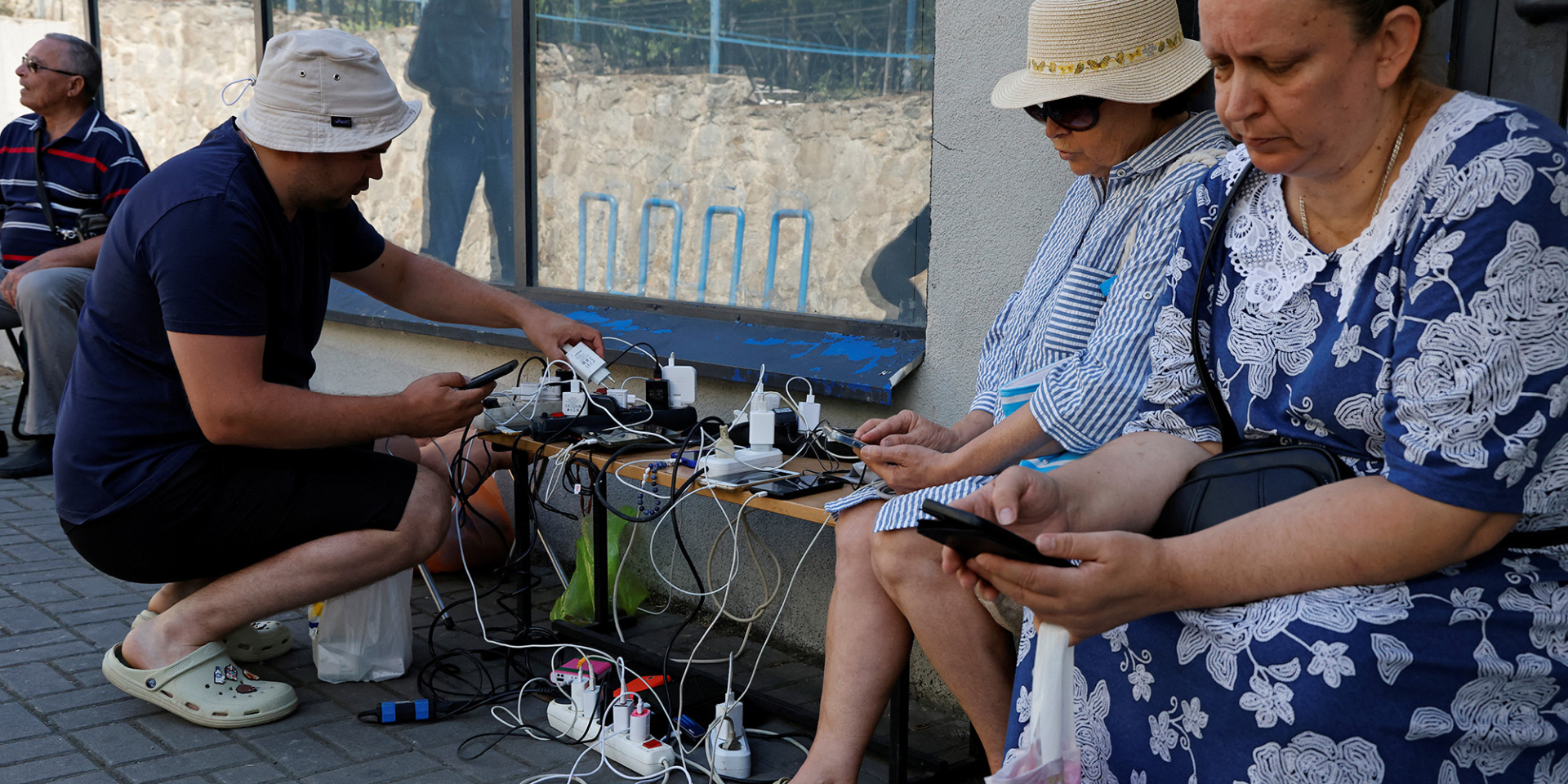
Life under occupation: Hurzuf residents are forced to find ways to charge their phones at outdoor outlets due to power outages (Photo: Reuters)
Occupied Crimea now has only one major operational element left in its overall power system after a sustained campaign of Ukrainian airstrikes, according to an NV analysis published on Aug. 29.
The occupied peninsula will head into winter in the dark and cold, since strikes by Ukraine's Defense Forces have left it with roughly a quarter of the electricity generation it needs during the coldest winter months.
Crimea's power system rested on three pillars: the Balaklava and Tavriya thermal power plants, which together produced about 940 megawatts, and an energy bridge from Russia's Kuban region running under the Kerch Strait, consisting of four cable lines with a designed capacity of 800 megawatts. Since mid-June, Ukrainian strikes have systematically worked through this entire system.
After a July 14 strike, the Balaklava plant — which had supplied up to a third of local generation — never returned to service. Then, overnight into Aug. 20, a fire broke out at the Taman substation on the Russian side, through which all four cables of the energy bridge pass. That infrastructure, which was meant to guarantee power to Crimea after the 2015 blackout, has itself become a target.
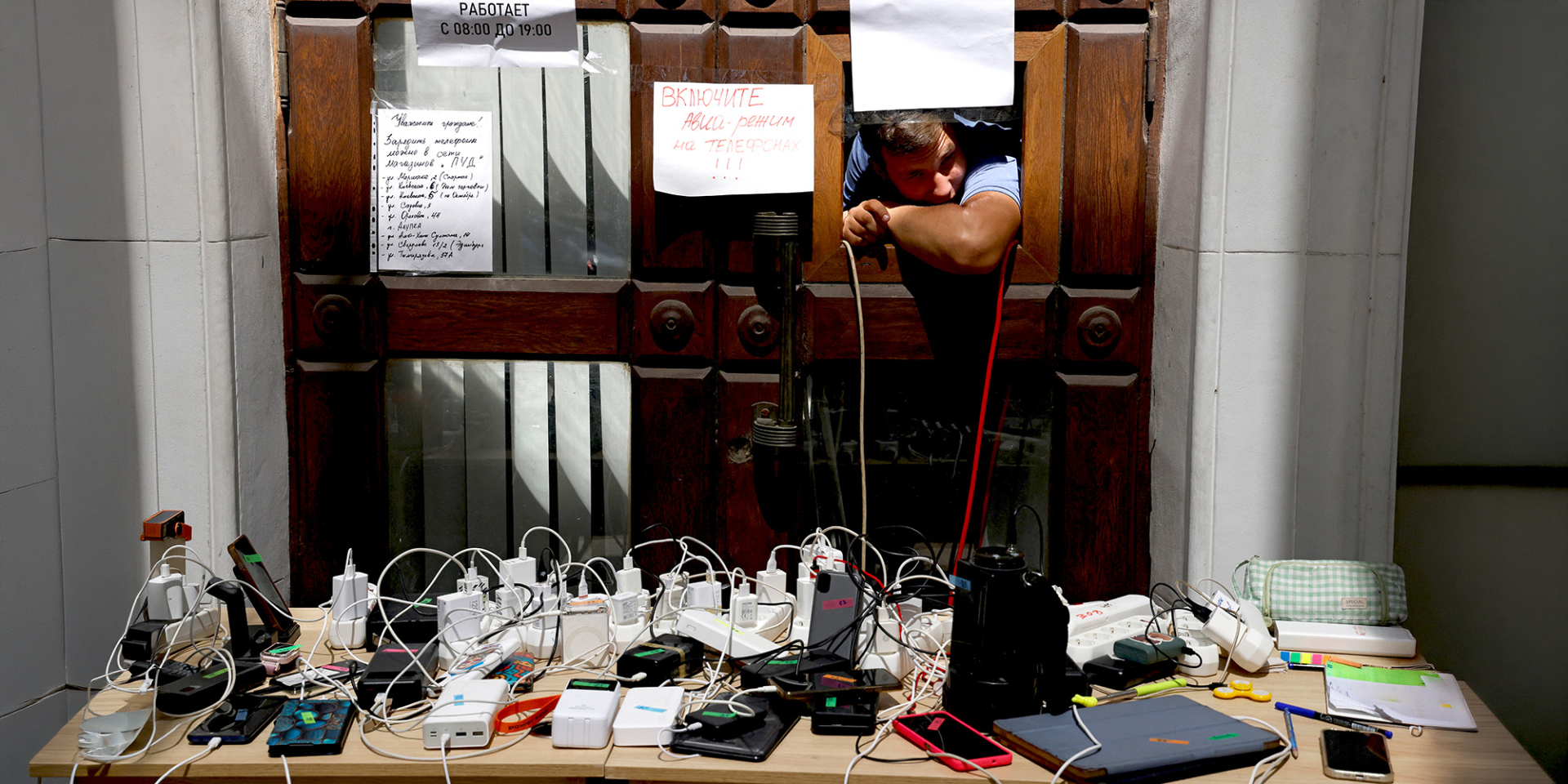
Effectively the only major generation source left on the peninsula is the Tavriya thermal power plant, with a capacity of about 470 megawatts, which survived three strikes back in June, along with small-scale and mobile generation units.
In January, Crimea's typical consumption reaches 1,780 megawatts — roughly 100 megawatts more than the summer peak the peninsula already failed to meet. Based on NV's calculations using open-source data, the available capacity will not cover even half of winter demand.
Natural gas presents a separate risk, since part of the peninsula's backup generation runs on it. "In the north [of Crimea], people are mostly getting by with portable power stations or natural gas-powered generators," a Crimean resident told NV on condition of anonymity. "If the situation turns so that there's no more gas, that would be an entirely new challenge."
Figures from earlier this summer show how deep the crisis already was. According to calculations by The Bell, electricity consumption in Crimea fell 42% year-over-year between July 1 and 20, and satellite imagery in mid-July showed nighttime lighting down 83% compared with April. Ukraine's Defense Intelligence (HUR) estimated that at the height of the blackout, about 1.4 million subscribers were without power at the same time.
Since July 1, Ukraine's Unmanned Systems Forces have disabled at least 267 energy facilities, and struck again after Aug. 22, though the results of those more recent strikes have not yet been made public.
The military war may be swinging in our favor, but the information war continues.
Just as an army needs soldiers, so does a free society need its journalists to ensure that people have access to honest, trustworthy voices to understand the world around them.
For the past five years, The New Voice of Ukraine has been working tirelessly to push back against Russian narratives and defend democracy. But we cannot do it alone.
Please consider supporting us on Patreon for just $5 a month – your donation does directly to supporting journalists and ensuring that this front of the infowar says solid and defended.
Thank you.
Follow us on Twitter, Facebook and Google News
