

Radina calls NABU independence Ukraine’s biggest win in Presidential Office scandal
 Read NV on Google
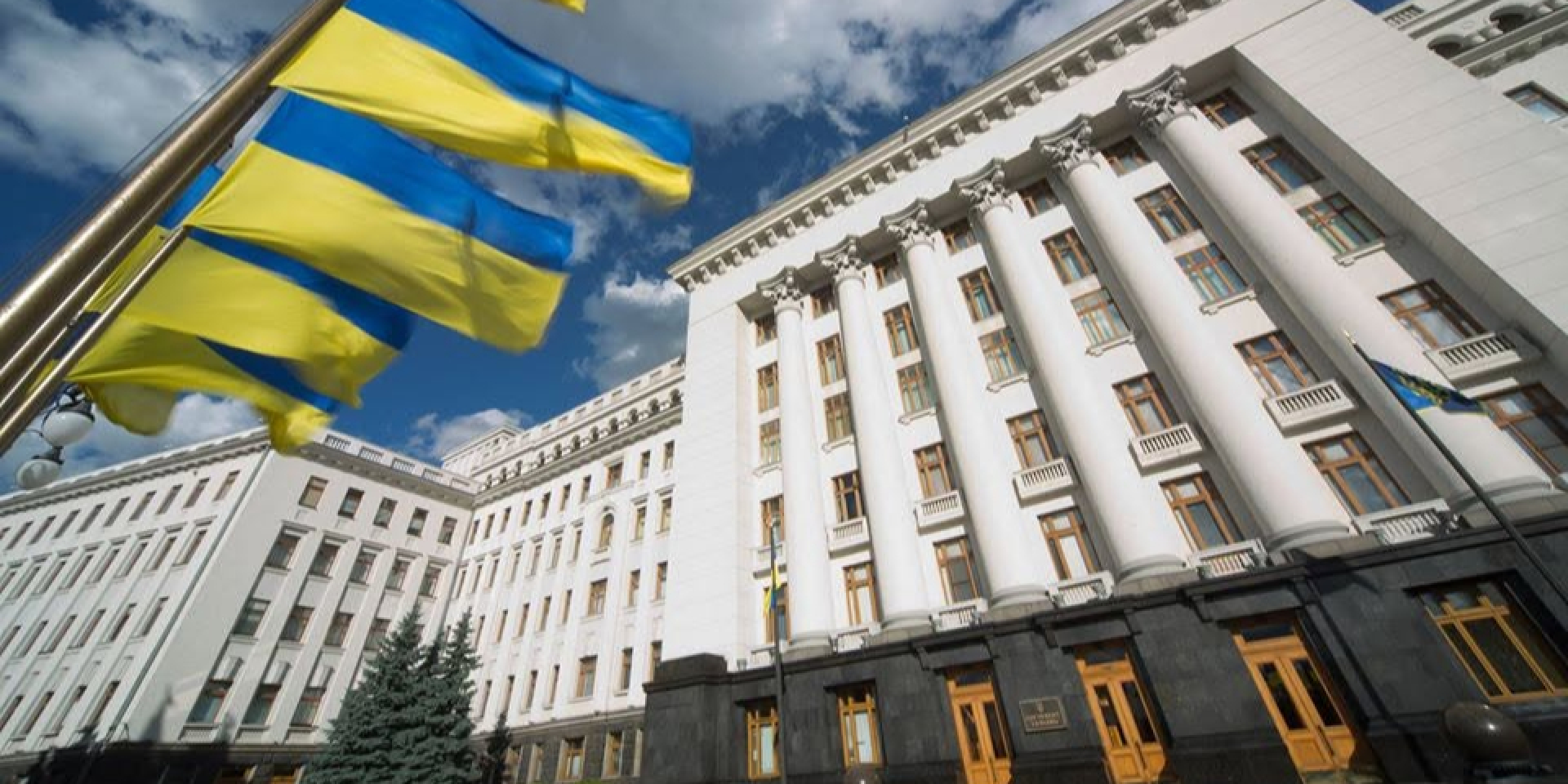
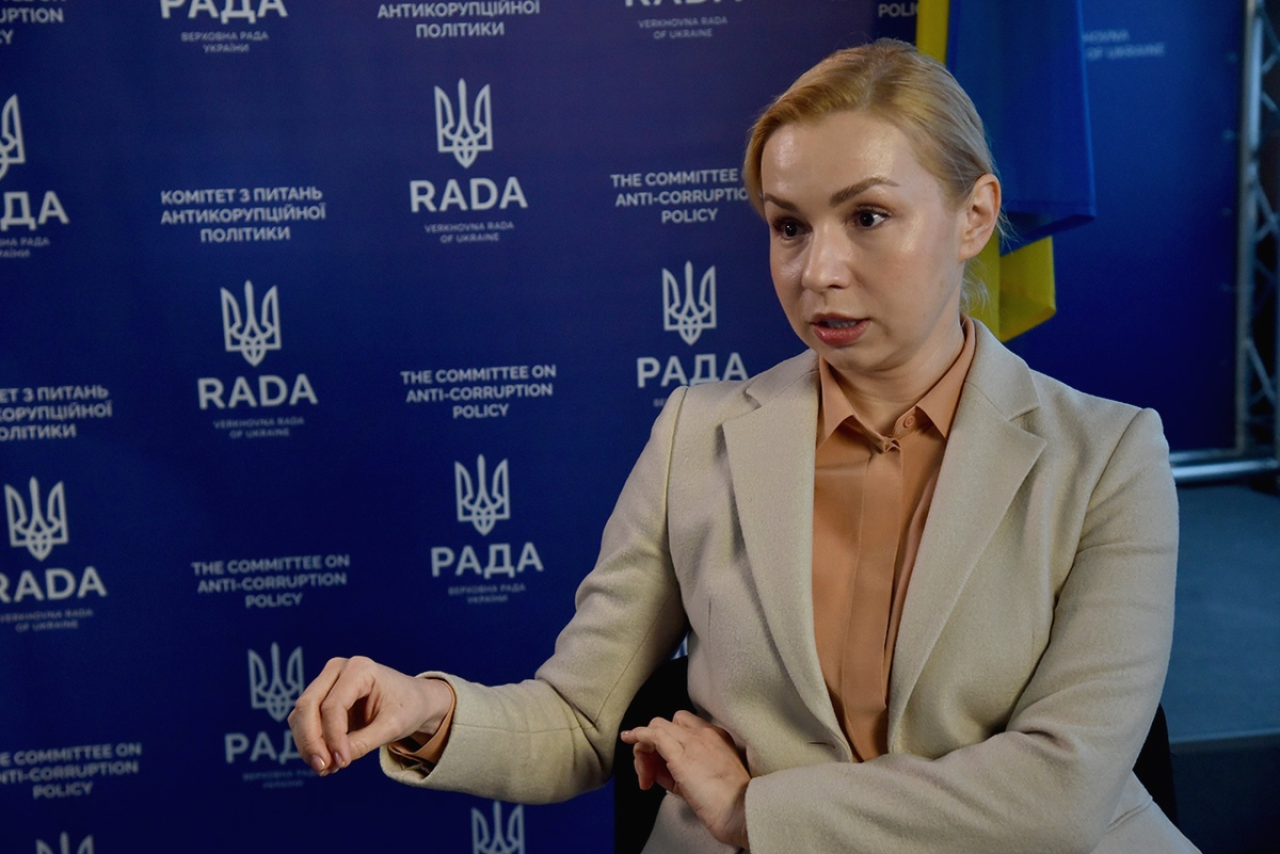
Interview with Radina — on the biggest victory in the corruption saga linked to the Presidential Office, “however disgusting it may look” (Photo: Office of the President of Ukraine / Facebook)
Anastasia Radina, a lawmaker from the Servant of the People faction and head
of the Verkhovna Rada’s anti-corruption committee, spoke in an interview with Radio NV about NABU’s work
investigating corruption in the Presidential Office.
— Former deputy head of the Presidential Office Iryna Mudra has been
taken into custody, with bail set at 20 million. Overall, this story is
extremely depressing, especially because she worked on judicial reform, dealt
with the judiciary and justice system, and oversaw efforts to establish a
tribunal for Russia. What was your overall impression of all these recordings?
Did you expect any of this?
— I have to say this was unexpected for me. I agree that the impression is
depressing. At the same time, I would suggest looking at this as treatment for
the country — treatment that makes things worse at first and then better.
At the very least, we have seen that the anti-corruption agencies are not
under anyone’s control, as the alleged figures on the alleged recordings have
been telling us for more than one episode now. As we can see, they know how to
do their jobs and do not hesitate to serve notices of suspicion when they
believe there are grounds to do so. That is what gives me hope for the future.
— If we look at the hierarchy of power, Mudra had only two people
above her: her immediate superior, Kyrylo Budanov, and President Volodymyr
Zelenskyy. Is it fair to conclude that Iryna Mudra participated in a criminal
group and helped legitimize and launder dirty money on instructions from one of
her superiors? Or is that conclusion premature?
— I cannot say that. Fortunately, I am not involved in such conversations,
and they are not discussed with me. I cannot make that claim.
I hear exactly what you hear in the recordings released by the National
Anti-Corruption Bureau. I hear references to conversations, still unknown to
us, with the presidential chief of staff. We do not know what those
conversations were about. So we also do not know whether there was any
involvement.
But there is one thing we can know for certain, at least from previous
experience. When or if the National Anti-Corruption Bureau and the Specialized
Anti-Corruption Prosecutor’s Office believe there are grounds to serve notices
of suspicion on a wider group of people, that wider group will receive them.
And the investigation will continue regardless of who those people are or how
well known or influential they may be.
We already saw this with the former presidential chief of staff. We also saw
lengthy complaints that former Energy Minister Herman Halushchenko had not been
served a notice of suspicion, which NABU eventually served anyway. The same was
true of former presidential chief of staff Andriy Yermak.
My conclusion is this: NABU is doing its job. And if and when it is ready to
proceed with notices of suspicion, those notices will be served and the cases
will go to court.
— If Mudra says she was carrying out some task on her boss’s
instructions, would it be logical to expect a notice of suspicion for Kyrylo
Budanov? Or did I misunderstand why you mentioned Yermak?
— What was I trying to say? Again, I do not know any more than you do. I
hear the same thing on the recordings. I also hear the presidential chief of
staff’s first name and patronymic mentioned there. At the same time, we do not
know — and I know no more than you do — what exactly happened or did not happen
in those conversations.
I am simply pointing out, based on previous experience, that if or when the
National Anti-Corruption Bureau, which knows more than you and I do, sees
grounds to pursue legal action against people, NABU will do so because it does
not shy away from investigating those who need to be investigated, regardless
of their name.
In my view, that is our biggest victory as a state and as a society in this
entire story, however disgusting it may look right now. And it really does look
disgusting. I agree with you there.
— Let me go through how I see it once again. We really do have to
wait for a court verdict. But we build our models based on what we heard on the
recordings and what we heard during the court hearings. The hearings concerning
Mudra lasted almost three days — Friday, Monday and Tuesday morning. And as of
now, the picture looks like this. I will describe it, and you tell me whether
you agree. It appears that Herman Halushchenko was in pretrial detention in the
Midas case. I do not know; this is my assumption, but perhaps he could have
struck, or was considering, a deal with investigators, which would have posed
certain risks for other figures in Mindichgate who, for example, had not yet
been served notices of suspicion. A group of people emerged who decided to save
Herman Halushchenko and find money for his bail. Not simply find it, but
launder it, legitimize it and post it. And that group turned out to be the same
group of people who have now ended up as defendants in NABU’s latest cases,
including Iryna Mudra. They wanted to save Herman Halushchenko, but while doing
so they had NABU on their tail. How does that look to you?
— It looks as though, in trying to save Halushchenko, they underestimated
the work of the National Anti-Corruption Bureau and the Specialized
Anti-Corruption Prosecutor’s Office. And in the end, in a sense, they
effectively took Halushchenko’s place.
I am also very interested to see how the situation develops and whether
Halushchenko’s pretrial status, for example, will change.
By the way, almost six months ago, alleged recordings were released not by
the anti-corruption agencies but by journalists. Even then, I said that,
according to my information, those materials may have been circulated and
disclosed by the defense, which could theoretically support your hypothesis.
As for who else was involved, I do not know any more than you do. In the
latest series of recordings, apparently involving Mudra, we also heard about
Mindich’s involvement. Whom was Mindich trying to save, and how? First and
foremost, himself. This is not higher mathematics; it is a logical assumption.
Who else, we do not know. But based on how the National Anti-Corruption Bureau
operates, I am comfortable assuming that we will find out.

— And you said we do not know what will happen with Halushchenko’s
pretrial status. Am I correct that if the court now concludes that the money
posted as Halushchenko’s bail was obtained illegally and laundered, his bail
would be revoked and he would return to pretrial detention? How would that
work?
— The anti-corruption agencies are the ones who should answer that question:
whether they believe the risks associated with Halushchenko have changed and
whether that would raise the issue of changing his pretrial status.
Not because, with a high degree of probability, laundered funds were posted
as his bail, but simply because the nature of the risks associated with him
remaining outside pretrial detention may have changed. But again, I am
definitely not the person who should assess that.
— Another interesting detail. The recordings suggest that Tymur
Mindich, also a figure in a NABU case and a former business partner of
President Volodymyr Zelenskyy, may have directly given cash to Mudra so she
could legitimize the money. So can we assume that even while in Israel — she
actually calls him “our Israeli refugee” — he continued to maintain ties with
the government hierarchy and even provide money to save his accomplices in the
Midas case? Is that what it looks like to you, Anastasia? Did I understand that
correctly?
— Based on the materials released by the National Anti-Corruption Bureau,
that is a logical conclusion. I draw essentially the same conclusion myself.
— From your perspective, how will this latest episode hurt Ukraine
internationally? I saw that the European Commission has already commented on
the story. They describe it as evidence of strong anti-corruption institutions,
which are an integral part of a state seeking EU membership, and that is the
positive side. But looking at the other aspects, how will this hurt Ukraine, or
how has it already hurt Ukraine?
— As far as our partners’ public messaging is concerned, I do not think
that, at least at this stage, we will see anything beyond this being treated as
an assessment of the anti-corruption agencies — their existence, strength,
independence, capability and willingness to investigate regardless of people’s
names. And that is a positive.
These are not just nice words. It really is a positive. And I would remind
you that we spent more than 10 years working on anti-corruption reform
precisely to achieve this. I would even say this is a story that goes all the
way back to the Revolution of Dignity and then to last year’s cardboard
protest. We as a society have put a great deal of work into making this
possible. Even when it is treatment that makes things worse at first and then
better.
Will all this affect private negotiations? I do not think it will call
Ukraine’s funding into question. I genuinely do not think so. I think it will
lead our partners to take a tougher approach to assessing the reforms we must
carry out to receive international support funding. And I think our partners
will be less willing to compromise.
The military war may be swinging in our favor, but the information war continues.
Just as an army needs soldiers, so does a free society need its journalists to ensure that people have access to honest, trustworthy voices to understand the world around them.
For the past five years, The New Voice of Ukraine has been working tirelessly to push back against Russian narratives and defend democracy. But we cannot do it alone.
Please consider supporting us on Patreon for just $5 a month – your donation does directly to supporting journalists and ensuring that this front of the infowar says solid and defended.
Thank you.
Follow us on Twitter, Facebook and Google News
