

Russia–North Korea border bridge nears completion: what it means for military supply
 Read NV on Google
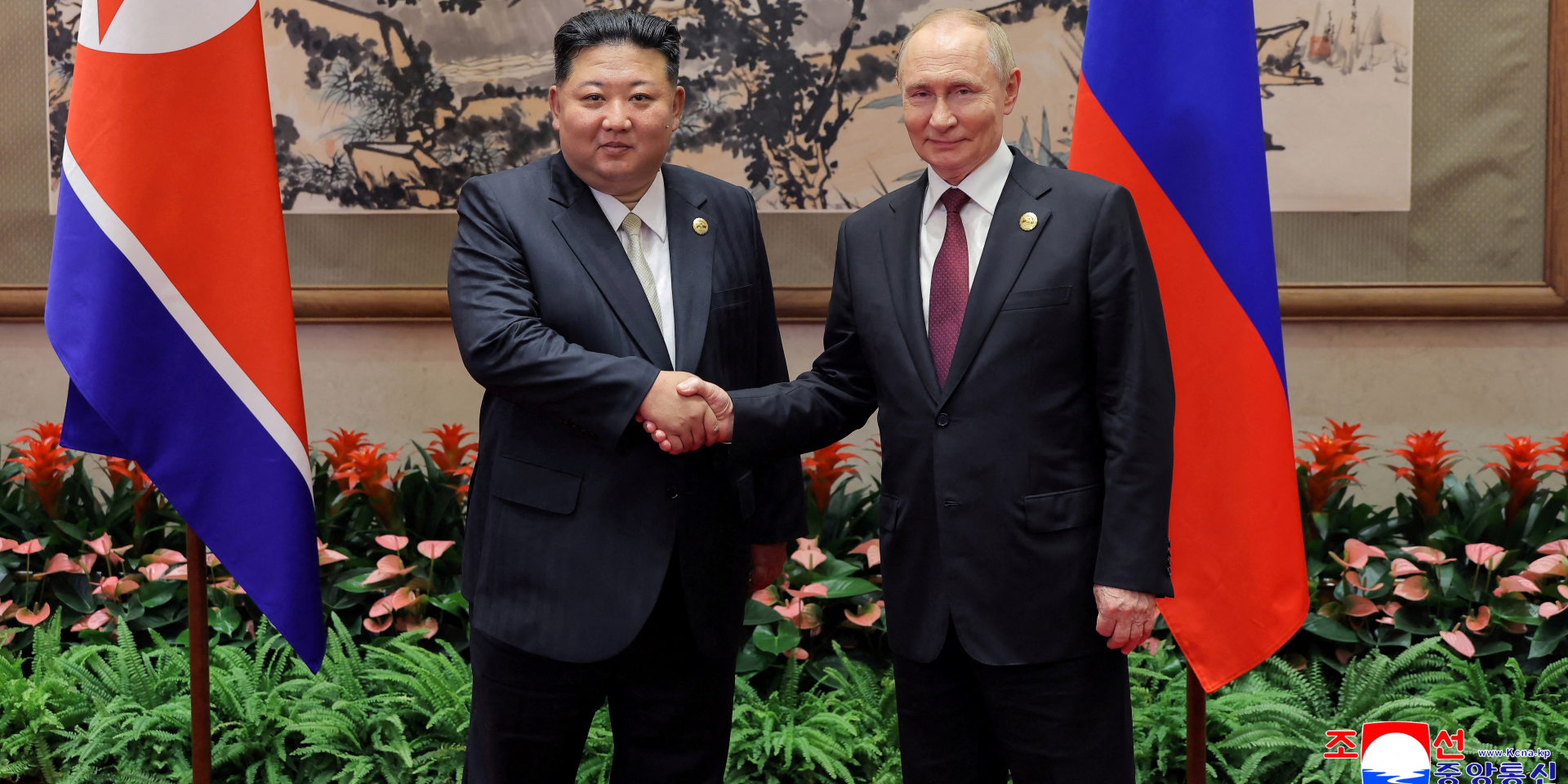
North Korean dictator Kim Jong-un shakes Putin’s hand (Photo: KCNA via REUTERS)
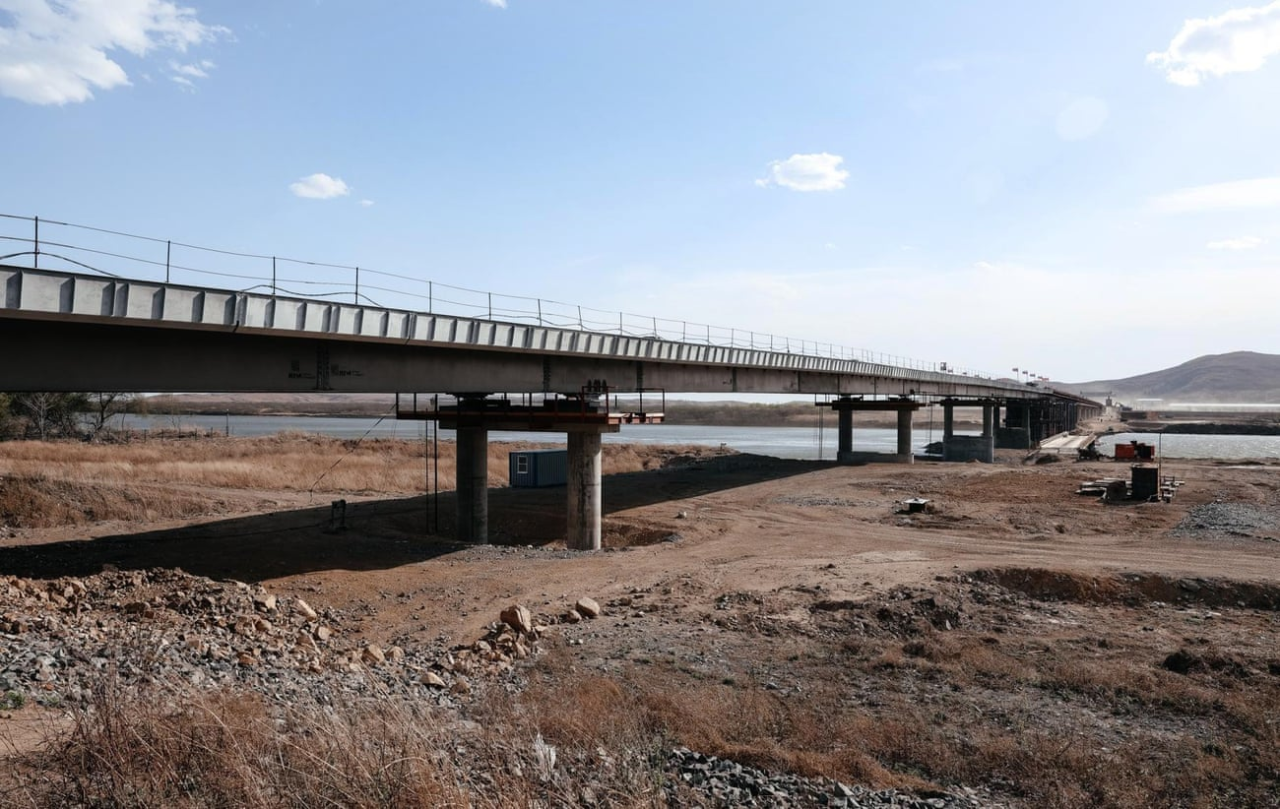
Russia and North Korea are finalizing the construction of a new bridge spanning the Tumen River, which will establish the first-ever direct road connection between the two nations and potentially serve as a strategic corridor for military supply lines, The Guardian reported on July 28.
The bridge over the Tumen River is about 1 kilometer long and seven metres wide, with two lanes, part of a wider 4.7 kilometers crossing that includes approach roads. Both sides have made no secret of the bridge project, saying it is intended to “expand trade and tourism”.
An investigation by Ukrainian human rights group Truth Hounds shared with The Guardian suggested that the bridge is intended more to provide a discreet military logistics corridor than to boost trade.
The lead investigator Nazar Myhun said a key reason behind such a conclusion was the fact that it is much easier to evade satellite monitoring by using roads compared with a rail network.
He noted that Russia and North Korea’s road network is far bigger than their rail network, making it harder to watch in its entirety. Loading and unloading of trucks can also take place much more quickly than for railcars, which are exposed to satellite passes for a longer period of time.
“The type of railcar visible in an image reveals a great deal about the cargo, and certain categories of goods are transported in open railcars, which allows them to be identified,” Myhun clarified, adding that Trucks, by contrast, almost always look the same in satellite imagery. Road cargo can also be loaded anywhere, as opposed to trains.
Despite Russian and North Korean pronouncements that the bridge will expand trade and tourism between both nations, Truth Hounds argued that such an economic rationale is weak. The crossing is estimated to have cost more than $100 million, versus bilateral trade that was reportedly worth just $34 million in 2024. Tourism from Russia into North Korea remains tightly controlled and largely limited to escorted tours, with around 10,000 Russian visitors in 2025. Pyongyang, where most foreign tourists visit, lies over 500 kilometers from the crossing.
“The investigation concludes that the crossing is better understood as strategic infrastructure: a corridor for moving North Korean troops, construction brigades and military officials into Russia, and for Russian technology and resources to move in the opposite direction,” The Guardian wrote.
Ukrainian President Volodymyr Zelenskyy announced on July 25 that intelligence reports indicate Russia is preparing to receive 30,000 additional North Korean troops this fall.
North Korean military participation in the war against Ukraine
South Korean news outlet Yonhap reported on March 16 that North Korea may have earned as much as $14.4 billion by deploying troops and exporting weapons to Russia.
The report said North Korea had carried out four troop deployments to Russia since October 2024, sending more than 20,000 soldiers in total. The revenue generated from the troop deployment, including soldier salaries and death benefits, is estimated at $620 million, Yonhap added.
North Korea also exports weapons to Russia. Satellite imagery showed North Korean shipments of various types of weapons to Russia even before the troops were deployed.
Ukraine's Main Intelligence Directorate (HUR) reported on February 4 that North Korean troops deployed to Russia's Kursk Oblast as of January 2026 are actively launching tube artillery and MLRS strikes, conducting aerial reconnaissance, and training in modern combat tactics, including drone technologies.
The military war may be swinging in our favor, but the information war continues.
Just as an army needs soldiers, so does a free society need its journalists to ensure that people have access to honest, trustworthy voices to understand the world around them.
For the past five years, The New Voice of Ukraine has been working tirelessly to push back against Russian narratives and defend democracy. But we cannot do it alone.
Please consider supporting us on Patreon for just $5 a month – your donation does directly to supporting journalists and ensuring that this front of the infowar says solid and defended.
Thank you.
Follow us on Twitter, Facebook and Google News
