

Russia stages sham State Duma vote in occupied Ukraine amid coercion
 Read NV on Google
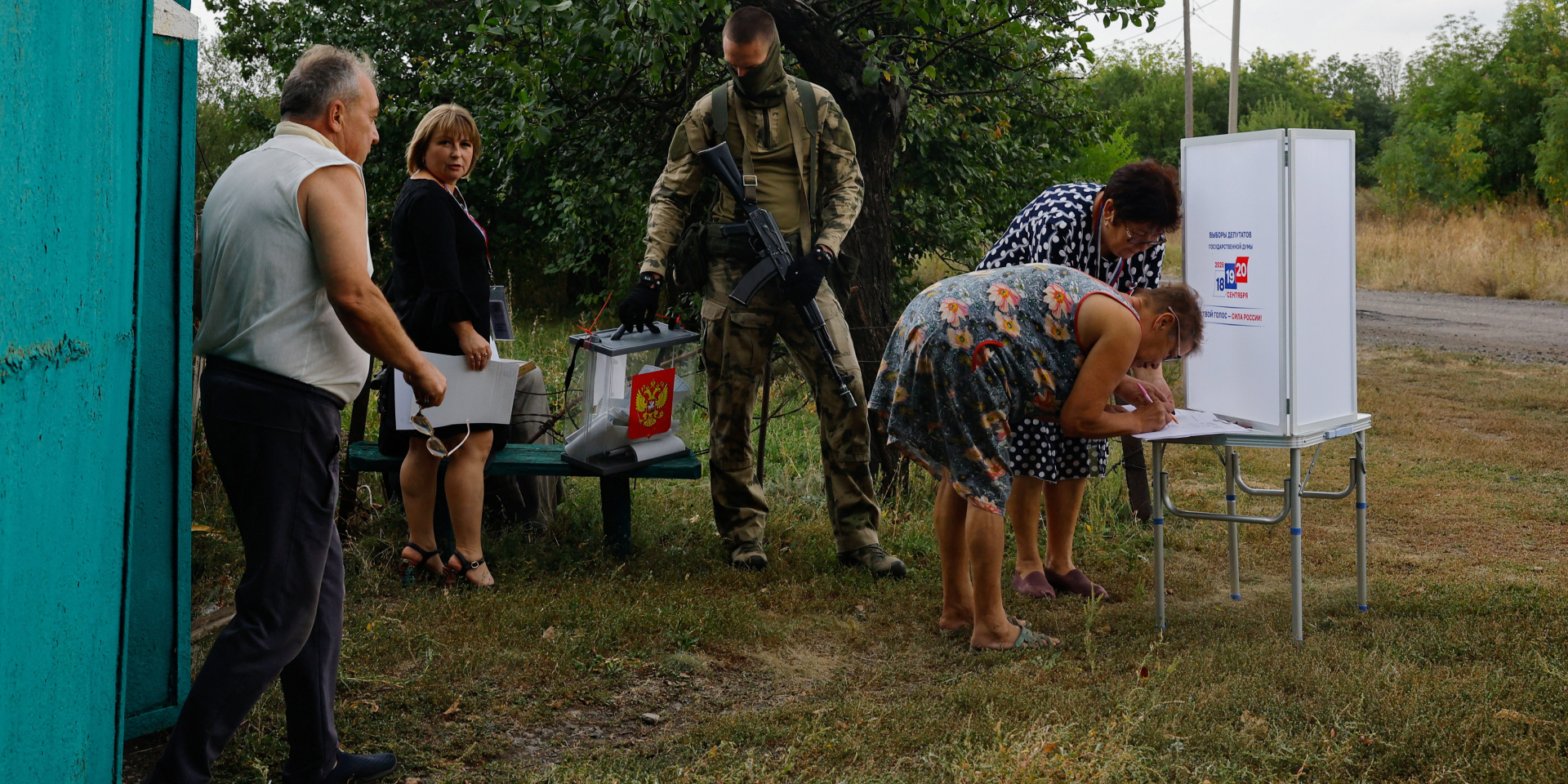
Election commission members accompanied by a Russian serviceman visit residents of Donetsk Oblast during early voting in Russia’s so-called parliamentary elections. Verbivka, Donetsk Oblast, Sept. 14, 2026. (Photo: REUTERS/Alexander Ermochenko)
Russia plans to hold another round of so-called State Duma
elections on Sept. 18–20, 2026. The criminal Kremlin regime wants to draw
occupied Ukrainian territories into the process.
So-called early voting has already begun in the temporarily occupied
territories, starting on Aug. 29, 2026.
Violeta Artemchuk, lead coordinator of the Donbas SOS civic organization,
explains in an NV explainer where the line lies between actions forced by life
under occupation and criminal conduct, and whether Ukrainians forced to
participate in sham elections under occupation could face punishment in
Ukraine.
How widespread is coercion to participate in ‘elections’ in the temporarily occupied territories?
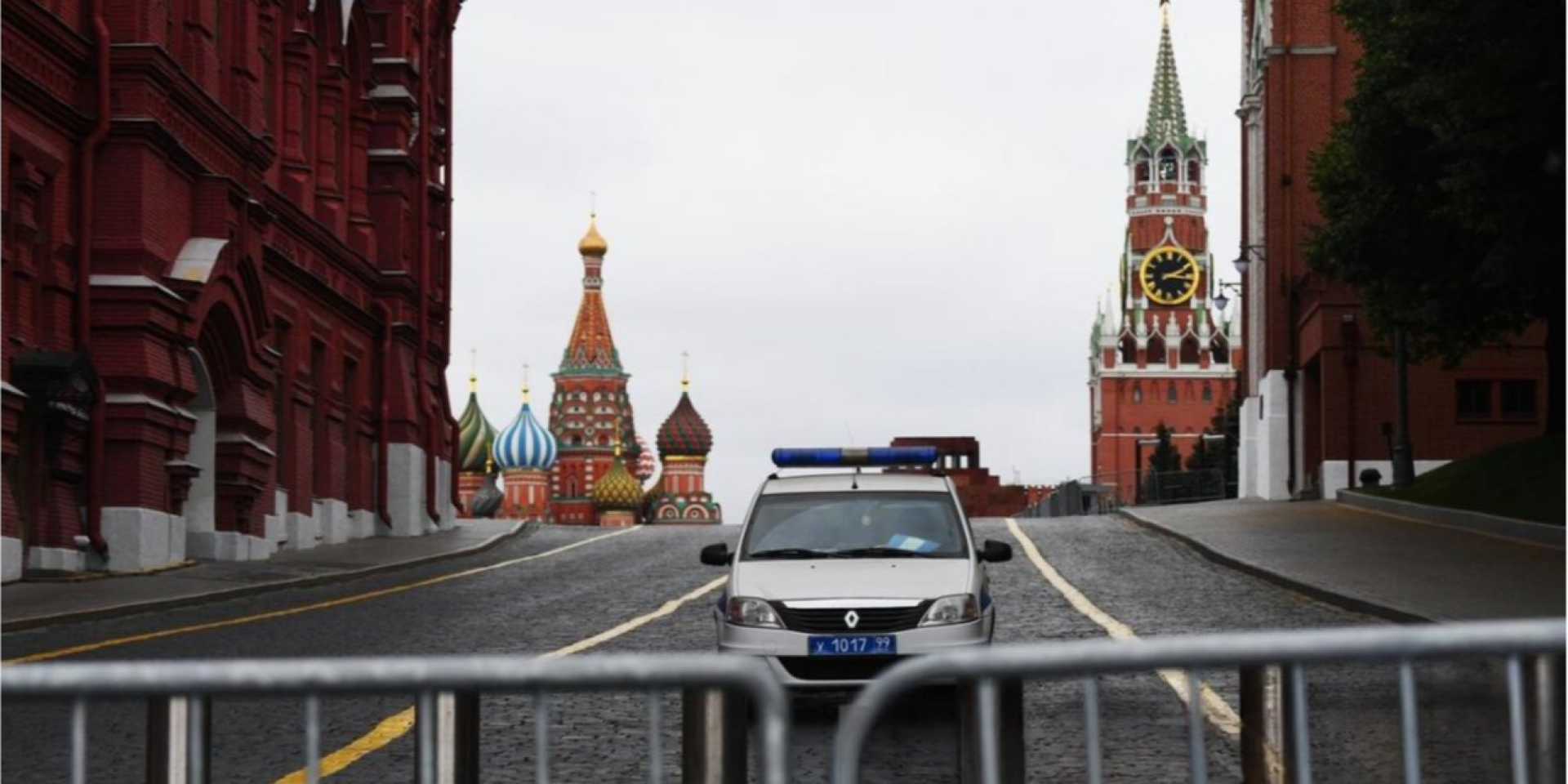
Coercion in the occupied territories can be direct or indirect.
Cases of direct coercion — when election commission members enter people’s
homes accompanied by armed Russian troops — were documented during previous
sham votes. The occupation authorities formally justify the presence of armed
personnel as “protection for commission members.” But in occupied territory,
where the rule of law does not apply, an armed person appearing at someone’s
doorstep is automatically perceived as a direct threat to life and health.
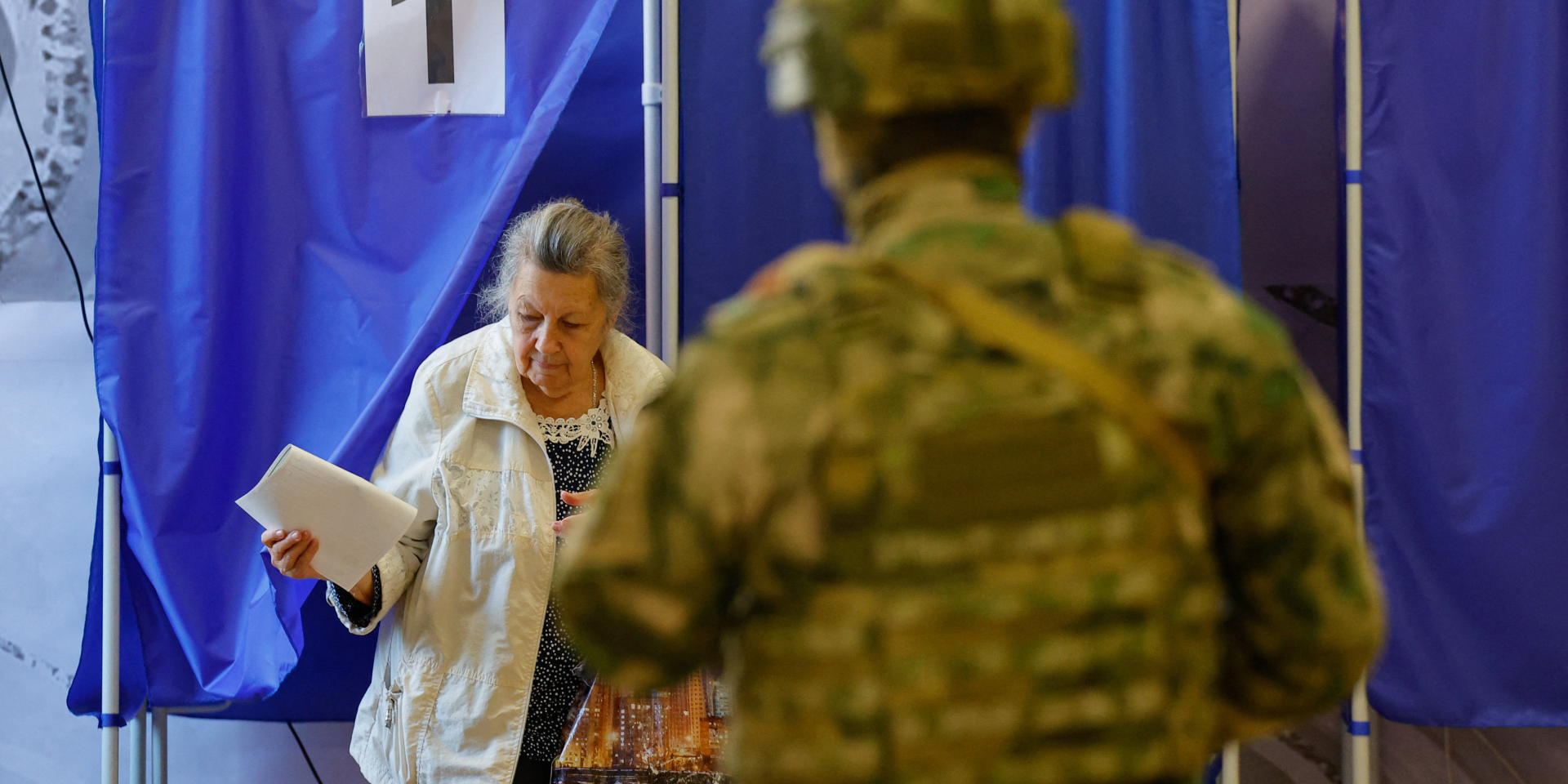
Indirect coercion, however, is more widespread. It involves creating
conditions in which refusing to participate in the occupiers’ “political life”
threatens a person’s basic survival. For example, if a person with a disability
or a pensioner depends on social assistance and does not take part in “voting,”
that person may be placed on lists of people deemed “disloyal” to the so-called
authorities and deprived of payments or humanitarian assistance.
Russia has already used similar coercive tactics during its mass passport
campaign. There have been documented cases in the temporarily occupied
territories of Zaporizhzhya Oblast where free deliveries of drinking water were
restricted for residents who refused Russian passports.
The Ukrainian state takes the position that most actions by civilians under
occupation are involuntary and carried out under pressure. Living in the
dangerous conditions of occupation is itself considered a coercive factor.
Will Ukrainians in the temporarily occupied territories be held liable for voting?
At present, Ukraine’s Criminal Code does not provide for criminal liability
simply for participating in a vote — that is, when a person merely casts a
ballot at a polling station.
Human rights advocates, however, strongly urge citizens to ignore the sham
elections whenever possible and avoid polling stations. Russian and pro-Russian
media operate at polling sites. Footage or comments given to occupation media
can be distorted and used to portray the process as legitimate and the
population as “loyal.”
The main advice to residents of the temporarily occupied territories is
therefore to distance themselves from the “voting” whenever possible. Go to a
village or a country house, or take sick leave. If you are forced to vote,
under no circumstances give interviews or speak to members of the media present
at the site.
Where is the line between voting and collaboration?
Under Part 5 of Article 111-1 of Ukraine’s Criminal Code, which covers
collaboration, criminal liability applies to serving as a member of an
“election commission,” acting as an observer for occupation organizations or
parties, organizing and conducting sham elections, and publicly calling on
people to participate in the “elections.” The penalty under the article is five
to 11 years in prison with confiscation of property. Simply participating in
the vote itself, however, as noted above, is not a crime and does not carry
criminal liability.
Even if a person is forced to join an “election commission” through threats
or blackmail, including threats to the life or health of relatives, it is
currently very difficult to prove legally that physical or psychological
coercion occurred.
Although Article 40 of Ukraine’s Criminal Code provides for mitigation of or
exemption from liability for acts committed under coercion, court practice
involving election organizers in the temporarily occupied territories shows
that proving such circumstances is extremely difficult. Serving on election
commissions, even under coercion, therefore creates a serious risk of becoming
the subject of an investigation and being convicted after the territories are
liberated or after traveling to Ukrainian-controlled territory.
What does international law say, and is this a war crime?
An occupying power holding its own elections in annexed or seized territory
belonging to another state constitutes a gross violation of international law.
First, it violates the U.N. Charter and the Hague Convention. Under
internationally recognized rules governing occupation, an occupying authority
must preserve the territory’s legal status quo, may not change residents’
citizenship and has no right to hold its own political elections. The
institutions and laws of the state to which the territory belongs must remain
in force in occupied territory.
The issue also concerns territorial integrity. Attempts to involve Ukrainian
territories in Russia’s electoral processes are regarded as an effort to
legitimize annexation and an infringement on Ukraine’s sovereignty. Organizing
elections in temporarily occupied territories violates the laws and customs of
war and therefore constitutes a war crime by the occupying power and occupation
administration.
Organizing voting in the temporarily occupied territories also provides
grounds for the EU, the United States and other countries to impose new
packages of individual and sectoral sanctions against members of Russia’s
Central Election Commission, local collaborators and “observers.” For Russia’s
senior leadership and the organizers of the process, it is another episode that
adds to the material for future international tribunals and the International
Criminal Court.
The military war may be swinging in our favor, but the information war continues.
Just as an army needs soldiers, so does a free society need its journalists to ensure that people have access to honest, trustworthy voices to understand the world around them.
For the past five years, The New Voice of Ukraine has been working tirelessly to push back against Russian narratives and defend democracy. But we cannot do it alone.
Please consider supporting us on Patreon for just $5 a month – your donation does directly to supporting journalists and ensuring that this front of the infowar says solid and defended.
Thank you.
Follow us on Twitter, Facebook and Google News
