

Russia shows Monokhrom and Kover missiles abroad for first time as TWZ assesses threat to Ukraine
 Read NV on Google
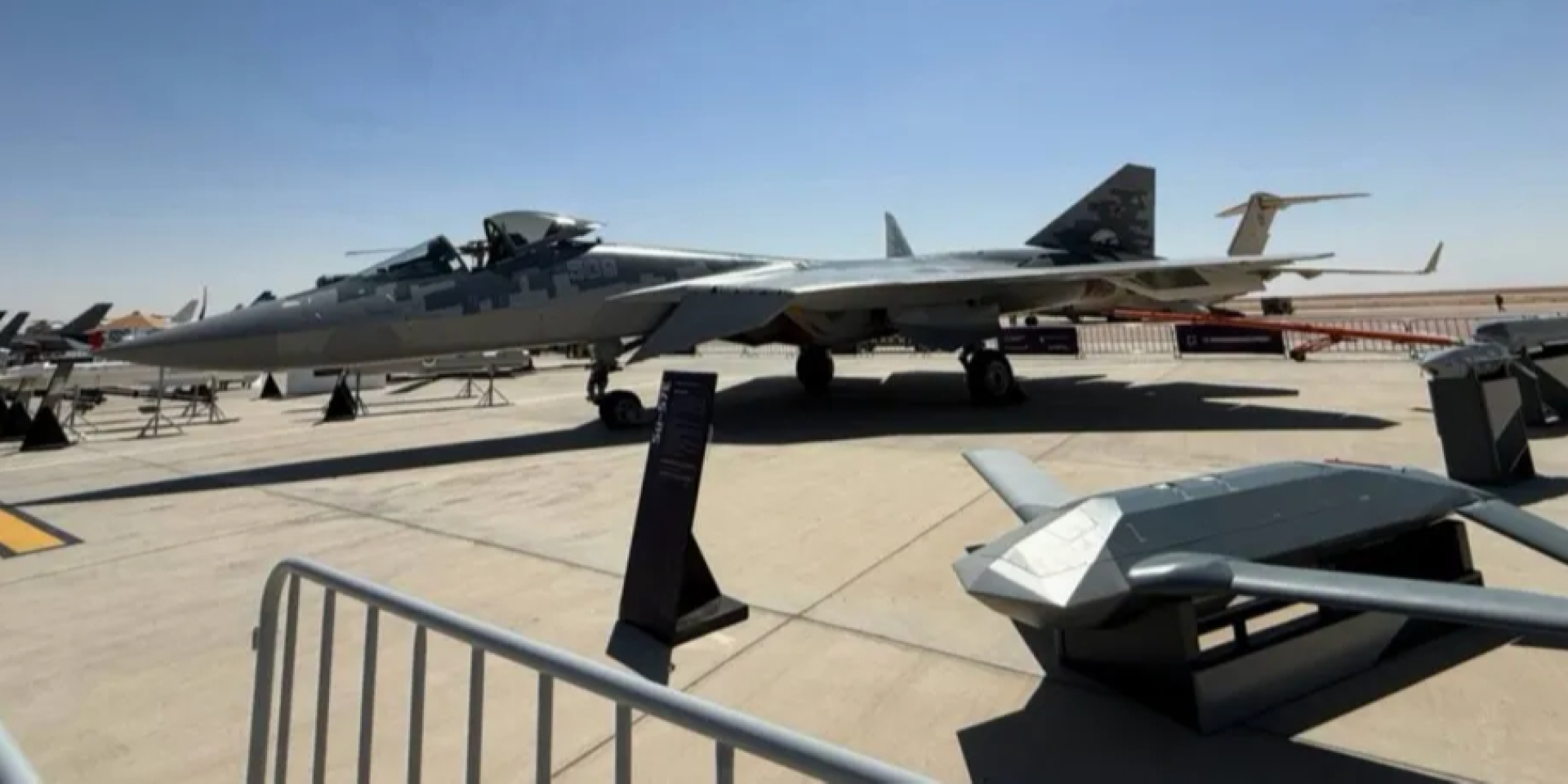
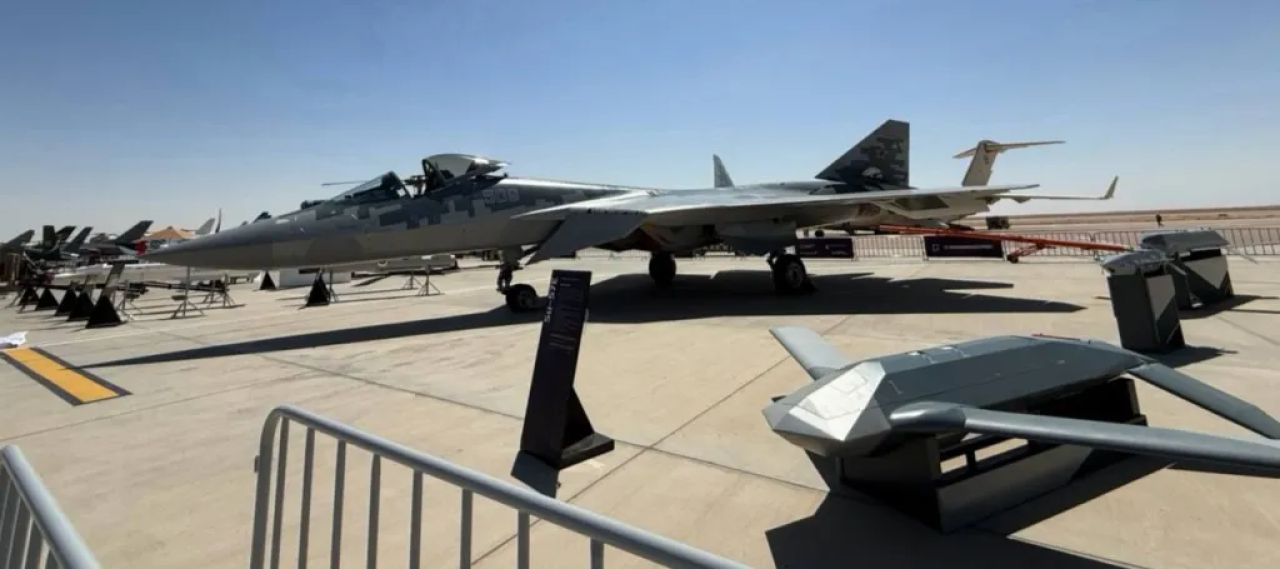
S-71K Kover missile next to a Russian fighter jet at an exhibition in Egypt (Photo: UAC / The War Zone)
Russia showcased several new weapons at the El Alamein International Airshow 2026 in Egypt, including the S-71K Kover, S-71M Monokhrom and S-8000 Banderol, which pose a growing threat to Ukraine due to their low cost and cruise missile-like capabilities.
The War Zone, a U.S. publication specializing in military affairs, highlighted the presentation, calling the Egyptian air show the first public display of the new Russian weapons.
In the post below, TWZ identified the weapon at the upper left as the S-71K Kover air-launched missile and the one at the lower left as the S-71M Monokhrom. At the lower right is the Banderol, a weapon already more widely known in Ukraine. The weapon at the upper right is a similar system of an unidentified type, the publication said. Its shorter length and shape suggest it may have been designed specifically to arm drones, TWZ noted.
Analysts said the new weapons underscore Russia's efforts to increasingly use relatively inexpensive alternatives to more sophisticated and costly cruise missiles. Russia has already expended vast numbers of various types of missiles in strikes on Ukraine, while "Ukrainian air defenses are becoming increasingly powerful," forcing Moscow to use combinations of missiles, drones, decoys and different flight profiles to penetrate or overwhelm Ukraine's air defense network, TWZ said.
"One lesson is that a weapon does not necessarily need to have the same capabilities as a high-end cruise missile if it can be produced in much greater numbers and still poses a real threat to the target," the analysts said, explaining the threat posed by cheaper missile-drones such as the Banderol, Monokhrom and Kover.
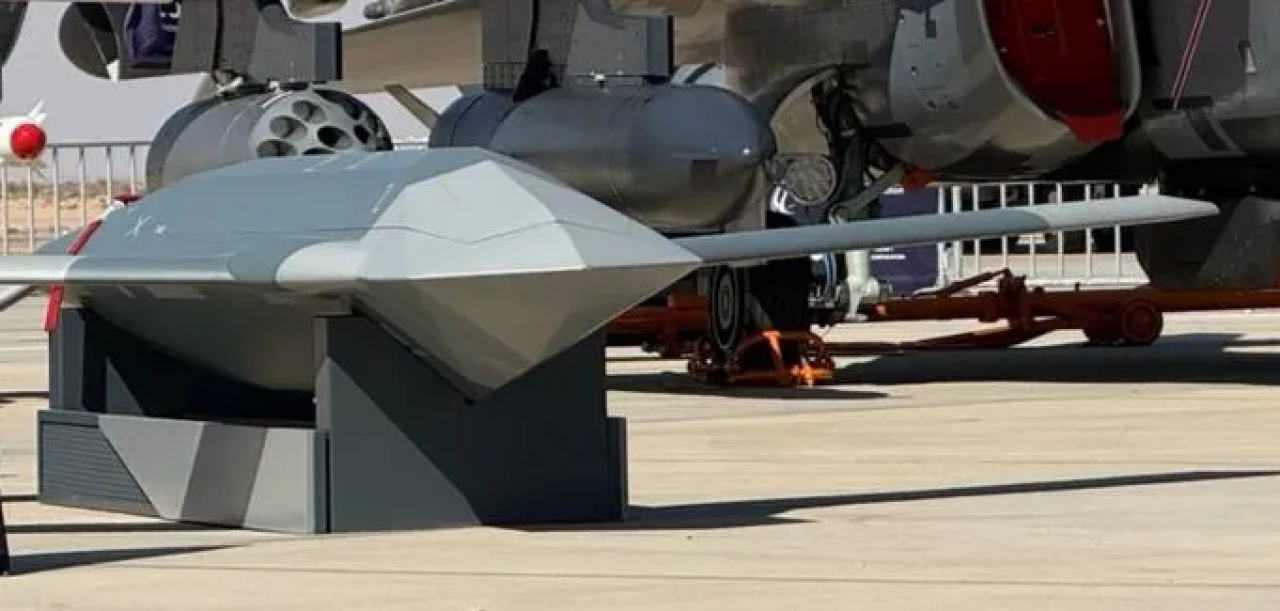
The S-71M Monokhrom, previously classified by Ukraine's Defense Intelligence as an air-launched cruise missile, is a compact turbojet-powered weapon whose shape and details were seen clearly for the first time in Egypt, TWZ reported. The missile's design differs significantly from the more conventional shapes of earlier Russian cruise missiles and appears intended to reduce its radar signature. Its nose has at least one flat, transparent window for an infrared or television guidance seeker. The missile has sharply swept wings that can fold while being carried by the launch aircraft, while its rear section features an inverted V-tail.
TWZ noted that Ukrainian intelligence previously said the S-71M Monokhrom carries an OFAB-250-270 high-explosive fragmentation bomb as its warhead. The publication also reported that Russia had tested the S-71M on Su-57 fighter jets, "although there is no reason why they could not be launched from a wide range of platforms," including other Russian combat aircraft. At the air show in Egypt, Russia's United Aircraft Corp., which developed the Su-57, said the S-71M and S-71K "were developed for fifth-generation [Su-57] fighters."
Regardless of which aircraft Russia uses to launch Monokhrom missiles, the current nature of the war in Ukraine makes them "particularly useful" for Russia and therefore dangerous to Ukraine's Defense Forces, the article said.
Russia has so far relied heavily on glide bombs to strike targets relatively close to the front line. However, these weapons require the launch aircraft to remain within a certain distance of Ukrainian air defenses. Longer-range cruise missiles allow aircraft to remain much farther away but are significantly more complex and expensive.
The S-71M Monokhrom falls "somewhere in between these categories," TWZ said. The missiles provide Russia with another type of relatively powerful air-launched weapon with a sizable warhead and some degree of low observability without requiring the expense and time needed to develop a full-fledged, genuinely stealthy cruise missile, the analysts concluded.
Ukraine's Defense Intelligence specialists previously discovered an Nvidia Jetson Orin computer module inside an S-71M Monokhrom missile. They suggested that the use of the microcomputer could indicate the integration of artificial intelligence technology into the missile.
The S-71K Kover, according to The War Zone, appears to be a more powerful and sophisticated version of the basic concept behind these missiles. The weapon likely features electro-optical guidance and enhanced onboard processing capabilities, potentially allowing it to "engage targets more flexibly" than the S-71M, which is largely preprogrammed, TWZ analysts said. It remains unclear exactly how these capabilities could be used and how autonomous the Kover actually is, the publication added.
Based on the examples displayed in Egypt, the S-71K Kover retains the general shape of the S-71M but has a different wing configuration and a slightly different fuselage. Its body is noticeably wider, its wings are thicker, and the weapon overall resembles a small unmanned aircraft more than a conventional air-to-surface missile.
The appearance of these missiles at an international air show clearly demonstrates "where Russian air-launched strike systems are headed," TWZ wrote. It also suggests that Russia is seeking to make such weapons more difficult to intercept. In particular, the S-71K Kover has a highly distinctive shape that suggests low observability was a key requirement in its design.
Ukraine's Defense Intelligence previously said the S-71K could have a range of up to 300 kilometers (186 miles) due to its main fuel tank and two auxiliary fuel tanks.
As for the S-71M Monokhrom, Defense Express previously estimated its range at 200 kilometers (124 miles), "although Russian claims put it at up to 350 kilometers" (217 miles).
Valerii Romanenko, an aviation expert and senior researcher at the State Aviation Museum, recently told UNIAN that the greatest threat posed by such ersatz cruise missiles, cheaper and simpler alternatives to full-fledged cruise missiles, is Russia's ability to produce them in large quantities because of their lower cost.
"What are the requirements for this type of weapon? It must cost less than a standard cruise missile such as the Kh-101 or Kalibr. Its range is about 500 kilometers, no more. The Kh-101, by comparison, has a range of 5,500 kilometers. The warhead is roughly 100 to 150 kilograms. And half of the components are Chinese, including the engine. Both the Banderol and Dan-T fit this definition, as does Russia's latest development, the [S-71M] Monokhrom missile, which has received little attention so far," Romanenko said.
The military war may be swinging in our favor, but the information war continues.
Just as an army needs soldiers, so does a free society need its journalists to ensure that people have access to honest, trustworthy voices to understand the world around them.
For the past five years, The New Voice of Ukraine has been working tirelessly to push back against Russian narratives and defend democracy. But we cannot do it alone.
Please consider supporting us on Patreon for just $5 a month – your donation does directly to supporting journalists and ensuring that this front of the infowar says solid and defended.
Thank you.
Follow us on Twitter, Facebook and Google News
