

Ukrainian defenders repel major Russian breakthrough attempt near Vovchansk, battles ongoing – Latest updates
Russian troops attempted to breach the Ukrainian defensive line near Vovchansk in Kharkiv Oblast around 5 a.m. on May 10, but were successfully repelled by the Ukrainian military, according to reports by Ukraine’s Defense Ministry.
As night fell, the enemy, supported by artillery, increased
fire pressure on the front line of Ukrainian defense. And at about 5 a.m. on
May 10, an attempt to break through the Ukrainian defense line under the cover
of armored vehicles took place.
“As of now, these attacks have been repelled, and fighting
of varying intensity continues,” the Defense Ministry said on May 10 at around
1 p.m.
Reserve units have been sent to the Vovchansk front, as the
Ukrainian Armed Forces are holding back the offensive.
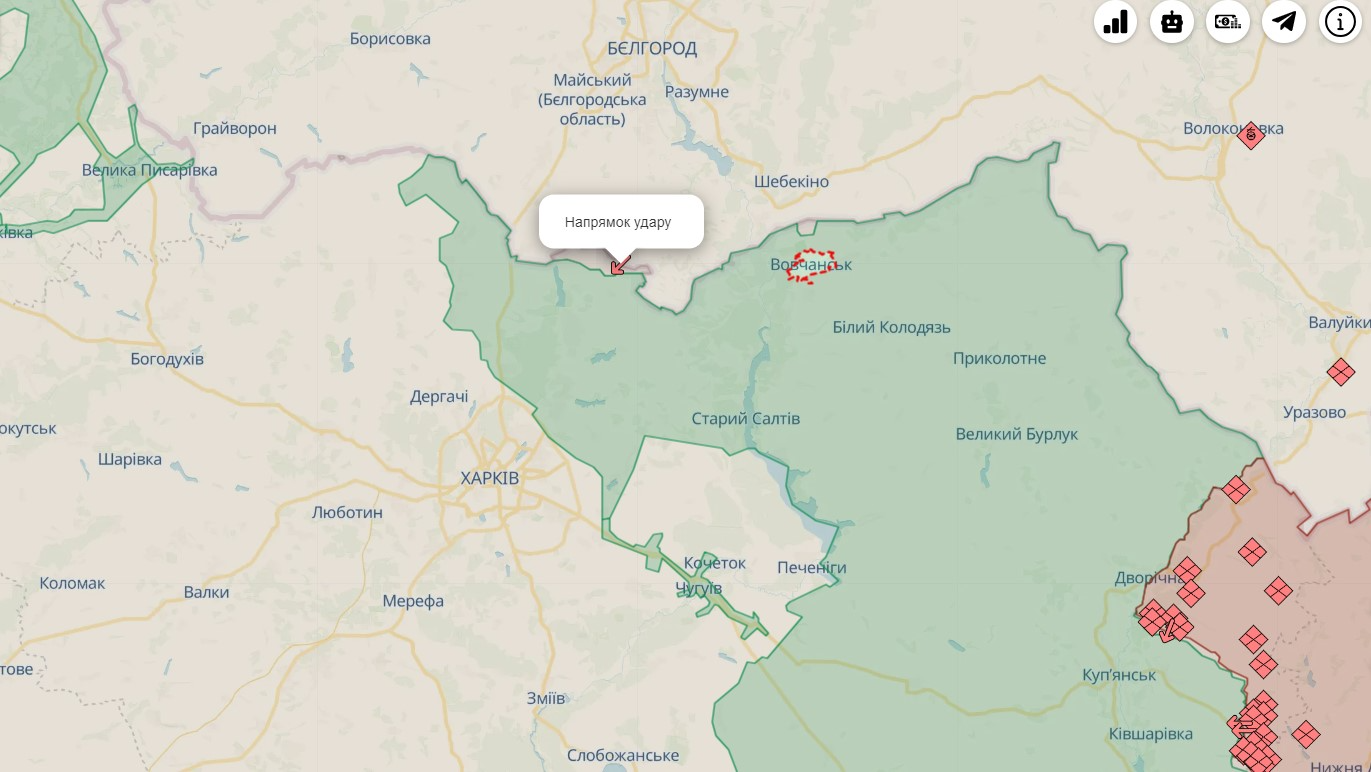
The Defense Ministry also confirmed the intensification of
shelling of Vovchansk during the day, including the use of guided aerial
bombs.
At least two deaths have been reported by the regional
administration. Another two people have been confirmed wounded in Vovchansk,
according to local police.
A number of monitoring Telegram channels cited the military
as saying that the fighting near Vovchansk in the north of Kharkiv Oblast had
intensified on May 10. Oleh Synehubov, loccal governor, confirmed the
intensification of “shelling from multiple rocket launchers and artillery
throughout the night” in Vovchansk and the unsuccessful work of Russian
sabotage and reconnaissance groups to break through the border.
“The Armed Forces of Ukraine are confidently holding their
positions: not a single meter has been lost,” Synehubov said.
“The enemy grouping does not pose a threat to Kharkiv, its
forces are only enough for provocations on the northern front.”
The situation in Kharkiv Oblast looks like a simulation of a
large-scale offensive and reconnaissance by combat, said Andriy Kovalenko, head
of the Center for Countering Disinformation at the National Security and
Defense Council.
“This operation is accompanied by the information work of
the Russian war correspondents, who draw arrows and report on the breakthroughs
of their forces in the depths of kilometers, which are now made up to try to
create panic and use the information vacuum,” said Kovalenko.
The situation is complicated in some places, but controlled
by Ukrainian troops, while the Russians have suffered losses in equipment and
manpower, he added.
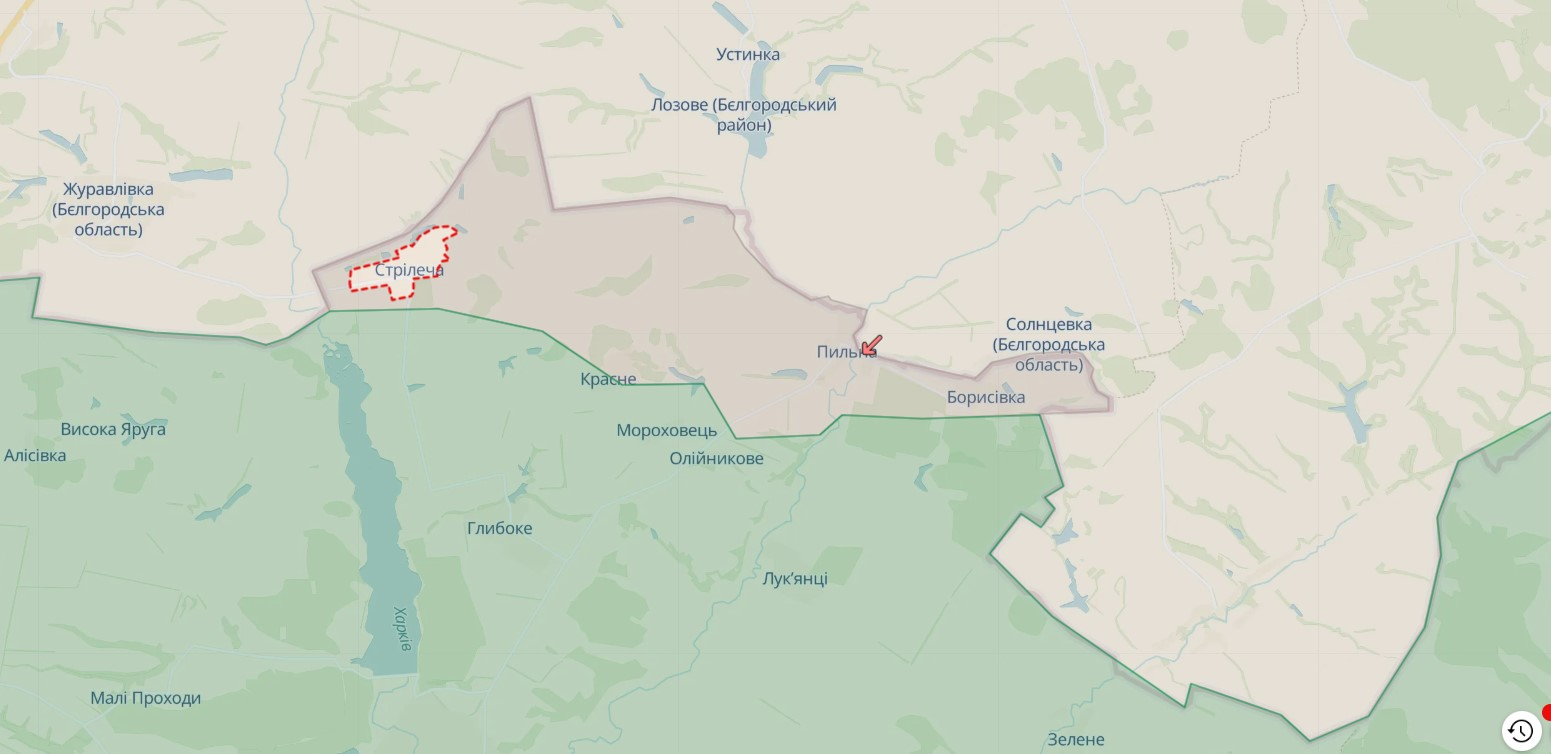
The aggressor has begun to intensify its activities in
Kharkiv Oblast, DeepState analysts reported. Russia is trying to enter and gain
a foothold in a number of settlements along the border, in particular, in the
villages of Strilecha - Krasne - Pylna - Borysivka. The aggressor is also
attempting to enter the settlements of Hatyshche and Pletenivka.
According to Deep State, the attempted breakthrough took
place north of the Ukrainian settlements of Morokhovets and Oliynykove, and the
Russians were moving from the direction of the border village of Pylna (Kharkiv
Oblast of Ukraine). This area is located about 30 km from Kharkiv, and
Vovchansk is 50 km from Kharkiv.
Deep State analysts also posted the first three burned units
of Russian equipment.
Russian attacks were repelled in other areas of the new
offensive, and the enemy suffered significant losses, according to journalist
Yuriy Butusov. A slight advance was also recorded near Vovchansk.
In his Facebook post, Butusov also reported a number of
other facts about the new Russian offensive on the Kharkiv front:
Russians crossed the border at night with up to four or five
infantry battalions, capturing four border villages. The enemy also crossed the
border near Vovchansk.
This border area (with the exception of the village of
Strilecha) “was actually a gray zone”. “As it turned out, the defense line was
not deployed there, and therefore the enemy managed to create a bridgehead up
to 10 km wide and 5 km deep on the territory of Ukraine without any obstacles,”
Butusov said.
The total area of the seized territory is over 30 square
kilometers at a distance of about 40 kilometers from Kharkiv.
The actions of the Russians did not come as a surprise to
the Ukrainian command. The enemy’s further offensive was halted due to the
deployment of Ukrainian troops and the fire engagement on the Russian units.
Russian troops are trying to advance further. Initially,
armored vehicles only brought infantry to the border, but now “armored vehicles
will enter to support further infantry actions.”
The enemy is advancing in separate infantry groups of up to
a platoon each.
The nature of the enemy’s actions is reconnaissance by
combat, conducted by significant infantry forces.
Russia has created a foothold for further actions, but there
are no forces in the area to quickly launch a large-scale offensive on Kharkiv
at this time, Butusov concluded.
President Volodymyr Zelenskyy also confirmed the new Russian
offensive in Kharkiv Oblast at a joint press conference with Slovak President
Zuzana Čaputová in Kyiv.
“Russia has launched a new wave of counteroffensive actions
on the Kharkiv front,” Zelenskyy said.
“Ukraine met them there with our troops, brigades and
artillery. It is important that they can increase and bring in more forces in
this direction. This is a fact. But our soldiers and military command were
aware of this and calculated their forces to meet the enemy’s fire. Now there
is a fierce battle in this area. And from what I know, at about 7-8 am, we met
them with fire, and I believe that by this time they were stopped by artillery
fire. From what I know it was in the morning.”
According to senior Ukrainian military sources, Russian
troops have advanced 1 km near the border town of Vovchansk in a mechanized
attack using armored vehicles, Reuters reported.
Their goal is to push Ukrainian forces 10 kilometers inside
Ukraine and create a so-called buffer zone, the source said.
Reuters also believes that this offensive threatens to open
a “new front” in Ukraine.
Kharkiv Mayor Ihor Terekhov also commented on the new
Russian offensive toward the eastern Ukrainian city.
“There is no panic in the city [of Kharkiv] and there will
be no panic,” he said during the national telethon program marathon amid
reports of a Russian attempt to break through the Ukrainian defenses near
Vovchansk.
“Everyone is working, everyone is doing their own thing.
Yes, we are well aware of what is happening at the front. We are well aware
that there is a war going on, but we need to be focused.”
People are being evacuated from Vovchansk and surrounding
settlements in Kharkiv Oblast, the head of the Vovchansk military administration
Tamaz Hambarashvili told Hromadske Radio.
“Now we are evacuating the population,” said the official.
“Most people are leaving by their own transport. But at the
same time, together with the humanitarian center, we are organizing the
evacuation of those locals who do not have their own cars. We are working
together with volunteers and the police. We are taking them out of Vovchansk
and nearby settlements.”
The evacuation is taking place because the Russian army is
now massively shelling the border town.
“Locals say they have never seen such shelling before,”
Hambarashvili said.
“So it is dangerous to be in Vovchansk now. Since 3 a.m.,
UAVs, artillery, and multiple rocket launchers have been fired.”
Up to 20% of local residents remain in Vovchansk amid Russia’s
largest activation in a year, Dmytro Chubenko, a spokesman for the Kharkiv
Oblast Prosecutor’s Office told Kyiv 24 TV channel.
“There are certain attempts by the enemy to advance and
strike at the border settlements of our region,” Chubenko said.
“As for the evacuation, there are only a few houses
remaining in Vovchansk and Kupyansk, as well as in the border villages of
Derhachi district, from which people have not yet left.”
Forced evacuation is primarily applied to children. If the
situation escalates, adults are forcibly evacuated.
“There is no compulsory evacuation in Vovchansk yet, so
about 10-20% of the local population remains there,” said the official.
Possible Russian offensive on Kharkiv
The Russian media outlet Meduza published on March 26 a
story about Vladimir Putin’s plans to allegedly seize Kharkiv.
A source close to the presidential administration believes
that the country’s leadership aims to capture Kharkiv and then end the
so-called “special military operation.”
Kharkiv Mayor Ihor Terekhov said previously that there was “some
concern” about a possible new Russian offensive on the city, but that there
were not enough resources for it.
The Russians do have a plan to capture Kharkiv or Sumy,
Lieutenant General Oleksandr Pavliuk, commander of the Ukrainian Ground Forces,
said in an interview with The Times on May 3, citing intelligence.
The Russian army is preparing for a new stage of offensive
and advancement of its troops, the deputy commander of the Third Assault
Brigade, Maksym Zhorin, said on May 4, but he believes that it is unlikely that
the Kharkiv front will be a priority for them.
The U.S.-based Institute for the Study of War reported on May 6 that the Russian army had redeployed some troops to Kursk Oblast and was forming a new grouping, presumably in preparation for a large-scale offensive on Kharkiv.
The military war may be swinging in our favor, but the information war continues.
Just as an army needs soldiers, so does a free society need its journalists to ensure that people have access to honest, trustworthy voices to understand the world around them.
For the past five years, The New Voice of Ukraine has been working tirelessly to push back against Russian narratives and defend democracy. But we cannot do it alone.
Please consider supporting us on Patreon for just $5 a month – your donation does directly to supporting journalists and ensuring that this front of the infowar says solid and defended.
Thank you.
Follow us on Twitter, Facebook and Google News
