

Ukraine seizes back initiative near Lyman, disrupts Russia’s Donbas plans
 Read NV on Google
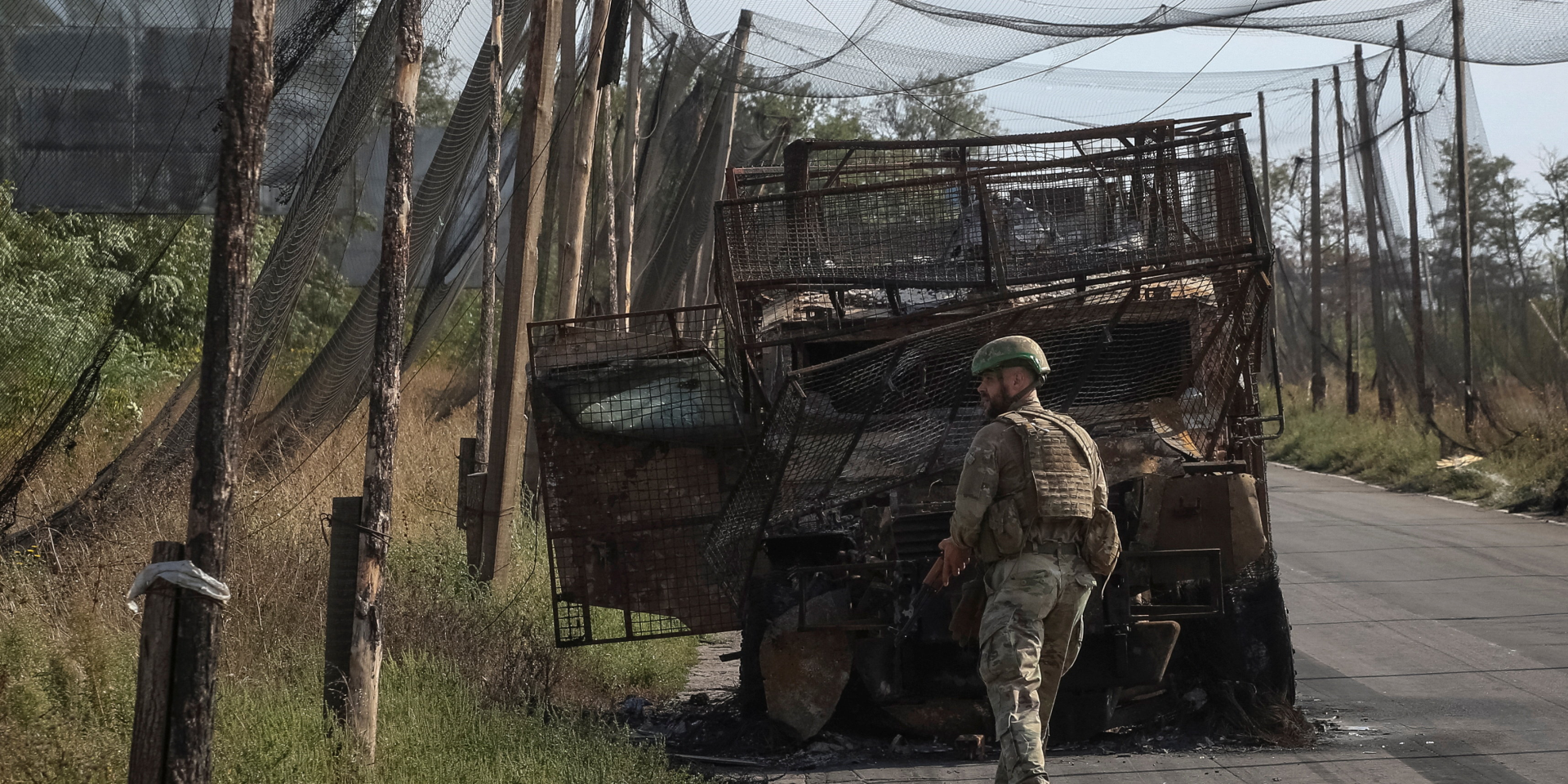
A Ukrainian soldier near the frontline city of Kramatorsk, September 11, 2026 (Photo: REUTERS/Anatolii Stepanov)
Ukraine’s Defense Forces have successfully regained the initiative on both the strategic and operational levels for the first time since the Kursk operation, eliminating a Russian salient north of Lyman and disrupting Moscow’s plans to encircle key cities in Donetsk Oblast, according to a Sept. 12 analysis by the U.S.-based Institute for the Study of War.
Ukrainian forces have successfully resisted the Russian army from late 2025 through all of 2026. Since March, Ukraine has reduced Russia’s net territorial gains almost to zero and carried out successful counteroffensives in the Kupyansk, Oleksandrivka, and Lyman sectors.
According to the think tank, those operations prevented Russian troops from breaking into Dnipropetrovsk Oblast, allowed Ukraine to regain lost positions in Kupyansk and its surrounding area, and destroyed a major Russian salient near Lyman that had threatened Slovyansk and other fortified cities in Donetsk Oblast.
ISW highlighted the Lyman operation in particular, saying it enabled Ukrainian forces over recent months to derail Russian plans to surround key Donbas cities from two directions — from Lyman and Dobropillya.
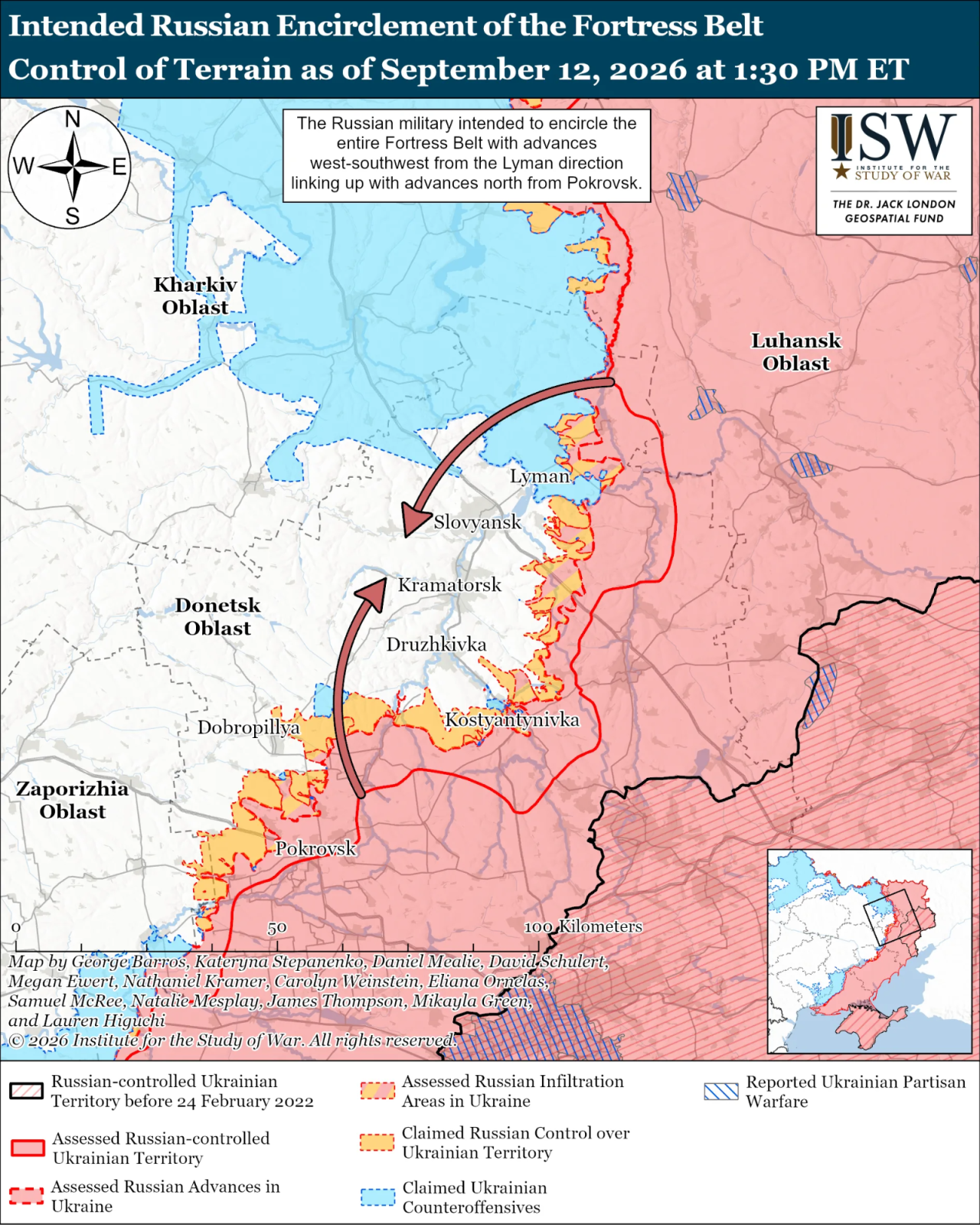
The report said the Russian military command will now likely have to revise its operational plans on the southern and northern flanks of the so-called fortress belt, especially if Ukrainian forces are able to fully push Russian troops back to the Zherebets River and establish a stable defensive line there.
Russia may choose to redeploy surviving units from the Lyman area to other sectors of the front, ISW suggested.
An alternative possibility would be for Moscow to double down on efforts to seize Lyman and revive plans to encircle key cities in Donetsk Oblast from the north. But ISW noted that Russian forces have failed to take Lyman since the fall of 2022, and after what it described as a dramatic defeat in that direction, they are unlikely to be able to use reinforcements to conduct successful large-scale infantry or mechanized assaults in the near future.
The report also said that, because of Ukraine’s recent battlefield successes, Russian commanders are reportedly pressuring President Vladimir Putin to launch a large-scale conscription campaign to retain the initiative. It remains unclear, ISW added, how such a move would affect the battlefield dynamic given Ukraine’s current advantages.
Ukraine’s offensive operation near Lyman
On Sept. 8, reports said Ukraine had launched its counteroffensive operation near Lyman in Donetsk Oblast as early as the beginning of May. According to OSINT analyst Clément Molin, the operation remained secret for four months.
He said Ukrainian forces liberated a series of villages and then completely eliminated the Russian salient, pushing invading forces back across the Zherebets River.
Foreign OSINT analysts also said the Defense Forces had liberated “hundreds of kilometers of territory” on the Lyman front.
In its Sept. 9 report, ISW noted that Russian military bloggers had acknowledged Ukrainian counterattacks near Lyman and were increasingly criticizing the widespread Russian military practice of providing false information about the situation at the front.
The military war may be swinging in our favor, but the information war continues.
Just as an army needs soldiers, so does a free society need its journalists to ensure that people have access to honest, trustworthy voices to understand the world around them.
For the past five years, The New Voice of Ukraine has been working tirelessly to push back against Russian narratives and defend democracy. But we cannot do it alone.
Please consider supporting us on Patreon for just $5 a month – your donation does directly to supporting journalists and ensuring that this front of the infowar says solid and defended.
Thank you.
Follow us on Twitter, Facebook and Google News
