


Russia’s auto giant had a monopoly. It still chose to fail
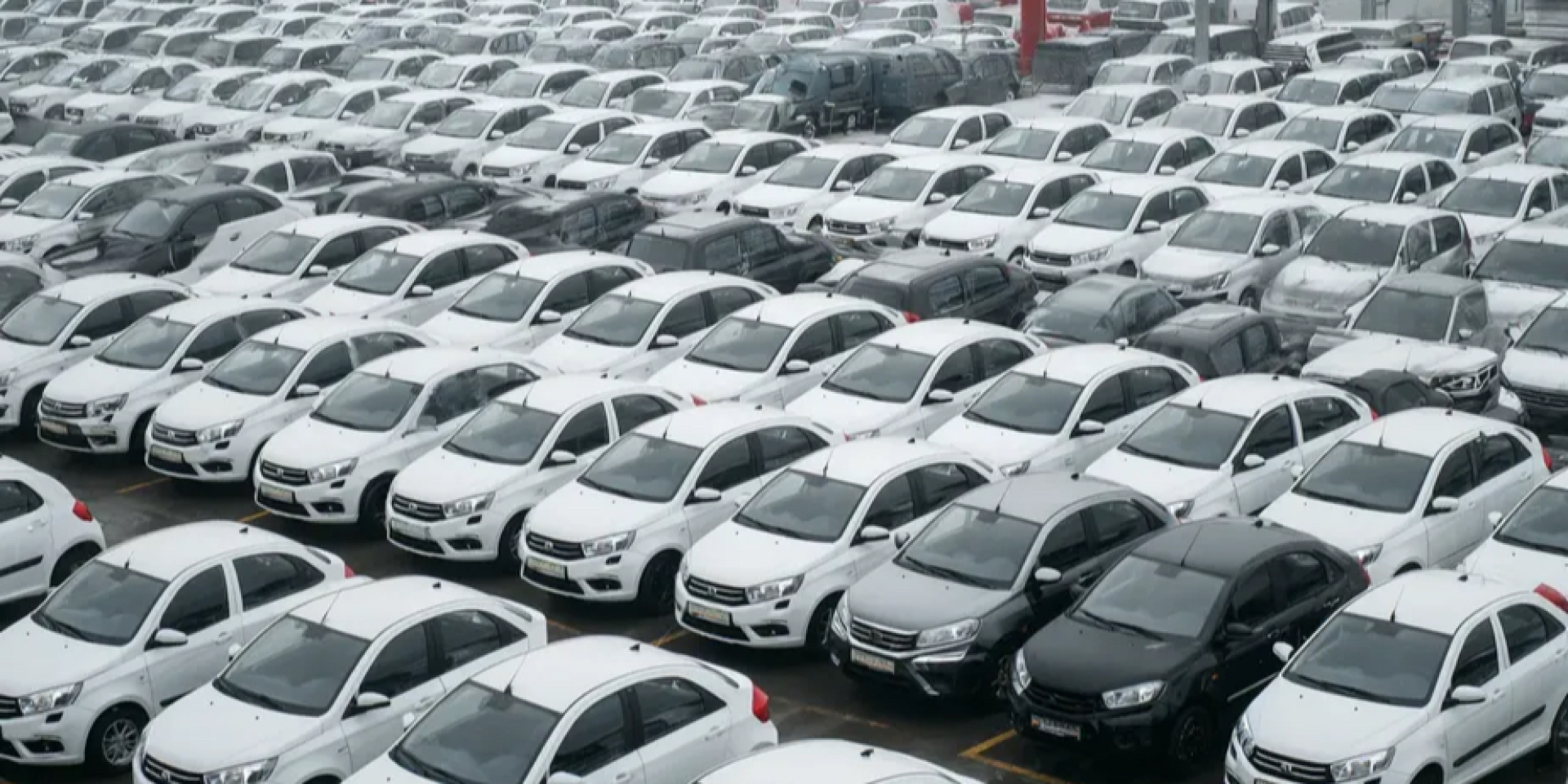
AvtoVAZ dealer inventories are overflowing due to weak sales. (Photo: IXBT.com)
There are moments when an entire system reveals itself in a single phrase. In late 2025, a senior manager at AvtoVAZ, Oleg Grunenkov, was asked whether the company could build something better — something closer to a modern, competitive car. His answer was disarmingly simple: “We could. But why?” In a functioning market economy, that line would trigger resignations, investor panic, and a collapse in consumer trust. In Russia, it became a meme — and like many Russian memes, it carried more truth than anyone intended.
What has happened to AvtoVAZ since 2022 goes far beyond declining product quality. It shows how an economic system can decay while still projecting stability. Before the full-scale invasion of Ukraine, AvtoVAZ never led technologically, but it delivered something essential: function. Its Largus model — built on the engineering backbone of Renault Group — served as a durable workhorse. Taxi drivers ran them nonstop. Couriers relied on them. Small businesses built entire operations around them. It lacked refinement, but it delivered reliability — and reliability drives real economies.
That foundation collapsed the moment Renault left the Russian market. What remained resembled an industry more than it functioned as one — factories disconnected from supply chains, branding detached from engineering, production stripped of quality control. The Kremlin responded with “import substitution,” promising technological sovereignty and domestic capability. In practice, the policy produced neither. European components gave way to the cheapest available imports, often sourced from low-end suppliers in China — reinforcing a long-standing reality: Russia has spent decades trying to match Western industrial quality, without ever fully reaching it.
The decline shows up immediately in the product. New Largus vehicles now fail at rates that would have shocked the market even a decade ago. Critical components break within a few thousand kilometers. Electronics behave unpredictably. Engines struggle to reach proper operating conditions. Gearboxes produce constant noise. Repairs begin before the vehicle enters real use. Across Russia’s online space — from YouTube to automotive forums — owners document the same experience: brand-new cars deteriorating almost as soon as they leave the dealership.
The system performs exactly as its incentives dictate.
And now the numbers confirm it.
AvtoVAZ sales have fallen by more than 60%. Dealers across the country describe identical conditions: unsold cars filling showrooms, storage lots packed with inventory, and new deliveries continuing to arrive. Vehicles from 2024 and 2025 remain unsold, sitting idle for months. Production continues, sustaining the appearance of activity, while demand collapses faster than the company can adjust. The market is flooding with unsold cars.
The causes run deep. Prices have climbed beyond what many buyers can afford. Credit — once a key driver of sales — has become harder to access as interest rates rise and lending conditions tighten. At the same time, Chinese manufacturers move aggressively into the market, offering more modern vehicles, better equipment, and competitive pricing. Against this backdrop, Lada loses its appeal.
Pressure spreads through the system. Dealers face slowing turnover while costs remain fixed. Financial strain builds quickly. Some dealerships are already approaching collapse. What began as a product issue is turning into a distribution crisis — and potentially something broader.
And here lies the central paradox. AvtoVAZ controls its segment. Western manufacturers have exited. Demand has concentrated. In a normal market, this combination creates a moment of expansion. A dominant company invests, improves, and strengthens its position.
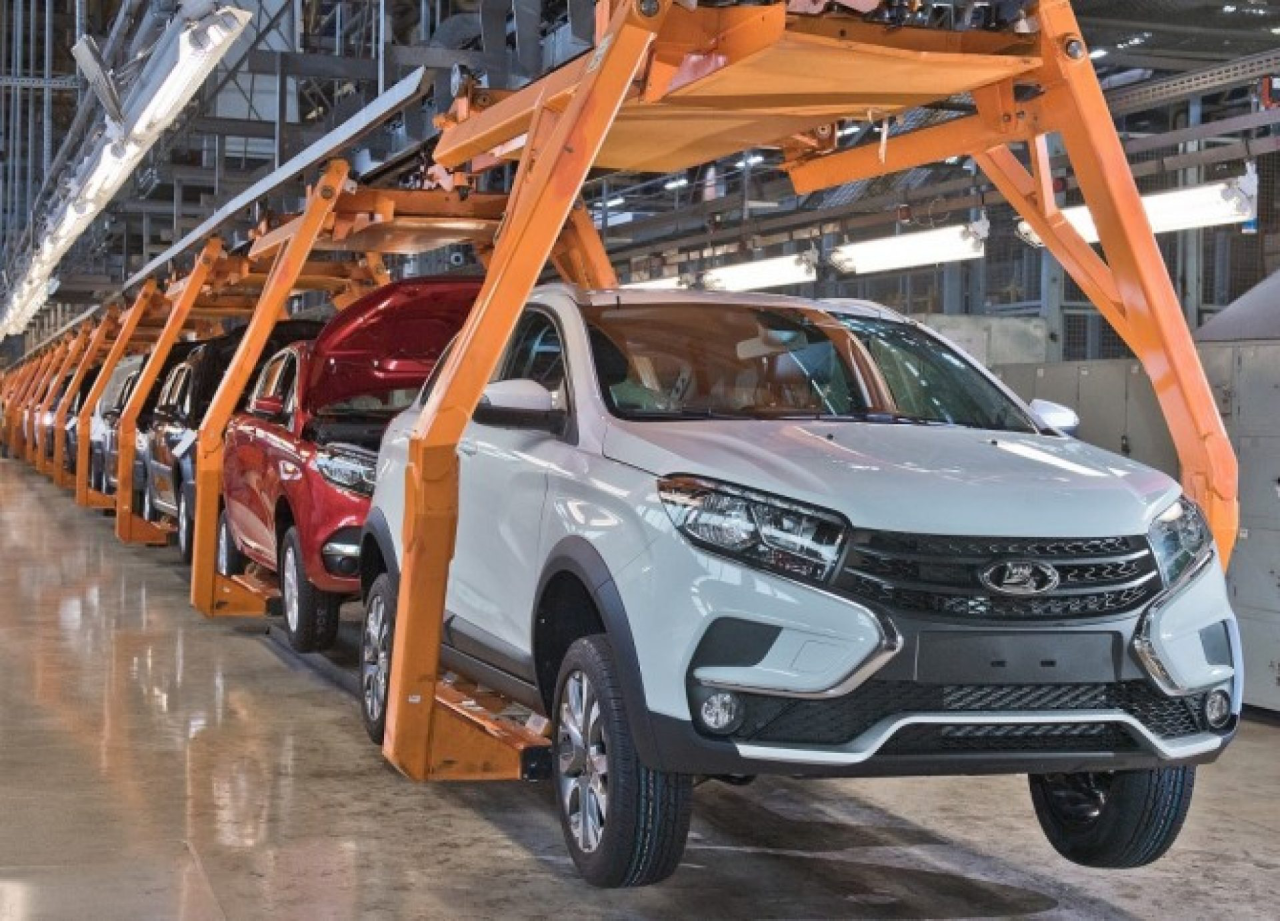
AvtoVAZ moved in the opposite direction.
Consumers responded accordingly.
Small businesses — the backbone of any functioning economy — shifted into the used car market. Within months, reliable vehicles disappeared. Prices for 15- to 20-year-old cars surged to extreme levels, sometimes matching their original retail value. The market stopped reflecting value and began reflecting scarcity and distrust.
At this point, the story moves beyond cars.
“We could. But why?” functions as a governing principle. It defines decision-making. Investment becomes optional. Accountability disappears. Innovation loses urgency. The system rewards minimal effort and tolerates declining outcomes.
Elsewhere, this would be called incompetence. In Russia, it reflects rational behavior — the logic of a monopolist operating in an environment that no longer penalizes failure. The absence of competition drives decay. State support then stabilizes that decay and turns it into policy.
AvtoVAZ illustrates this dynamic with unusual clarity. A flagship company, backed by the state and protected from competition, struggles to produce a reliable product. The constraint no longer lies in capability. It lies in necessity. When necessity disappears, development follows.
That is the deeper meaning of “We could. But why?” It captures a system where improvement becomes optional, responsibility fades, and decline coexists with stability.
The final irony speaks for itself. AvtoVAZ received what every company seeks — a monopoly. Instead of strengthening its position, it weakened it. Consumers now turn to 20-year-old vehicles at inflated prices rather than risk buying a new domestic car. Trust has shifted backward.
And once trust leaves the present, it becomes extremely difficult to rebuild.
At that point, the central question changes.
Capability matters less.
Necessity becomes everything.
In today’s Russia, decline is no longer a failure.
It is a choice.
“We could. But why?”
The military war may be swinging in our favor, but the information war continues.
Just as an army needs soldiers, so does a free society need its journalists to ensure that people have access to honest, trustworthy voices to understand the world around them.
For the past five years, The New Voice of Ukraine has been working tirelessly to push back against Russian narratives and defend democracy. But we cannot do it alone.
Please consider supporting us on Patreon for just $5 a month – your donation does directly to supporting journalists and ensuring that this front of the infowar says solid and defended.
Thank you.
Follow us on Twitter, Facebook and Google News
