

Returning Crimean Tatars helped secure support for Ukrainian independence in Crimea
 Read NV on Google
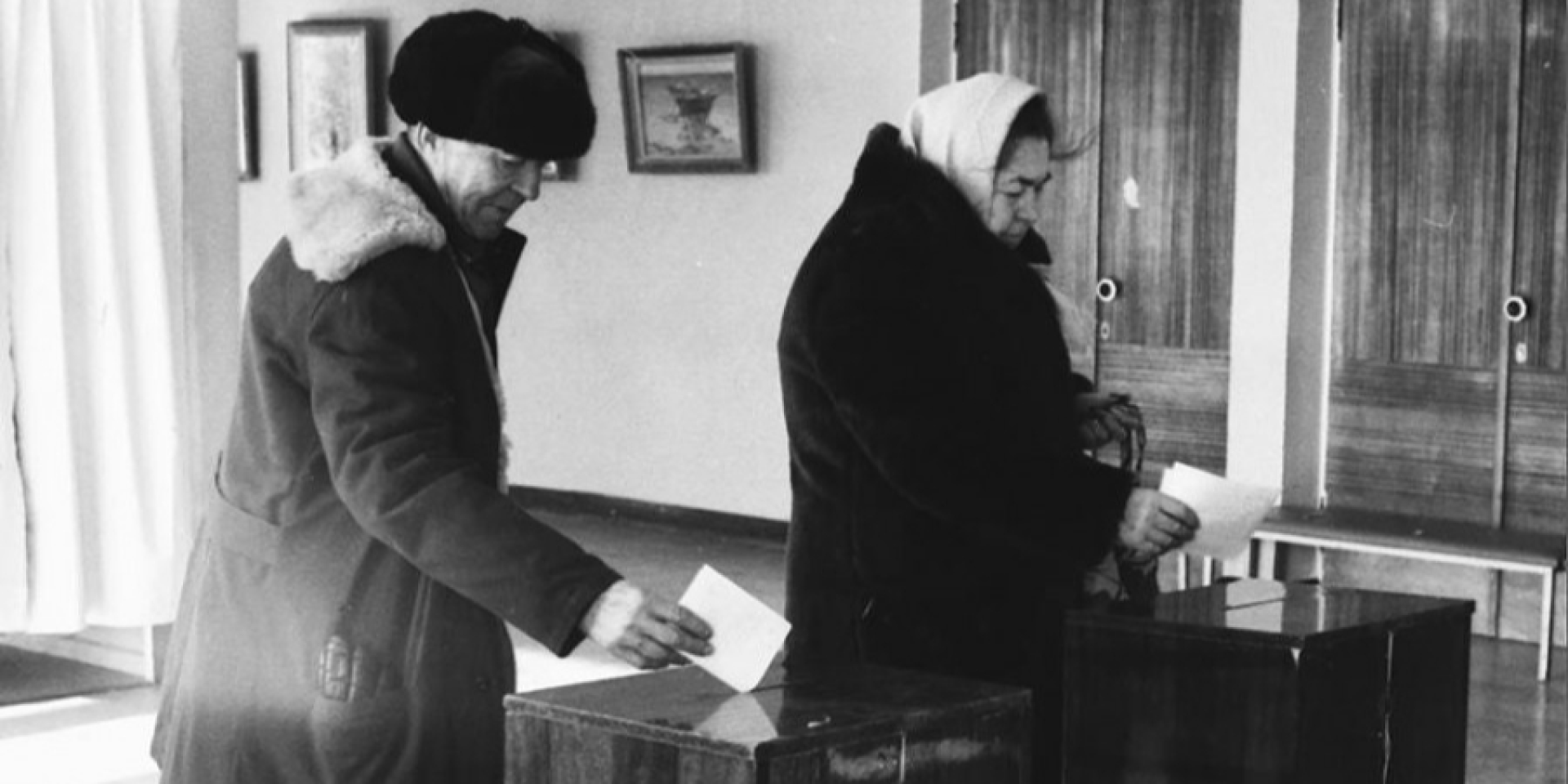
On December 1, 1991, Ukrainians supported the Act of Proclamation of Independence in a referendum (Photo: DR)
Tens of thousands of Crimean Tatars returned to their homeland in the final months of the Soviet Union and helped ensure that Crimea backed Ukrainian independence in the Dec. 1, 1991 referendum, Refat Chubarov, chairman of the Mejlis of the Crimean Tatar People, told Radio NV.
At the time, the exile of the Crimean Tatars had lasted for more than 45 years, but the weakening Soviet empire was no longer able to stop their mass return to the peninsula, Chubarov said.
“The Soviet Union was collapsing, the independence of the Ukrainian state was declared, and then came the referendum on Dec. 1, 1991,” he said.
“All the Crimean Tatars who had returned to Crimea by then — there were already more than 70,000 voters — supported Ukrainian independence.”
About 54% of voters in Crimea backed the Act of Declaration of Independence of Ukraine, the lowest level of support among Ukraine’s regions but still a majority.
“You could say that thanks to the Crimean Tatars, the vote crossed the 50% threshold,” Chubarov said.
He argued that the early 1990s offered a particularly favorable opportunity for Ukraine to legally establish the status of those returning from exile and make it easier for them to rebuild their lives in Crimea.
Kyiv, however, lacked a coherent state policy toward Crimea at the time, Chubarov said.
“Everyone understood that the state could not resettle such a flow of people all at once,” he said. “We were talking about tens of thousands of people who had finally abandoned everything in the places of exile and returned to their own land.”
He said the government needed to help develop areas where Crimean Tatars were settling compactly, particularly as many returnees were ready to build homes themselves if they could obtain land.
“If they were given land — and very little was given — they began building, and these new settlements at least had to be provided with some basic infrastructure,” Chubarov said.
“The third issue was to begin introducing legal norms so that these people could integrate into the new state.”
Ukraine also missed a “fantastic” opportunity at the time to establish a special status for Crimea, Chubarov said.
Crimean Tatar deportation and return to Ukraine
Between May 18 and 20, 1944, the Stalinist authorities deported Crimea’s Crimean Tatar population to remote parts of Central Asia.
Crimean Tatar sources estimate that about 400,000 people were deported.
The Soviet authorities justified the deportation with false accusations that the Crimean Tatars had collaborated with Nazi Germany and its Axis allies.
The Crimean Autonomous Soviet Socialist Republic, which had served as a national-territorial autonomy for the Crimean Tatars, was abolished in 1945.
It was restored in February 1991, but without its previous ethno-national character.
The Soviet Union adopted a law rehabilitating repressed peoples in 1991, although the spontaneous return of Crimean Tatars to the peninsula had begun earlier.
By the first half of the 1990s, more than 250,000 Crimean Tatars had returned.
On Nov. 12, 2015, Ukraine’s Verkhovna Rada recognized the 1944 deportation as genocide and designated May 18 as the Day of Remembrance of the Victims of the Genocide of the Crimean Tatar People.
The military war may be swinging in our favor, but the information war continues.
Just as an army needs soldiers, so does a free society need its journalists to ensure that people have access to honest, trustworthy voices to understand the world around them.
For the past five years, The New Voice of Ukraine has been working tirelessly to push back against Russian narratives and defend democracy. But we cannot do it alone.
Please consider supporting us on Patreon for just $5 a month – your donation does directly to supporting journalists and ensuring that this front of the infowar says solid and defended.
Thank you.
Follow us on Twitter, Facebook and Google News
