

Former Estonian president: Ukraine must stay a top priority after fighting ends
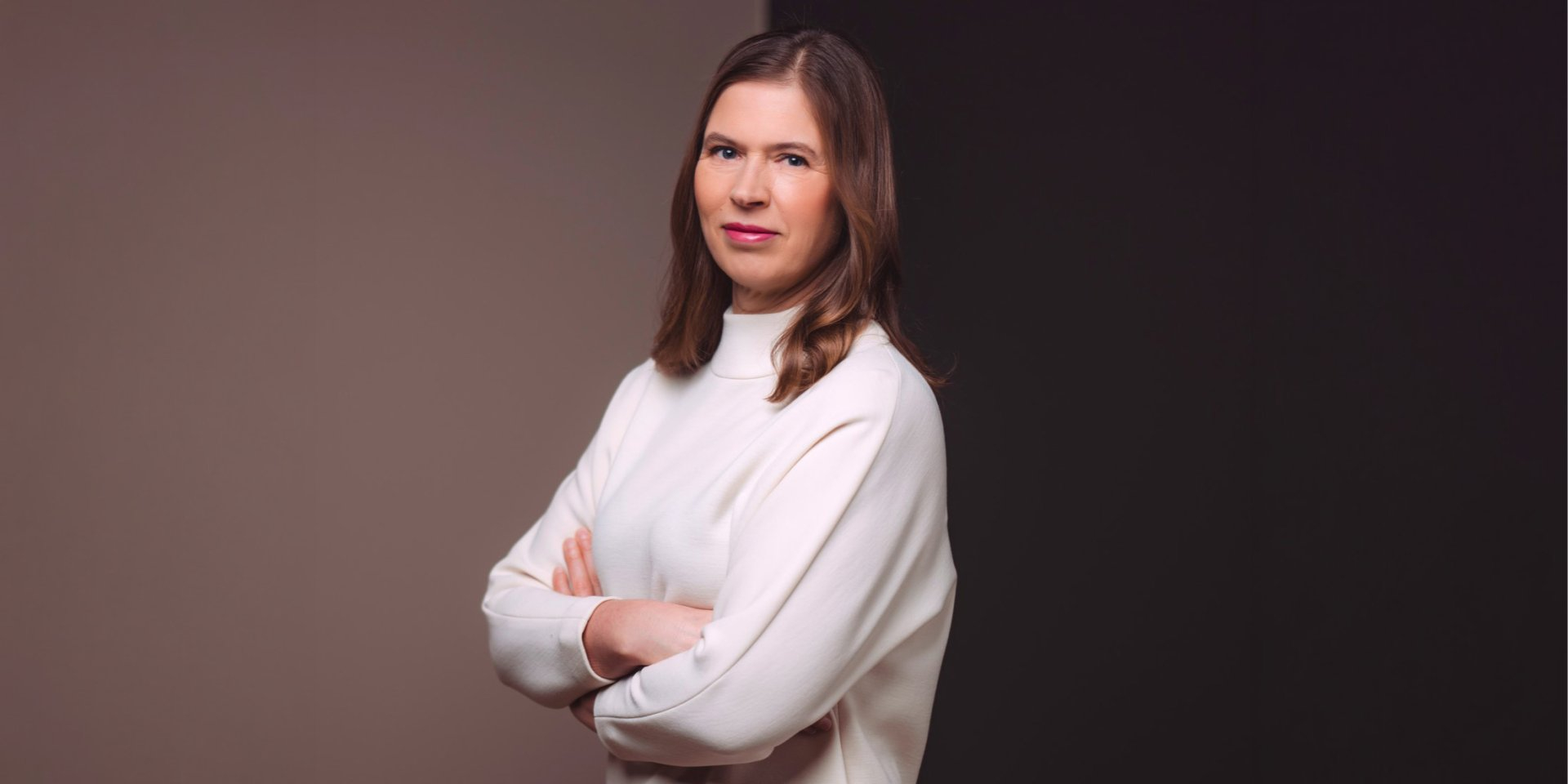
Kersti Kaljulaid, former president of Estonia (Photo: DR)
Former Estonian President Kersti Kaljulaid warned that Ukraine faces a serious risk of repeating the “Georgian scenario” if the West fails to act decisively after the fighting ends — a mistake she said could have lasting consequences for both Ukraine and Europe.
In an interview with The New Voice of Ukraine, Kaljulaid said Ukrainians could quickly become disillusioned with the European Union if it moves too slowly to help restore normal life once active hostilities cease. Russian propaganda, she stressed, would exploit any delay.
Kaljulaid also drew parallels between debates over Greenland and Ukraine, arguing that both reflect broader questions about global power, sovereignty, and Western resolve. She said U.S. President Donald Trump’s confrontation with China cannot be separated from Russia’s war against Ukraine, warning that strategic miscalculations in one arena would reverberate in the other.
NV spoke with Kaljulaid about the scale of these risks, why the EU has been slow to deliver military assistance to Ukraine, whether there is a realistic danger of the United States withdrawing from NATO, and what she views as the West’s most dangerous potential mistake once the war enters a post-combat phase.
The interview was conducted by NV correspondent Nataliia Rop during the World Economic Forum in Davos, on the sidelines of the Ukrainian pavilion organized by the Viktor Pinchuk Foundation.
— Greenland was one of the main topics at the World Economic Forum in Davos. Do you think Ukraine was pushed out of focus because of that?
— I don’t think so, frankly. Anyone thinking clearly understands that this is ultimately a discussion about how a country can violate international law — especially when that country is usually seen as being on the “right side” of such debates. You can’t talk about Greenland without thinking about Ukraine, or Taiwan. These issues are interconnected.
It is true, however, that it may be harder right now for Ukraine to dominate front pages. But it’s the same issue. It’s not a different discussion.
— How would you advise the Ukrainian government to keep Ukraine in focus at this moment?
— I think the Ukrainian government is doing the right thing. It remains engaged in negotiations with the United States on what peace should look like. There are different work streams and sequencing documents involved. Focusing on that process and avoiding political noise is a very sound approach. I can clearly see here in Davos that Ukrainian diplomats and politicians are doing exactly this.
— Speaking of Greenland, do you believe Donald Trump could actually attempt to annex the island?
— This idea is not supported by the U.S. public. We are also hearing more Republican voices saying that acting against a NATO ally would disrupt the world order in ways that are not in America’s own interest. So I still think it is unlikely.
That said, I agree that Greenland needs stronger defense. Europe, unfortunately, usually moves only under strong pressure — but it is moving now. If this discussion is brought into NATO and includes transatlantic partners on how Greenland should be defended, that would be a far more constructive approach. I have heard indications that Mark Rutte is trying to move in that direction.
— Trump said on Jan. 21 that Europe should give him “this piece of ice,” referring to Greenland, adding that if Europe refused, he would remember it. How did you interpret that?
— He will remember it — that’s true. But for me, it resonated with something broader. It is very difficult for an average American to understand why Ukraine continues fighting for a narrow strip of territory in the Donetsk region after losing 20% of its land and much of its energy infrastructure. They often don’t grasp why it matters.
That reflects a wider problem: sometimes even people in the highest offices don’t have the patience to listen to their own advisers explaining why principles matter. One of the most important principles is that borders must not be changed by force. If that principle stops applying to the United States, it certainly won’t apply to China.
That would directly undermine Trump’s own goal of containing China — which appears to matter more to him than containing Russia. But it is the same issue. Standing up to Russia is inseparable from future calculations about China.
— Do you think Trump could decide to withdraw the United States from NATO?
— No, I don’t think so. He has said he created “the most beautiful NATO,” so withdrawal seems unlikely. His method is to pressure and incentivize — to threaten and reward. It’s the art of the deal. It’s unconventional, but at times it has produced results.
Europeans are now talking about defense spending of 5%. Trump incorrectly claimed they already spend that much. Most countries have passed 2%, but very few have reached 5%. There is still work to do.
What saddens me is that European institutions needed such pressure. Some of what Trump says should be done is entirely sensible — and that is the most uncomfortable part.
— Compared with a year ago, are we closer to ending the war?
— I haven’t been close to the peace talks themselves. I understand Ukrainians have high hopes and that negotiations are being taken very seriously. What I don’t see is what would actually compel Russia to agree to anything. Russia believes it is ahead and continues to pressure Ukraine.
So I don’t see a fundamental change yet. While this process may be moving toward peace, the crucial link — what forces Russia to compromise — is still missing. But I may be wrong.
— Russia seems uninterested in peace.
— Russia appears to want to eliminate Ukraine as a state and a nation. It may accept a pause, but not peace. Even if Ukrainians calculate it would take Russia 100 years to occupy Kyiv, Europe must be extremely careful not to give Ukraine away after the fighting ends.
If reconstruction stalls and Ukraine slips off the political radar, people may become disappointed with the West and more vulnerable to Russian strategic communications. We’ve seen this happen in Georgia.
If Europe does not act quickly — rebuilding Ukraine, integrating it into the EU, and making Ukrainians feel supported — disappointment could lead to dangerous political choices. I hope I am wrong, but Russia knows how to exploit such moments.
— What should Europe do now to avoid that outcome?
— First, Europe must recognize this risk is real. Trust in Ukrainian society is not enough. Reconstruction and EU integration must happen extremely fast — to ensure Putin does not gain Ukraine’s people, territory, or its military potential through democratic manipulation. We’ve seen how Russian influence operates in Romania and elsewhere. Europe must act quickly and decisively.
— How can Ukraine avoid a capitulation peace under U.S. pressure?
— Ukraine is doing a very good job. Security guarantees are strengthening. Mark Rutte mentioned this recently. The rigid sequencing documents have disappeared, which is crucial. Ukraine cannot agree to elections without guarantees that Russia won’t exploit them militarily. These issues are now being discussed step by step.
This is no longer a fixed-point plan — it’s a process. The only problem is that Russia is still not at the table.
— Why hasn’t Europe done more militarily?
— That has been the frustration of the past four years. Europe has done just enough to keep Ukraine alive. If today’s actions had been taken in 2022, the situation would look very different. But democratic systems move slowly, and politicians cannot move far ahead of public opinion. Ukraine has paid the price for that delay.
That said, I never would have believed Ukraine would be offered EU accession talks. Europe has broken its own rules by funding a third country’s defense. That shows Europe can act — but always too slowly. I share your impatience.
— Is Europe afraid of destroying Russia?
— I remember when Estonia was occupied and the West talked about preserving “equilibrium.” We learned there is no equilibrium. As former occupied states now in the EU and NATO, the Baltic countries should be Ukraine’s advocates.
We should not speculate about what Putin or Washington might do. We should do what is right: arm ourselves, arm Ukraine, and be strong.
— Are we closer to a global war?
— I don’t think so. The world is becoming more transactional. If the main guarantor of the rules-based order no longer believes in it, trust collapses. Smaller and mid-sized countries will need to stick together.
The Canadian prime minister’s speech here was a call for that — not to build individual fortresses, but to unite. Old structures are breaking down, and new ones take time to form. That gap is dangerous.
— Are Baltic measures against Russia’s shadow fleet effective?
— Estonia is a militarily small player. We rely on Finland and NATO’s Eastern Sentry operation to monitor, intercept, and detain ships when necessary. We always act within the law — and that is our strength.
Democracies never start wars; they fight back. And when they do, they usually win — because their people have something worth fighting for.
The military war may be swinging in our favor, but the information war continues.
Just as an army needs soldiers, so does a free society need its journalists to ensure that people have access to honest, trustworthy voices to understand the world around them.
For the past five years, The New Voice of Ukraine has been working tirelessly to push back against Russian narratives and defend democracy. But we cannot do it alone.
Please consider supporting us on Patreon for just $5 a month – your donation does directly to supporting journalists and ensuring that this front of the infowar says solid and defended.
Thank you.
Follow us on Twitter, Facebook and Google News
