

Fico hints Slovakia will not aid NATO allies if a wider war breaks out
 Read NV on Google
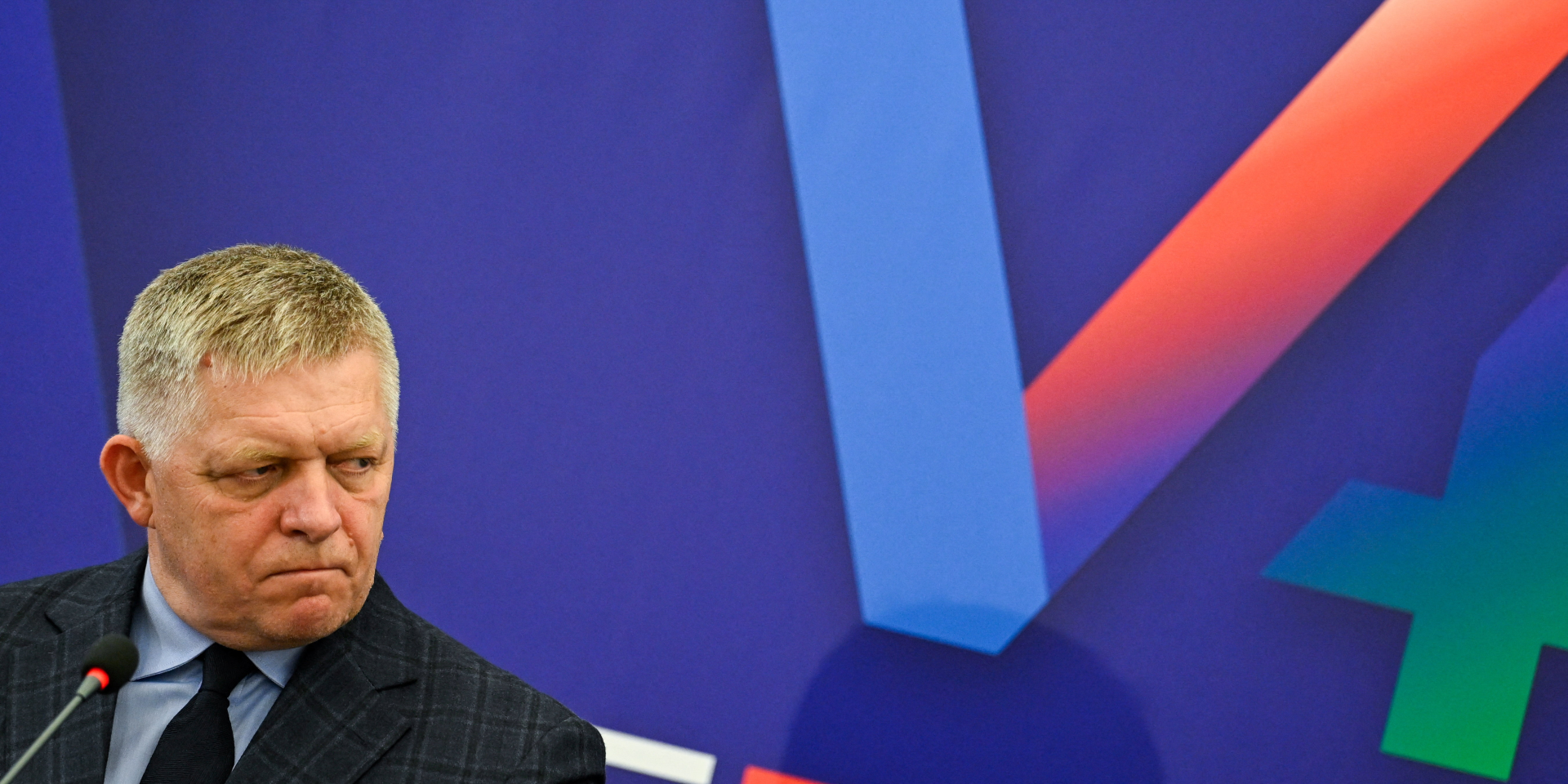
Robert Fico stated that while NATO membership is important to his country, he would resist Slovakia being dragged into a wider conflict (Photo: REUTERS/Radovan Stoklasa)
Slovak Prime Minister Robert Fico stated that while NATO membership is important to his country, he would resist Slovakia being dragged into a wider conflict “via some Article 5,” according to remarks he made during a speech on September 17.
Fico stated that he is concerned about the “loud, bellicose rhetoric being heard in Europe.”
He added that the threat of a pan-European military conflict has never been “as serious and tense as it is now.”
“I do not want Slovakia to become part of any military conflict because of some Article 5,” Fico said. “Yes, we are NATO members; we respect that and are committed to cooperation and fulfilling our obligations, but as prime minister, I will do everything to ensure Slovakia is never drawn into a military conflict.”
Fico noted that he will travel to Ukraine on September 18 to attend a regional summit, where he is scheduled to meet with Ukrainian President Volodymyr Zelenskyy and newly appointed Prime Minister Serhii Koretskyi. Several other European leaders are also scheduled to arrive for the talks.
Fico reiterated that his fear of an escalating war is driving his desire to hold serious, high-level discussions on European security.
CNN reported on September 17 that Russia's hybrid attacks against Europe aim to create a sense of impending war without triggering a direct conflict. However, the report noted that Moscow could eventually miscalculate and cross a line, forcing NATO to respond with military force.
Russian hybrid attacks against Europe
Russian forces launched a drone strike on a passenger train near the Yahodyn border checkpoint in Volyn Oblast on September 13, just two kilometers from the Polish border. Polish Prime Minister Donald Tusk later said on September 17 that a Russian strike drone crashed near Ukraine's border with Poland in Volyn Oblast. According to the Polish prime minister, the drone crashed near the Yahodyn-Dorohusk border crossing during a Russian attack on a gas station.
The Institute for the Study of War (ISW) posited that the Russian strike on the Yahodyn-Dorohusk border checkpoint intended to injure or kill current and former European government officials as they were leaving Ukraine.
A Russian frigate fired two signal flares at a Danish military helicopter in international waters off Gedser on September 14. Emil Gresholm, head of counterintelligence at the Danish Security and Intelligence Service (PET), revealed on September 3 that intelligence operatives uncovered concrete operational plans and preparatory actions orchestrated by Russian intelligence to conduct sabotage operations targeting Danish defense industrial facilities.
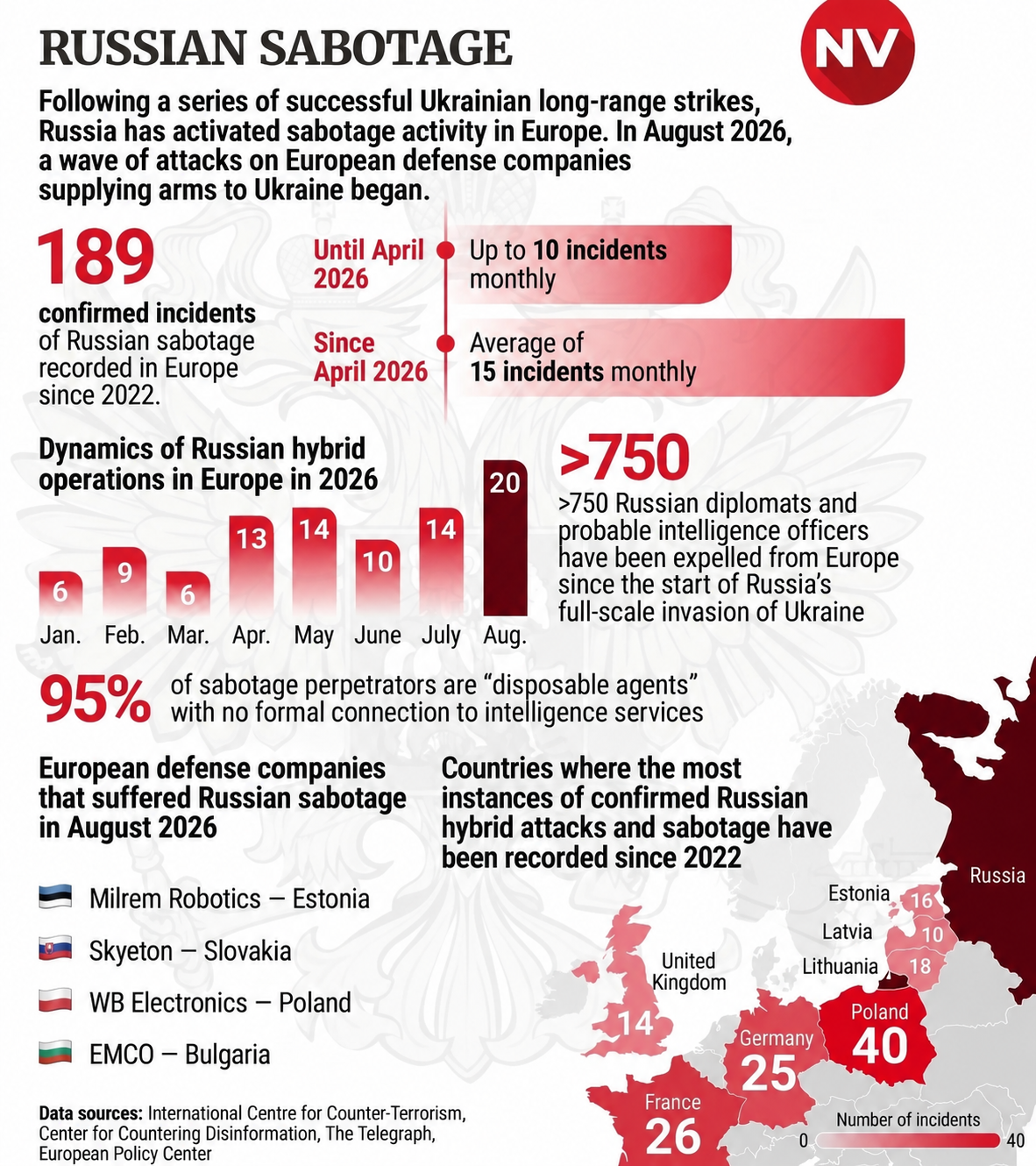
A Russian drone crashed in Lithuania on September 15 after crossing the border from Belarus, where explosives experts subsequently neutralized a bomb found on the aircraft, according to a report by LRT. Italian fighter jets stationed at the Šiauliai airbase shot down the drone over the Kaišiadorys district, near the critical Kruonis Pumped Storage Hydroelectric Plant.
Beyond Lithuania, Russian drones have periodically entered the territory of Moldova, Romania, Latvia, Estonia, and Poland. Furthermore, suspicious or unidentified drones have repeatedly been spotted buzzing strategic sites and critical infrastructure facilities across Finland, Denmark, and Belgium.
Germany has repeatedly investigated acts of state-sponsored sabotage and espionage tied directly to Moscow. High-profile cases include plots to disrupt Western military supply routes to Ukraine, a parcel bomb that caught fire at a DHL logistics hub in Leipzig, and a failed explosive-laden drone attack orchestrated by Russian intelligence targeting a Ukrainian Antonov cargo aircraft at Leipzig/Halle Airport.
The military war may be swinging in our favor, but the information war continues.
Just as an army needs soldiers, so does a free society need its journalists to ensure that people have access to honest, trustworthy voices to understand the world around them.
For the past five years, The New Voice of Ukraine has been working tirelessly to push back against Russian narratives and defend democracy. But we cannot do it alone.
Please consider supporting us on Patreon for just $5 a month – your donation does directly to supporting journalists and ensuring that this front of the infowar says solid and defended.
Thank you.
Follow us on Twitter, Facebook and Google News
