

Kremlin calls U.S. ‘hellish sanctions’ bill unfriendly, warns of peace impact
 Read NV on Google
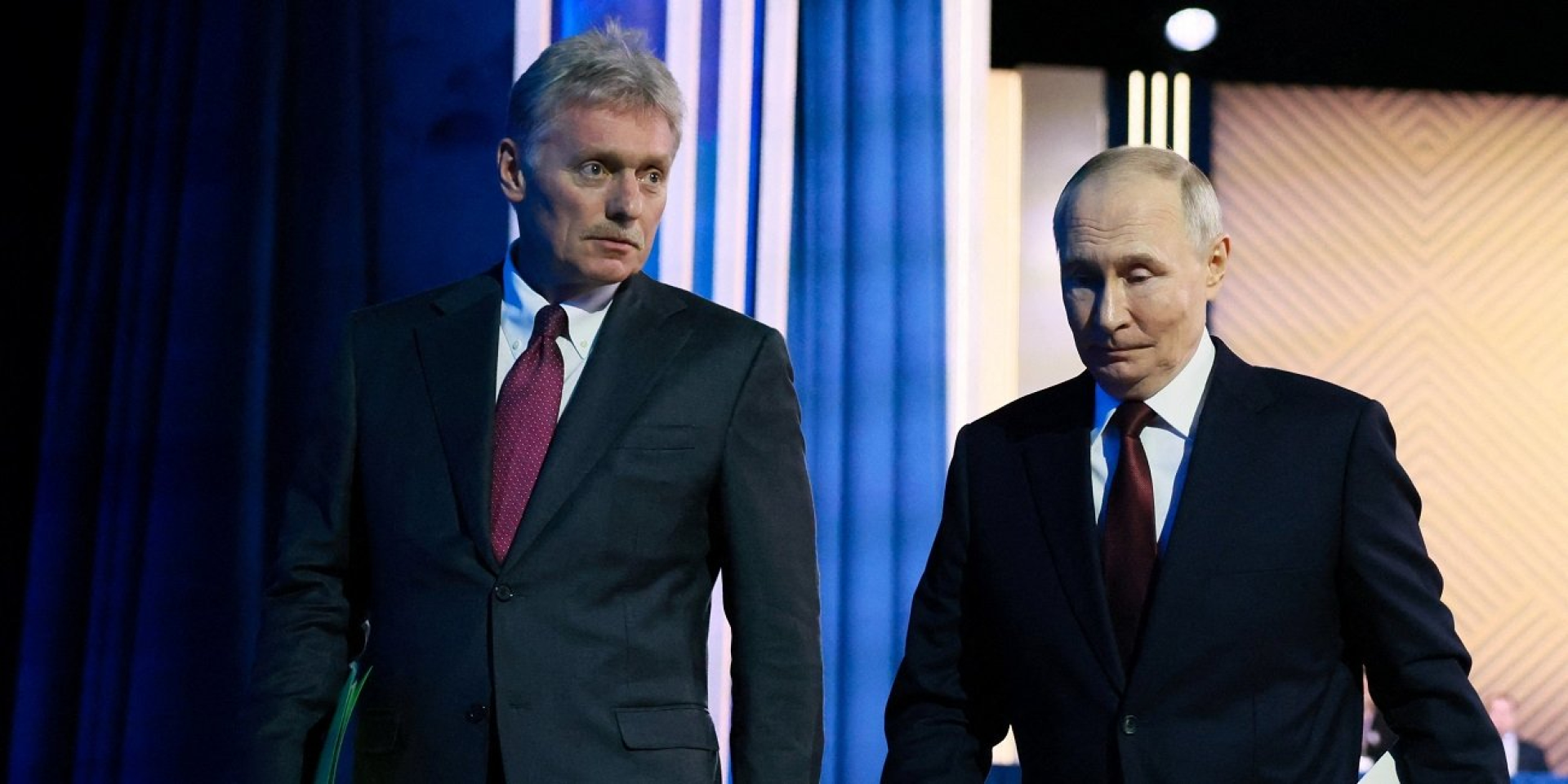
Kremlin spokesman Dmitry Peskov and Russian dictator Vladimir Putin on Dec. 19, 2025 (Photo: Sputnik/Mikhail Metzel/Pool via REUTERS)
Spokesman for the Kremlin regime Dmitry Peskov said Moscow
is monitoring the progress of a sweeping “hellish
sanctions” bill against Russia. He also described such U.S. actions as
“unfriendly.”
Russian propaganda agency Interfax reported the remarks on
Aug. 17.
Peskov also claimed that additional U.S. sanctions would
complicate efforts to reach a peaceful settlement in Ukraine.
On Sept. 16, the U.S. House of Representatives approved a
bill imposing “hellish sanctions” on Russia and Iran. Among other provisions,
the measure would authorize President Donald Trump to impose tariffs on the
largest importers of Russian oil and gas.
The Lindsey O. Graham Russia and Iran Sanctions Act of 2026
passed by a 262-159 vote.
The bill will now go to Trump for his signature.
Lindsey Graham’s Russia sanctions bill
In early April 2025, a bill
proposing new sanctions against Russia was introduced in the U.S. Senate.
It called for a 500% tariff on imports from countries that continued to buy
Russian oil and other raw materials. The bill was co-sponsored by Sens. Lindsey
Graham, a Republican, and Richard Blumenthal, a Democrat.
In June 2025, The Wall Street Journal reported that the
Trump administration was pressuring Graham to soften the bill. Politico also
reported that the legislation could be significantly softened before passage.
On July 10, 2026, Sen. Lindsey Graham said at a news
conference during a visit to Kyiv that he had reached an agreement with the White
House on a new version of the Russia sanctions bill.
On Sept. 16, the House gave final approval to the bill.
The legislation would significantly tighten sanctions on
Russia. In particular, it would authorize the U.S. president to impose tariffs
of up to 100% on countries that continue to buy Russian energy products.
The bill would also expand restrictions on Russia’s military
leadership, financial and energy sectors, foreign suppliers and shadow fleet
vessels, while tightening export controls on goods Russia could use to make
weapons.
The military war may be swinging in our favor, but the information war continues.
Just as an army needs soldiers, so does a free society need its journalists to ensure that people have access to honest, trustworthy voices to understand the world around them.
For the past five years, The New Voice of Ukraine has been working tirelessly to push back against Russian narratives and defend democracy. But we cannot do it alone.
Please consider supporting us on Patreon for just $5 a month – your donation does directly to supporting journalists and ensuring that this front of the infowar says solid and defended.
Thank you.
Follow us on Twitter, Facebook and Google News
