


Crisis with no playbook: seven wartime lessons for central banking – NBU governor’s speech
 Read NV on Google
Ukraine is the first belligerent to be caught between the future and the past. Even during the Cold War, global uncertainty was not as high as it is now.

Here is the keynote address by the Governor of the National Bank of Ukraine (NBU) Andriy Pyshnyy at the June 14 Central Banking Summer Meetings in London:
War. This is not just a terrible word. It is a reality that is even more terrible. This is an existential challenge for the Ukrainian people. It was evident to us from the first days of the war and became evident to the world after the tragedies in Bucha, Mariupol, and many Ukrainian cities.
This is an existential challenge for the European region as well, as evidenced by the environmental catastrophe caused by Russia’s destruction of the Kakhovka Dam. Therefore, we Ukrainians have no choice but to resist and win.
At the same time, the war has mobilized our internal efforts and massive assistance from our partners, including in the financial sphere. This support and partnership have not only helped us to withstand Russian aggression, but have also become one of the key elements of our superpower, which we call the "Factor of Invincibility" at NBU.
This Ukrainian anti-fragility – our resilience during wartime – has become an absolutely real economic factor that we even take into account when shaping policy. International support, including from our colleagues at other central banks, is a multiplier of our resilience.
Why is our experience important? There are at least three reasons:
Firstly, we found ourselves on the front line of a conflict which was caused by attempts at revanche by autocracy and the past as such. The modern world hoped for a peaceful evolution. Ukrainians did, as well. However, we were not given this opportunity. Unfortunately, we have to move forward at too high a price. Ukraine turned out to be the cornerstone on which the transition to the new global order is based, first and foremost through a transition to the new security and economic order.
In other words, Ukraine has become the first belligerent nation to find itself on the front line between the future and the past.
Let's be frank: even during the Cold War, there was not such extreme uncertainty as there is now. There was no such deep vulnerability of the global economy to the shocks generated by war challenges. The oil crisis of the '70s looks like a mild problem in comparison to what is happening now, for example, with food or the production of modern electronic chips.
Thirdly, Ukraine has resisted and continues to resist despite having extremely limited resources. There are no textbooks explaining what to do in the event of a full-scale war in the heart of Europe in the 21st century. We greatly appreciate the help and support of our partners, but the aggressor's resources remain plentiful. Should this scare us? As evidenced by our 476 days of resistance and the ongoing counteroffensive – no, it does not scare us. However, it requires quick, non-standard, asymmetrical responses and interactions. Sanctions pressure on the aggressor is one strong example.
The combination of threats generated by Russia's full-scale, barbaric invasion of Ukraine created a perfect storm: forced migration, disruption of supply chains, man-made and ecological disasters, attempts to test the immunity of the democratic world to resistance, and challenges for the global security system.
The combination of these factors and phenomena became a "black swan event" that few expected. The modern central bank of this country, with a financial system that has high technology and a high digitalization level, is facing horrible things.
We have to respond to the challenges. The world must respond collectively – in a powerful, creative and asymmetrical manner. I offer several theses for your consideration.
Thesis 1: if it is impossible to predict the appearance of future black swan events, then we must all become anti-fragile. In recent years, the world has faced black swans – unexpected events and influences – quite regularly. COVID, Russia’s war against Ukraine, and what's next? Perhaps a future confrontation of the democratic world against authoritarian regimes, which I've already mentioned. Or the "climate challenge," but this is known to us in advance, so it's not exactly a black swan, even though the challenge is global and extremely dangerous.
I’d like to turn to Nassim Taleb's book Antifragility: Things That Gain from Disorder. There is a quote from it: " By grasping the mechanisms of antifragility, we can build a systematic and broad guide to non-predictive decision making under uncertainty..."
I am confident that everyone present here is searching for solutions that can help prepare for unforeseeable events and the impact of exogenous factors. The influence of exogenous factors is increasing every year because the world is becoming more interconnected. Even expected or predicted events, when combined in a certain war in time and space, can create another black swan. What are some examples of this interdependence? Let’s start with the food crisis in Africa, where Russian aggression against Ukraine was added to known problems (climate, interstate relations, and significant global food price inflation). And it turned out that Ukraine plays a key role in global food security, which caught some people by surprise.
Thesis 2 concerns the special role of central bank heads. We already see that the financial system is a key battlefield for confronting global challenges. The destruction of a country’s financial system is similar in its consequences to the destruction of the circulatory system in a human being. The most important thing while confronting global challenges is to avoid "scarring" financial systems in particular and the world economy as a whole. The most recent example of this "scarring" is the "inflationary tail" after COVID-19.
We see minimizing the scarring of the Ukrainian economy as one of our key tasks. We saw an example for ourselves and drew conclusions from the powerful and somewhat unconventional steps taken by international financial organizations and the most experienced central banks in overcoming the consequences of the pandemic.
At the beginning of the war, we focused our efforts primarily on ensuring the uninterrupted functioning of the banking system and payments in the economy. At the first stage, we had to resort to supporting the state budget while simultaneously limiting its monetization, which helped to maintain macro-financial stability. We managed to preserve trust in the national currency, control the pace of inflation, and ensure relative stability in the foreign exchange market. The internal debt market has started working. All of this amidst a war shock led to the loss of a third of GDP. Thanks to administrative measures, measured restrictions, a balanced intervention policy and international assistance, our international reserves were preserved. Today they are at their highest level in the last 11 years. And the pace of consumer price growth has almost halved from peak values, to 15% per annum as of June 1.
And all of this together has created the opportunity to begin preparing for the return of market mechanisms. At the same time, it has contributed to the preservation of the stability of the banking system and even cautious recovery of lending.
Thesis 3 concerns the extraordinary nature of our experience. With no playbook to turn to on what to do during a full-scale war, the NBU emerged as a generator and tester of novel solutions. We worked under the toughest resource constraints, proposing and discussing with foreign partners solutions that ultimately led to changes in the policies and approaches of leading international financial organizations. Ukraine gained very valuable experience, at a very high cost.
One example is our new program with the IMF. It is part of a general package of external financial support to Ukraine, which totals $115 billion, according to the basis scenario. Taking into account the conditions under which the new program with the IMF was adopted, its financing, and qualitative changes in cooperation with the Fund, this program is unprecedented. In the future, other countries affected by military aggression or other prolonged external shocks will be able to seek similar assistance.
This means that the world, which became even more vulnerable after Russia’s invasion of Ukraine, will become more protected. Therefore, by demonstrating the ability to surmount extreme challenges and fulfill obligations even during wartime, Ukraine has made a kind of gift to the whole world.
Thesis 4 – about the flexibility and adaptability of the Central Bank as an institution. We, of course, had several Plan B options in our drawer. But they had critical limitations, as the swan was indeed "black." The real shock turned out to be much more powerful. Therefore, the Central Bank as an institution had to become super-adaptive, and much more innovative than usual.
A central bank, as our experience shows, must also be more innovative and proactive rather than being a possible source of uncertainty. We gained certain experience in 2014 when Russia occupied Crimea and parts of Donetsk and Luhansk oblasts. We prepared and worked things out, but responsiveness and readiness to act immediately after the first missiles fell near the NBU headquarters became extremely important.
Thesis 5: people are the basis of anti-fragility. After all, this antifragility is implemented by a specific team and by specific people. These people must hold the system together even when the ground is being physically swept away from under their feet and missiles fall from the sky. No strategy will be worth anything if nobody implements it. Conversely, every motivated and professional person on the team is a carrier of anti-fragility, embodying our resilience factor.
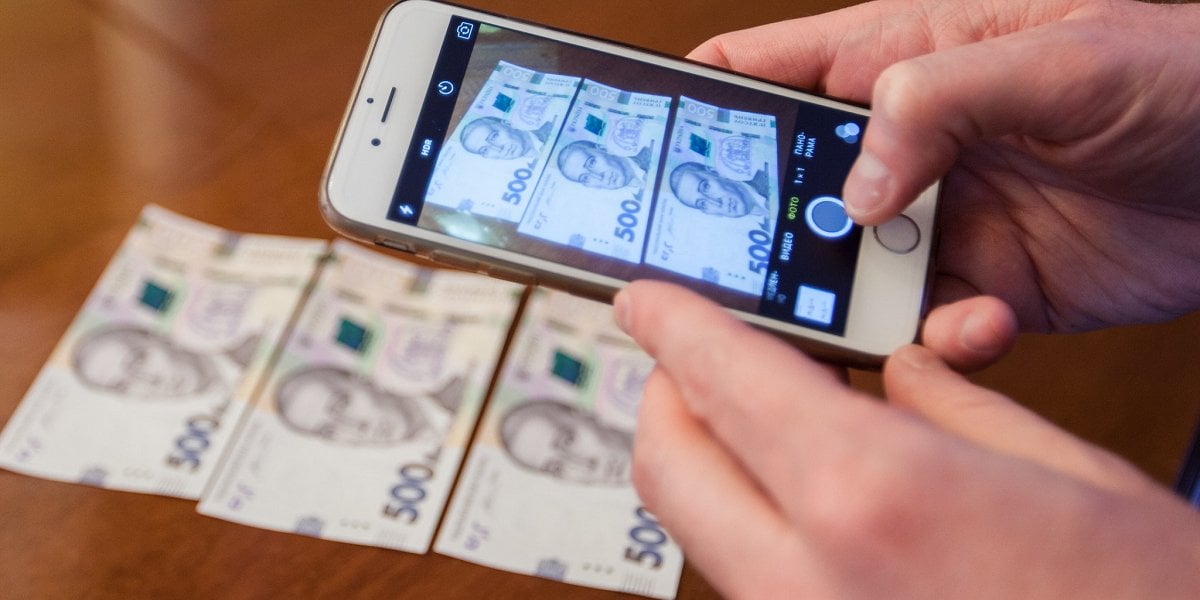
When Russia attempted to destroy the Ukrainian energy system in late 2022, we created a single and unique joint banking network – Power Banking, that is, a system for the uninterrupted functioning of the financial system during regular power outages and even complete blackouts. Imagine rival banks supporting each other. That's how it worked in Ukraine. The entire financial sector worked as a single team during that crisis period. It was not only a matter of professionalism, high qualifications, and technological advancement. It was also a matter of ethics, dedication to the cause, and patriotism.
Thesis 6 – we must maintain a strategic focus and reduce areas of uncertainty for society and businesses. Our experience shows that the central bank must formulate an anti-fragility strategy based on the fastest possible reduction of uncertainty zones, the development of local capacity to autonomously solve problems in the financial sector, proactive involvement of stakeholders in solving emerging problems, and the precise balancing of priorities. We have laid all these principles at the base of NBU’s new strategy, which was adopted just a few weeks ago under the name Financial Fortress.
Threats and challenges of both wartime and post-war reconstruction have required the NBU to update its strategic development goals and increase the flexibility of its planning methodology. Despite the fact that we did not have and still do not have an answer to the key question of when the war will end, we firmly believe that strategic planning is appropriate in these circumstances as a tool for reducing uncertainty. The first focus is resistance and adoption of European standards, while the second is post-war reconstruction.
Thesis 7 relates to the role of central banks as a source of stability and leadership. In this sense, operational interaction with our colleagues and other central banks, including the exchange of information and mutual support, is extremely important. The leadership of central banks also involves the powerful use of available mandates and international legal mechanisms. What are some examples? The FATF (Financial Action Task Force) plenary meeting is approaching, and we are all waiting for results that will determine future measures to prevent money laundering and terrorism financing. First and foremost, this means the inclusion of Russia – a country which undermines not only the financial system, but also the global security architecture – on the organization’s blacklist. Ukraine has prepared an appeal for this action with clear legal arguments and undeniable evidence confirming Russia's involvement in financing terrorism. We hope that your delegations will support Russia's inclusion on the blacklist in order to safeguard the international financial system against its criminal actions. The fire must be extinguished in your neighbor's house before it spreads to yours. I believe that this would be a worthy joint response and a robust foundation of global financial anti-fragility.
The military war may be swinging in our favor, but the information war continues.
Just as an army needs soldiers, so does a free society need its journalists to ensure that people have access to honest, trustworthy voices to understand the world around them.
For the past five years, The New Voice of Ukraine has been working tirelessly to push back against Russian narratives and defend democracy. But we cannot do it alone.
Please consider supporting us on Patreon for just $5 a month – your donation does directly to supporting journalists and ensuring that this front of the infowar says solid and defended.
Thank you.
Follow us on Twitter, Facebook and Google News
