


Unions, civic groups call for labor reforms at Kyiv forum
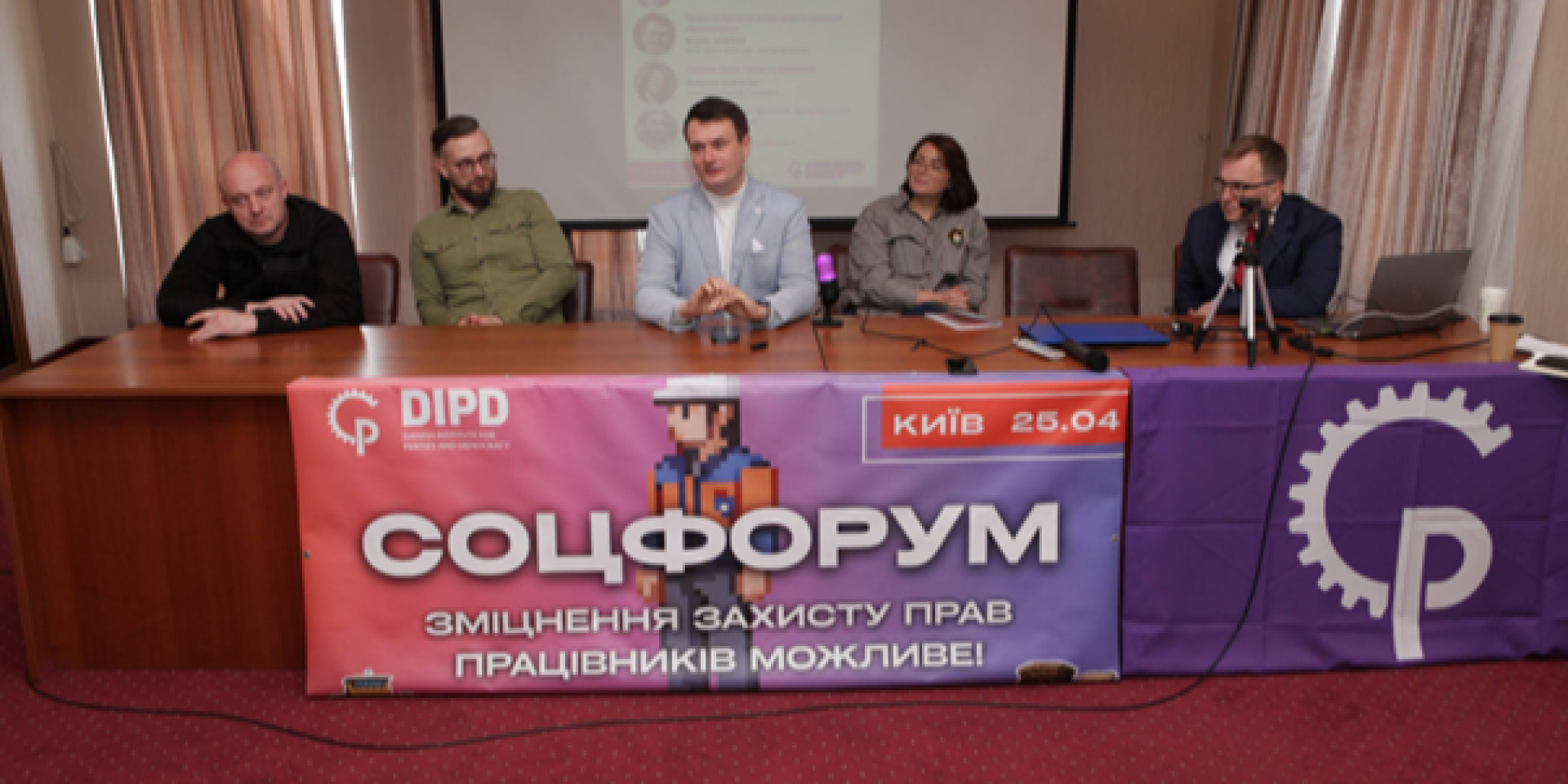
Social Forum in Kyiv, April 25 (Photo: Social Movement – SR)
Ukrainian NGO Social Movement (Sotsialnyi Rukh; SR)
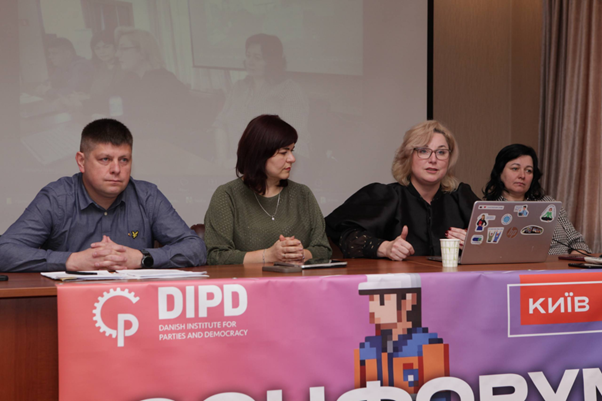
organized a Social Forum in Kyiv on April 25, bringing together trade union
leaders, social activists, and representatives of political organizations to
discuss labor
reforms, workplace safety, and social protections during wartime.
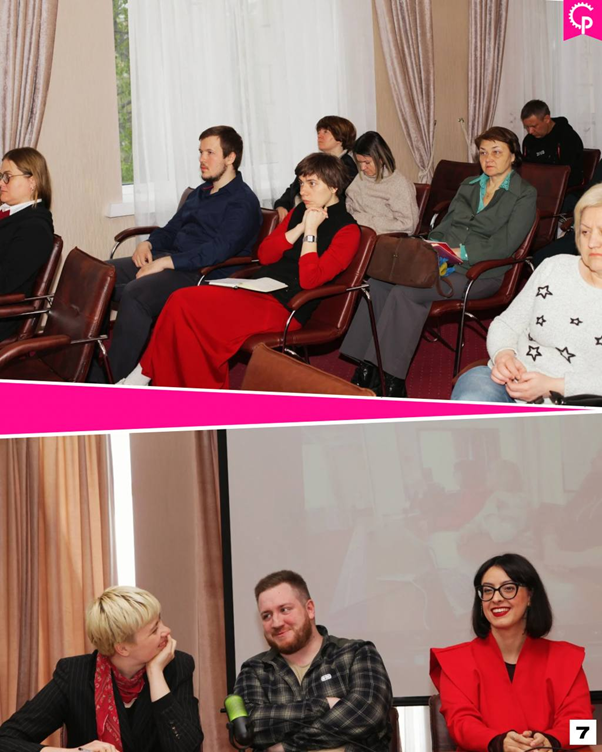
The event included representatives of unions from the nuclear energy, construction, aircraft manufacturing, machine-building, and railway sectors, as well as delegates from socially oriented organizations and political groups, including Narodovladdia, Social Movement, and the Social Democratic Platform. Participants discussed urgent problems facing their industries.
At the center of the discussion were proposed changes to labor legislation, particularly the government bill submitted in January, which could weaken workers’ rights and further tilt the balance in favor of employers over employees.
Untapped social spending reserves
Among the speakers was MP Pavlo Frolov, author of legislation on compensation payments for workers affected by Russian shelling. He said Ukraine spent only 53% of allocated international assistance for housing programs for internally displaced persons in 2025.
Frolov attributed the large share of unspent funds to ineffective bureaucracy and poor coordination. He stressed that these problems extend beyond housing and reflect broader failures in Ukraine’s social policy.
Workplace safety
Vasyl Andriyev, head of the Builders’ Union of Ukraine, presented data on workplace fatalities and labor safety. He said nearly half of employed people in Ukraine work in conditions that fail to meet basic occupational safety standards.
He added that these standards remain significantly below European levels, contributing to injuries, deaths and avoidable health risks that could be prevented through stronger labor regulation.
Minimum wage and sectoral pay
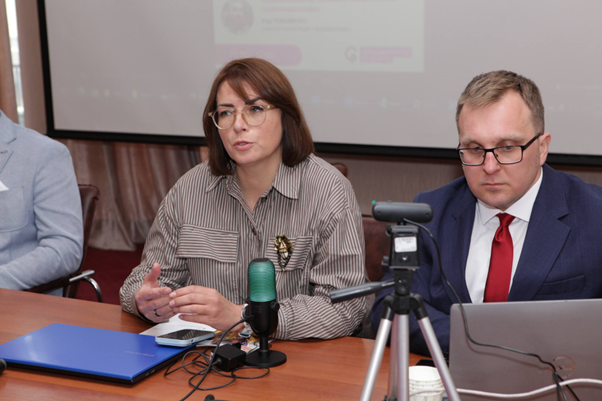
Nataliia Zemlianska, head of the All-Ukrainian Union of Industrial Workers, Entrepreneurs and Labor Migrants and chair of the Social Insurance Fund, delivered a presentation on wage conditions in Ukraine.
She argued that the minimum wage no longer fulfills its intended purpose and should be tied to the average salary at a level of 50%. Zemlianska said the current minimum wage does not cover basic living needs and fails to meet standards of dignity. The current minimum monthly wage stands at UAH8,647 ($197).
Participants also stressed the need to distinguish between the minimum wage as compensation for simple, unskilled labor and a baseline level of pay for qualified workers.
They argued that an employee with 20 years of experience, or
a highly qualified medical professional, should not be paid only the minimum
wage, as this devalues experience and professionalism in critically important
sectors.
Zemlianska also supported the idea of sector-specific base pay: a wage floor above the national minimum that would be set separately for each branch of the economy and would account for seniority, qualifications, and job complexity.
She noted that the war has created new basic expenses related to medical treatment, mental health and internal displacement, while power outages make it harder to work and maintain stable access to social infrastructure. These realities, she said, are not reflected in minimum wage calculations.
As a result, a person living on the minimum wage often cannot meet basic needs or cope with new wartime challenges, leaving many caught between emigration and informal employment.
War participant status and compensation
Doctors, nuclear energy workers and the head of the aviation and machine-building workers’ union called for employees working in high-risk conditions, including energy; the defense-industrial sector; and medical infrastructure in frontline areas, to be granted official war participant status.
Currently, such status applies to home-front workers from WWII, family members of those killed, and military personnel involved in defending the country even if they did not directly participate in combat.
Speakers emphasized that the extraordinary working conditions, heightened risks from attacks on energy facilities, healthcare infrastructure and military enterprises, as well as the strategic importance of these sectors, justify extending this status to such workers.
They said recognition would acknowledge their contribution and provide at least limited social guarantees.
Participants also criticized the low level of social protections and support for workers in strategically important sectors facing elevated risks.
Criticism of the pending Labor Code amendments
Labor lawyer and Social Movement representative Vitalii Dudin presented an analysis of labor reforms in both European countries and Ukraine, highlighting what he described as the shortcomings of neighboring countries’ approaches.
Dudin argued that the new Labor Code would significantly worsen workers’ rights in Ukraine and had been developed without proper social dialogue or a fair balance between business interests and employee protections.
He called for the restoration of a dedicated Ministry of Labor that could specifically represent workers’ interests in social dialogue and help create a balanced labor code free from what he described as libertarian illusions and failed policy practices.
Visibility and political representation of workers
Representatives of the Narodovladdia party and the Social Democratic Platform focused on the political dimension of labor rights.
They argued that “invisible labor” and limited media attention to the living conditions of most Ukrainians make it harder to address real social problems.
Narodovladdia representative Ihor Tokovenko stressed the need for stronger representation of workers in parliament to defend the interests of the majority rather than a privileged minority.
He sharply criticized the new Labor Code draft, saying it
represents a return to “19th-century labor standards,” including a retreat from
the eight-hour workday and the five-day workweek.
Narodovladdia party leader Yurii Levchenko also called for a
fairer distribution of economic burdens through the introduction of genuine
progressive taxation.
Forum resolution
On May 5, forum participants published a resolution prepared
on the basis of speeches and discussions held during the conference. In the
document, experts, activists and union leaders outlined a list of demands
addressed to the Cabinet of Ministers and the Ukrainian parliament (Verkhovna
Rada).
The resolution calls for authorities to:
- withdraw draft Labor
Code No. 14386 from parliament;
- limit the duration of
workplace accident investigations during martial law;
- restore wage
preservation for mobilized workers;
- develop a draft law on labor inspections;
- amend the Labor Code to clearly define labor relations and
establish a fair ratio between minimum and average wages;
- introduce labor
collective representation on supervisory boards of joint-stock companies;
- improve the system of
minimum wage payments for medical workers in areas of possible or active
combat;
- ensure compensation payments for affected critical infrastructure workers;
- grant war participant status to certain categories of
workers and regulate social guarantees for the families of killed and injured
workers.
Will you support Ukraine’s free press?
Dear reader, as all news organizations, we must balance the pressures of delivering timely, accurate, and relevant stories with requirements to fund our business operations.
As a Ukrainian-based media, we also have another responsibility – to amplify Ukraine’s voice to the world during the crucial moment of its existence as a political nation.
It’s the support of our readers that lets us continue doing our job. We keep our essential reporting free because we believe in our ultimate purpose: an independent, democratic Ukraine.
If you’re willing to support Ukraine, consider subscribing to our Patreon starting from 5$ per month. We are immensely grateful.
Please help us continue fighting Russian propaganda.
Truth can be hard to tell from fiction these days. Every viewpoint has its audience of backers and supporters, no matter how absurd.
If conscious disinformation is reinforced by state propaganda apparatus and budget, its outcomes may become deadly.
There is no solution to this, other than independent, honest, and accurate reporting.
We remain committed to empowering the Ukrainian voice to push against the muck. If you’re willing to stand up for the truth – consider supporting us on Patreon starting from 5$ per month. Thank you very much.
Will you help tell Ukraine’s story to the world?
Twenty years ago, most people hadn’t even heard of Ukraine. Today, the country is on everyone’s lips and everyone’s headlines. War pushed us on the front page. But there are many other things we do that we are proud of – from music and culture to technology.
We need your help to tell the world Ukrainian story of resilience, joy, and survival. If you’re willing to back our effort, consider supporting us on Patreon starting from 5$ per month. We are immensely grateful.
Follow us on Twitter, Facebook and Google News
