

China rejects U.S. Russia sanctions bill as lacking legal basis
 Read NV on Google
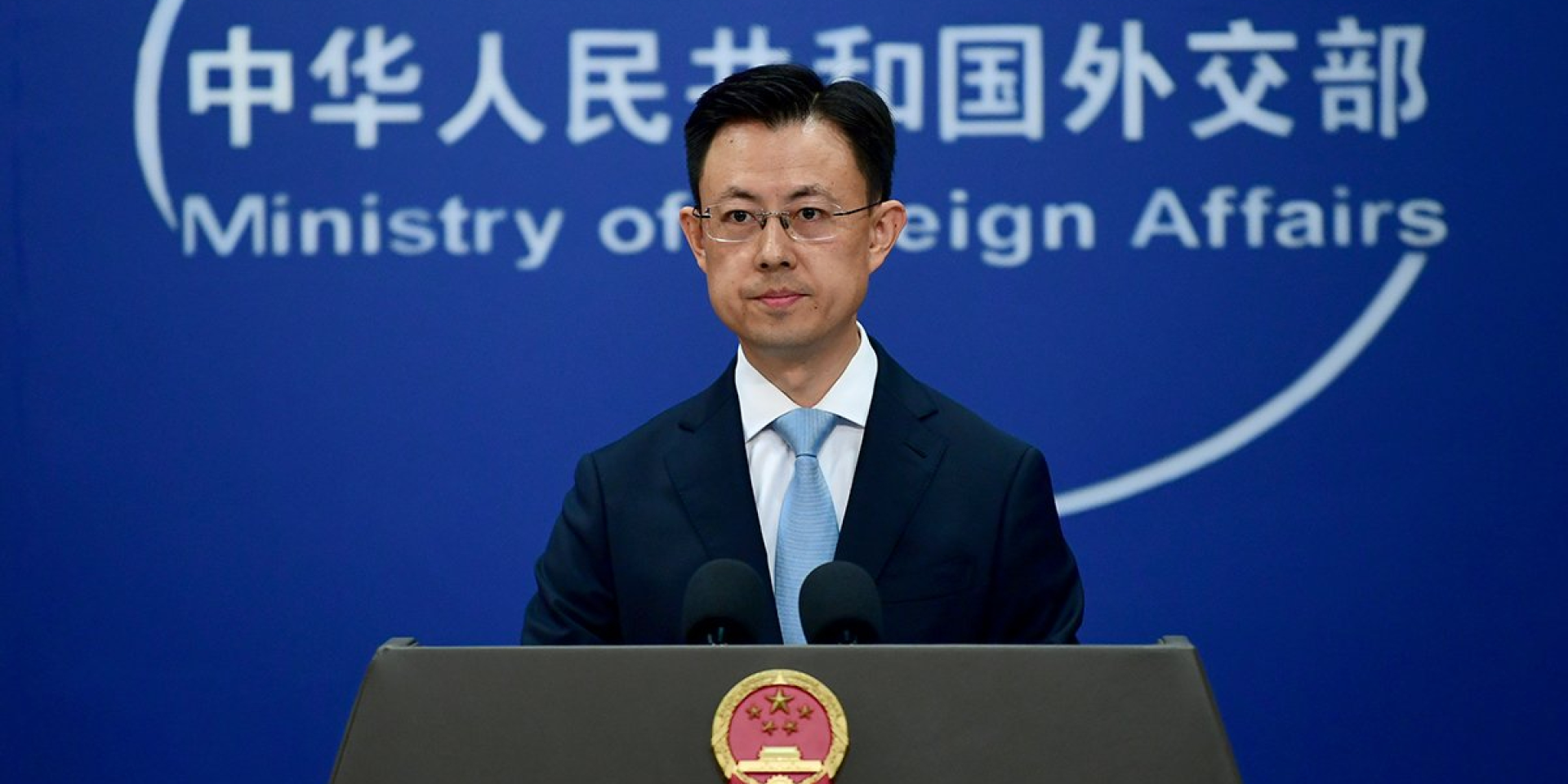
Chinese Foreign Ministry spokesperson Guo Jiakun said at a briefing that U.S. sanctions against Russia have no basis. (Photo: CHINA MFA Spokesperson / X)
The U.S. Congress has passed the
late Sen. Lindsey Graham’s bill imposing sanctions on Russia, and China’s
Foreign Ministry said
in a post on X on Sept. 17 that the measures have no basis, while India
also reacted to the legislation, Reuters reported.
China’s Foreign Ministry said U.S. restrictions should not
affect Beijing’s economic and trade cooperation with other countries.
“Economic and trade cooperation between China and other
countries is not directed against any third party and should not be subject to
interference or coercion by third parties. China opposes extraterritorial jurisdiction
and unilateral sanctions that have no basis in international law and are not
authorized by the U.N. Security Council,” Chinese Foreign Ministry spokesperson
Guo Jiakun said.
India’s Foreign Ministry said
it had “taken note” of the legislation. New Delhi, however, will continue
buying energy from a range of suppliers based on “market dynamics.”
The ministry added that it had raised the issue with U.S.
partners in recent months and clearly expressed its position on the risk of
worsening bilateral relations, as well as its determination to take all
necessary measures to protect its trade and economic interests.
Russia had also reacted to the bill earlier. Kremlin
spokesman Dmitry Peskov said Moscow was monitoring developments, called
the U.S. actions “unfriendly” and added that additional sanctions would
complicate efforts to find a peaceful settlement in Ukraine.
Lindsey Graham’s Russia sanctions bill
In April 2025, a bill proposing new sanctions against Russia
was introduced in the U.S. Senate. Sens.
Lindsey Graham and Richard Blumenthal co-authored the measure, which called
for a 500% tariff on imports from countries that continued buying Russian oil
and other raw materials.
In June 2025, The Wall Street Journal reported that the
Trump administration was trying to force Graham to soften the bill, while
Politico reported that the measure could be significantly softened before
passage.
On July 10, 2026, Graham said he had reached an agreement
with the White House on a new version of the bill. The House of Representatives
gave it final approval on Sept. 16.
The legislation would significantly increase sanctions
pressure on Russia, including authority for the U.S. president to impose
tariffs of up to 100% on countries that continue buying Russian energy, while
expanding restrictions on Russia’s military leadership, financial and energy
sectors, foreign suppliers and shadow fleet vessels.
The military war may be swinging in our favor, but the information war continues.
Just as an army needs soldiers, so does a free society need its journalists to ensure that people have access to honest, trustworthy voices to understand the world around them.
For the past five years, The New Voice of Ukraine has been working tirelessly to push back against Russian narratives and defend democracy. But we cannot do it alone.
Please consider supporting us on Patreon for just $5 a month – your donation does directly to supporting journalists and ensuring that this front of the infowar says solid and defended.
Thank you.
Follow us on Twitter, Facebook and Google News
